Humanity at Stake

1157633_289730281164755_734281549_n

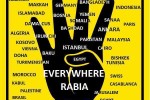
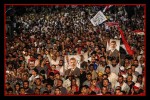
A woman in many women- and children and men- was reported to be rushing back and forth in panic of the gunfire chasing her. A woman- another woman- was seen from her balcony with a portrait of General Al-Sisi; watching, observing, comprehending, and smiling. A grimly smile. This is not fantasy. This is not a scene from a horror movie. This is real life and real humans- or at least, real humanoids!

People are seen enjoying the beach in the scorching heat to get away perhaps from the tense city life. But behind the beach there is a road, and behind that road there are buildings, and behind that building we see smoke, a tense, scorching hot smoke. And we learn that that smoke is the product of chaos, of oppression, of resistance, of subjugation, of panic, of murder, of silence, and of noise. People lie dead on the streets and people lie flat on the beach. Two stories. One city.

Egypt is in crisis. This we are all told. But there is much more to the story. The crisis isn’t merely political. It isn’t merely about who you support. It isn’t about who you don’t support either. It’s not an Egyptian issue anymore. Boundaries don’t make sense now. It’s boiled down to the very essence of what it means to know and love freedom and democracy, to value dignity, to value humans as human subjects, to figure out what it means to be human.

But here is where narratives fail, and collide. The crisis in Egypt has consistently been portrayed as a clash between two parties- or to say, two narratives. This schema has been deliberately consolidated by both the coup-regime, which includes all its functionaries, and forces of the global hegemonic status quo. Locally there is this thing they call ‘the people’- a label created to function as a catchall term for supporters of the illegitimate regime- and then there are ‘terrorists’- a label used to discredit a demonstrably peaceful resistance movement against illegitimate regime change.  The mainstream global media on the other hand adopts a less obvious propaganda model. It divides people into ‘anti-morsy protestors’ and ‘pro-morsy protestors’- or sometimes calls them ‘Muslim Brothers’ straight out- and by doing so it very criminally distorts the picture. In doing so they’re undermining the fact that the ‘pro-Morsy protestors’ are in fact an ‘anti-coup’ and ‘pro-democracy’ movement. But of course, is it really a coup? And yet, it isn’t a matter of what definitions say when it is a matter of what global (western) interests say.

The most vulgar display of this politics of labels and binaries was when the world was watching military men, accompanied by tanks and cheering fascists, firing directly at the Al-Fattah Mosque in Cairo where a few hundred protestors were trapped. The domestic media portrayed it as an operation against anti-state elements and terrorists—one of the old classics- while the global mainstream media portrayed it as a clash between two rival parties- that very workable tactic. By calling it a ‘clash’ or ‘conflict’ of what is clearly obscene violence carried out by the establishment against individuals is the old method deployed in covering the ‘Israel-Palestine conflict’ or what is clearly Israeli repression of Palestinian individuals.

The Egyptian crisis has also become a crisis of confusion in Muslim majority societies. A victim narrative seems to emerge where the culprit is made to be democracy itself. The greatest beneficiary of this narrative is none other than Al-Qaeda itself; just as it was the greatest loser in the Arab Spring where it seemed as though change through peaceful and democratic means was a viable option. This optimism seems to fade away. This is the same optimism that makes sleeping difficult for oppressive regimes; for it’s easier to break bones than minds. The narrative serves both terrorist groups at the fringes of society and the establishment controlling society. But besides the damage that is carried out by this narrative, it is also flatly wrong. What happened in Egypt was not because of democracy but the lack thereof. There was nothing remotely democratic about it. Even the regime of Mubarak retained itself in all spheres of life. Not only was a democratically elected parliament disbanded immediately on a technicality, the democratically elected president was never given any true authority. He was overthrown by anti-democratic means and what is now present in Egypt is the suppression not only of people but of the very notion of democracy and freedom. It is here where the story needs to be squarely put as a matter of democracy, freedom and dignity. To place the problem elsewhere undermines and hurts the broader cause.

What else needs to be understood from the problem in Egypt is the consequences of polarization and uncompromising partisanship. To understand each other, to build on each other’s point of view, to discuss and debate critically are all essential to the health of a given society. A politics of empathy is the need of the hour. Unfortunately, Muslim majority societies are plagued by a clash of uncompromising narratives. The damages have played themselves out it Egypt. Pakistan is also deeply polarized and suffers from a politics of condemnation and ridicule of the other. In Tariq Ramadan’s words, Muslim majority societies need a ‘cultural revolution where we can think critically about our current state, be conversant with the challenges of modernity, offer creative solutions to contemporary challenges, as well as be consistent and employed with cultural, religious and civilizational references. This calls for moving beyond binaries and labels, and moving forward constructively and collectively.

Independence Day – Why Must I Celebrate?

pakistan-is-a-strange-country-1024x640

My home, my country is 66 years old today. Come August and we start gearing up to celebrate Pakistan’s birthday, if we can call it that.  The emotional patriot that I am, the whole “green” thing works for me. It is my time to re-visit the qaumi taraanaas (patriotic songs) and hoist a flag on my roof and go all teary when I see Quaid e Azam on the TV screen. In August, basically, I am having a crash course in patriotism. Like a 2nd or 8th or 16th honeymoon of a couple who over the years have forgotten what they mean to each other. So they take a trip down memory lane and sit and watch their shaadi movie and leave the kids with the grandparents and take a trip together to rekindle what’s left.

In most cases, this stuff works. As in the case of me and Pakistan.

But one minor issue. Let’s go back to the weird example about the couple. So imagine this. They have a great “re-kindle the romance” tryst at a far-eastern island resort, have spent a week together, and love is in the air. But then reality sets in once they return. The honeymoon fever starts subsiding. They slide back into the old pattern. The wife nags, the husband is indifferent and insensitive. She’s obsessed with her clothes and her family, he is a workaholic who gives her no time. Honeymoon goes down the drain.

That might be, sadly, the problem with how we look at 14th August, or any ritual in any relationship for that matter, whether it is our relationship with a person, a country, an idea or even God. When we indulge into something without thinking and without reflection and introspection, all that remains is hollow and outward expressions of a love that is shallow.

In a love that is deeper and more real (and most of us claim to love Pakistan), we must give back in return. The truest relationships are those that stand the tests of time. Relationships in which you feel an urge to do for your beloved anything that makes him/her happy. What can I do that would make Pakistan happy, I wonder?

For sure, Pakistan LOOKS happy today. Celebration’s in the air. Fireworks marked the grand entry of the 66th birthday of my homeland at midnight. Everyone will be dressed in green (yes, me too, I confess!). Flags, songs, chants, slogans of hope, of better tomorrow.

So yeah, sure, Pakistan looks all happy. Just like that couple looks happy in the 2nd honeymoon pictuers they post on facebook. But are they, really? And is Pakistan happy? Really?

A REGISTERED 23% (almost) living below the poverty line, a dismal literacy rate, a non-existent state emphasis on health and education when compared to what we spend on defense, ethnic prejudice and violence, killing in the name of caste and creed, extremism, huge economic disparity, an increasing tendency of polarization in society; a society divided between liberal extremists and religious extremists, persecution of minorities; the list is endless. Poverty in the land of the pure forces people to commit suicide. Women are raped and silenced. Our government’s corruption has assumed legendary proportions. While minorities are persecuted, we, the Muslim majority (with all due respect) is essentially clueless about the true nature of Islam. We have not yet met Islam one on one, most of us. A reflection of us not knowing Islam is evident in tiny things like breaking the traffic signal and littering and losing tempers in Ramadan and also in bigger things like killing our fellow Muslims and Pakistanis.

In a nutshell, Pakistan is not happy, really.

Like a cynical but forthright friend’s tweet said, “I am not a proud Pakistani. With this mess I can’t be. Seriously. But I promise to work towards it.”

Yet, I still DO celebrate the 14th of August. Not just because I am an emotionally labile person who reaches out for her tissue to wipe tears when she hears “Khayal Rakhna” by Alamgir and the Benjamin Sisters. Not just because I am in the 14tn August honeymoon zone. No. I have given it careful thought.

And the reason lies in the last part of my friend’s tweet:”….I promise to work towards it”.

With all the mess that it is in, when I look at that white-haired old man called Dr Adeeb Rizvi serving at SIUT, and I see people believing in him, I know there is something worth celebrating. When I look at the work Imran Khan has done at Shaukat Khanum and the work Edhi has done, I know there is hope. And not just the very known heroes. At grass root level, I meet a woman in Heera Mandi Lahore, running a school for literacy of her children. In the dangerous Lyari, a man is teaching children peace-skills in his school. My nephew is working with his group of friends as a small initiative to spread literacy among under-privileged children. At an even smaller level, my mother always would teach the children of domestic staff to read and write. She was a member of the National Women’s Guard in the years around independence, a fierce patriot, who still in spite of her dementia sings patriotic songs and tells stories of how she saw Quaid e Azam. History repeats itself when my daughter teaches an underprivileged child in her summer holidays. I land at Jinnah International and with all the negatives, the positive is that the chivalrous men of my nation will still help me with my luggage, and the poor fruit vendor may give me an extra banana free of charge. We still cherish good values. We are a poor nation (not talking about the ruling elite right now!) but one of the most charitable nations in the world. We have been through hell and Pakistan is a dangerous country to live in, but we are resilient, and all this “mess” is bringing out the best in us in art, literature, and very importantly in humour – yes, Pakistanis know how to have a good laugh at themselves.

Deep down, somewhere, Pakistan is happy.

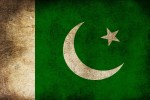
But the emotionally charged paragraph I have written above still does not fully justify why I celebrate 14th of August. For me, the reason is multifold. Patriotism, unless ill-founded and leading to anger and an “us versus them” psyche, can be and is a positive force if used correctly. It re-kindles the spirit of volunteerism, a sense of responsibility towards one’s country and one’s nation. If coupled with a bit of reflection and awareness, it can remind us of important lessons long-forgotten. A small example would be that if we take a careful look at the flag of Pakistan, the white reminds us of the presence of minorities as equal citizens of the state. Disrespecting or persecuting innocent minorities is tantamount to disrespecting the basic ideology on which this nation was formed. Celebrating this day, as my daughter has made me understand, is important to her generation who have sadly grown up in a time where most of what they hear about their country is negative, skeptic and disillusioned. The new generation must thrive on a sense of hope and a sense of pride.

So let’s give a careful thought today, each one of us, to what we are doing to make Pakistan happy. If we are positive contributors to the well-being of this nation, we have every right to celebrate the Independence Day, sing the national anthem and say Pakistan Zindabad.

🙂 If you’ll excuse me, I gotta go iron my green dress now.

Loving Pakistan Against the Odds

LovingPakistanPakistan- a word I’ve been hearing since my first day but every single time I hear it and interpret it, the familiar sense of belonging and feeling of love is rejuvenated. I’ve heard it under muffled voices as my grandparents would narrate their childhood stories; we would squeeze beside them under the blankets and awe at the thrilling events of 1947 while we munched peanuts and walnuts. I, then grew up and with time the voices spelling out Pakistan changed as well. I remember the gasp which would travel around the class every time our teacher shared an unusual fact regarding Pakistan. Then, I heard some people pronouncing it spitefully, executing particular stress on it during their heated debates. At times, the word reflected hopelessness and despair while at others it spoke of elation, pride, enthusiasm and determination. The tones and speakers were of great variety but a single thing remained unimpeded- the name never ceased to leave an impact on my heart. Either I speak of it in a mediocre manner or chant “Pakistan Zindabad”. I speak of it as one would speak of a cherished family member.

It wasn’t I who chose Pakistan as an identity, culture, lifestyle or a possession. Instead, Pakistan chose me to breathe in its air and walk upon its soil; I was invited to experience the feeling of being at home and being loved at this part of the world.

Since my young days I have been witnessing argument about Pakistan and its issues but all along I’ve been no more than a reticent listener. People are prepared to alienate their homeland and consider a single ticket, a single flight to be their key to success because it’s hard for them to see this country prosper. However, amidst this devastation I see a smile. I see it beaming through the tears and scars and just when I have been disheartened enough to turn around and join the crowd I see a glisten in those sorrowful eyes. The eyes have put behind the grievances as they stare at me hopefully. I see trust and belief in them, an unhampered belief that if not this time then the next or maybe some other time Allah would help and heal those scars. And, despite the disappointments it has had to face it still believes the people are worthy enough to be relied upon. I cannot abandon my idealism after finding life beneath the dead.

It will be hard to believe if you claim to have never lost anything because of Pakistan or to Pakistan. There were times when I stumbled and I, too lost my confidence in this country but when I stood up I had even greater zest because I realized it were my hopes which still give the green-white flag a reason to stand tall. It’s your ideology and vision which will help Pakistan to overcome the tribulations, thrive and rise to the long forgotten glory, it’s actual destination.

Prophet (SAW) is reported to have said,

“And know that victory comes with patience, relief with affliction, and ease with hardship.” (Tirmidhi-Saheeh)

Quran Journey series – Reflections on Quranic verses – X

justice-peace


In the Name of Allah, the Beneficent, the Merciful

“Allah forbids you not, with regard to those who fight you not for (your) faith nor drive you out of your homes, from dealing kindly and justly with them: for Allah loveth those who are just.

Allah only forbids you, with regard to those who fight you for (your) faith, and drive you out of your homes, and support (others) in driving you out, from turning to them (for friendship and protection).”  (60:8-9)


Islam is about submission to the Divine Will in order to attain peace, and this works both at the individual level as well as for the community. Muslims are supposed to seek to acquire peace within and strive to establish it in society. However, the establishment of peace at the communal level is only possible through the provision of justice. The central principle around which the socio-politico-economic system of Islam is built is Justice.

Islamic Justice is all-embracing and universal, to be extended to all mankind, regardless of any distinction of race, creed, nationality and even faith/religion. It is a fundamental human right. Islam asserts justice in dealing with those belonging to other faiths, whether they be citizens of the Islamic state or members of other communities and nations. The rights of non Muslims in a Muslim state have been clearly outlined by the Shariah_ they are entitled to all rights of citizenship and complete freedom of belief:

Non-Muslims are to be protected by the Muslims, as the Prophet Muhammad (SAW) himself said:

“Whoever harasses a dhimmi I shall be his adversary, and of whomever I become the adversary, I shall prosecute him in the Doomsday” (At Tabrani, 65).

Again: “He who harms a non-Muslim who keeps a peace treaty with Muslims has harmed me, and he who harms me has harmed Allah” (At-Tabarani in Al-Awsat).

In support of the Prophet’s view, an orthodox caliph stated that the blood of the dhimmi is “like our blood and his religion is like our religion” so that “they are entitled to what we are entitled to…” 

As is made clear by the verse, all non Muslims be they citizens of the Islamic state or not, must be dealt with justly: this justice is to be waged universally and unconditionally, even in case of hostility. The Quran says:

“O you who have believed, be persistently standing firm for Allah , witnesses in justice, and do not let the hatred of a people prevent you from being just. Be just; that is nearer to righteousness. And fear Allah ; indeed, Allah is Acquainted with what you do.” (5:8)

In fact, the Quran takes it a step further by adding to it the element of kindness. Muslims must deal with non Muslims who possess no explicit aggressive designs with kindness, forbearance, gentleness. This is built on the Islamic concept of the entire creation of God being His ‘family,’ all being the ‘sons and daughters of Adam (A.S).’  It is this kindliness of demeanour in dealing with those not yet Muslim that earns us the Love and pleasure of Allah.

However, it is a demand of justice that wrong be redressed, that evil be confronted, oppression be resisted and defended against. Muslims must be active agents of justice and peace on earth. In order to attain justice and root out injustice, Muslims have to exert themselves, through force if need be. Only through the readiness to establish justice with might and main can peace prevail, and History is a witness to this_ the might of Goliath was shattered through the courage, valour and strength of David (Daud A.S). Those who are unwilling to strive with physical strength and force for the establishment of a just order will be trodden on and vanquished by the forces of evil as it pervades, unresisted. Hence, the Quran instructs, Muslims must act with firmness against those who have evil designs against Islam; who oppress human beings, who spread evil (fitnah) in the land and assist the forces of injustice and evil. That too is the example provided by the seerah of Muhammad (SAW) who exerted himself in the Way of Allah through waging military struggle against the enemies who had persecuted believers for their faith, and who had taken away the freedom of belief that is a God-given right of all human beings.

The verse above is a radiant example of the middle position of Islam and its great emphasis on the principles of justice and peace, its firm insistence on the rights of human beings; it highlights Islam’s rejection of all forms of discrimination and its insistence on absolute justice  for all. Islam, in the light of this and other verses of the Quran and statements of the Prophet (SAW), stands tall as an egalitarian system of life with a universal vision of justice and peace.

Muslims must be just and kind towards fellow human beings regardless of faith-based (or other) distinctions. However, those who violate the rights of others, oppress and persecute are to be defended against with firmness, strength and might. Only thus can a just order be established that facilitates the attainment of a peaceful society.


Ali (RA) – My Eternal Hero

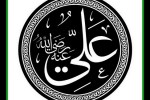
aliFor me, he is the emblem of heroism, of wisdom, of passion, of love of Allah.

He accepted Islam as ten year old child, when very few were willing to risk their lives. He grew up, literally, in the house of Allah’s beloved (Salallaho Alaihi Wasalam -SAW). He resembled Rasool Ullah (SAW) in mannerism and action. On the night of the migration from Makkah, he slept in the bed of the Prophet (SAW) with the risk that the enemies may kill him in place of the Prophet (SAW).

Our beloved (SAW) trusted Ali (RA) with his treasure, his youngest daughter Fatima (RA). He was the Prophet’s (SAW) kin.

While Rasool Ullah (SAW) breathed his last on the chest of our mother Ayesha (RA), Ali (RA) was the one to bathe Rasool Ullah (SAW) after his death.

Ali was a lion in the battlefield and most humble in private life. In worship, such was he that he told people to pull out an arrow lodged in his body during salaat (namaz) because when in the presence of his Rabb in prayer, he focussed on nothing else.

Ali (RA) is my hero, forever.

They are all my heroes: Abu Bakr (RA) and Umar ibn Al-Khattab (RA) and Uthman bin ‘Affan (RA) and Ali (RA). Each a sparkling gem warding away darkness and showing rays of light. Each with their own beautiful unique personalities. Each chosen by God for special work. Each guiding us in their own way.

Yet, with the mention of Ali (RA) the heart softens with the realization of how beloved he was to the Prophet (SAW) of Allah. He is the father of Hasan (RA) and Hussain (RA), and the love of Fatima’s (RA) life.

These glimpses from ahadith and seerah remind me even more why Ali (RA) is who he is to me:

 Abu Turaab

So many incidents are recorded about the beautiful way the Prophet (saw) used to solve disagreements between Ali and Fatima.

One such incident resulted in Ali getting the title Abu Turaab – “The man covered with dirt” – this title was one of the dearest to Ali. For once the Prophet went to visit his daughter Fatima & he did not find Ali home. He asked about him, so Fatima told her father that she had some argument with her husband so he left home angry in the afternoon without taking his usual nap. The Prophet told someone to go & look for Ali. He came back saying that he is in the mosque. The Prophet went to him to find him lying on the floor with his dress falling off his flank which was covered with dirt. The Prophet woke him up clearing the dirt off his body & addressing him with a smile: “Wake up you who is covered with dirt”.

The Prophet’s Kin

When the verse 3:61 was revealed to the Prophet (SAW): Now that you know the facts, say to them ‘Come, let us summon our sons and your sons, our women and your women and ourselves and yourselves and pray Allah and beseech Him to accurse those who intentionally assert falsehood’ ; he summoned Ali, Fatima, Hassan and Hussain and said: “O God, & these are my kin”.

How can a believer not love Ali (RA)

Zirr reported: ‘Ali observed: By Him Who split up the seed and created something living, the Apostle (may peace and blessings be upon him) gave me a promise that ‘No one but a believer would love me, and none but a hypocrite would nurse grudge against me.’
Reference: Book 001, Number 0141: (Sahih Muslim) 

The strength of Ali – in fighting the enemy and fighting anger

I love the incident where Ali (RA) was fighting with a man on a battlefield. Ali was about to thrust his sword into his heart when all of a sudden the he raised his head and spat at him. Ali immediately dropped his sword, took a deep breath, and walked away. This man was stunned. He ran after Ali and asked him why he was letting him go. “Because I’m very angry at you,” said Ali. “Then why don’t you kill me?” hel asked. “I don’t understand.”

Ali (RA) explained, “When you spat on my face, I got very angry. My ego was provoked, yearning for revenge. If I kill you now, I’ll be following my ego. And that would be a huge mistake.”

So Ali set the man free. The man was so touched that he became Ali’s friend and follower, and in time he converted to Islam of his own free will.

He whom Allah and His Messenger (SAW) love

Narrated Salama: ‘Ali happened to stay behind the Prophet (SAW) and (did not join him) during the battle of Khaibar for he was having eye trouble. Then he said, “How could I remain behind Allah’s Apostle?” So Ali set out following the Prophet . When it was the eve of the day in the morning of which Allah helped (the Muslims) to conquer it, Allah’s Apostle said, 

“I will give the flag (to a man), or tomorrow a man whom Allah and His Apostle love will take the flag,” or said, “A man who loves Allah and His Apostle; and Allah will grant victory under his leadership.”

 Suddenly came Ali whom we did not expect. The people said, “This is ‘Ali.” Allah’s Apostle gave him the flag and Allah granted victory under his leadership.’ Reference: Volume 5, Book 57, Number 52: (Sahih Bukhari)

He was to the Prophet (SAW) what Haroon (AS) was to Musa (AS)

Sa’d reported Allah’s Apostle (may peace be upon him) as saying to ‘Ali: Aren’t you satisfied with being unto me what Aaron was unto Moses?
Reference: Book 031, Number 5916: (Sahih Muslim)

For whosoever is Prophet (saw) Mawla, Ali is Mawla

Sayyidna Abu Sarihah (Radhi Allah) or Zayd ibn Arqam (Shu’bah is uncertain about it) said that Prophet (SAW) said: He for whom I am Mawla (friend, beloved, helper), Ali is Mawla
Reference: Sunan al Tirimdhi Hadith No. 3733 – Imam Abu Isa Tirimdhi (rah) said: This Hadith is “HASAN SAHIH”

Say No to Extremism – Stand Up

Terrorism has no religionWhat happens when events recur so often that we become accustomed to them? They end up becoming a part of our lives and we learn to live with them.

Pakistan came into existence because it was seen as the sole solution to safeguard the rights of the minority i.e. Muslims. However, the very basis of the creation of Pakistan was soon violated by its people; a country where Quaid had promised utmost respect and security for the minorities became the breeding ground for extremism and intolerance. A country which had been envisioned to be a land of justice has faced nothing but disappointment because we all failed to live up to the expectations of the father of the nation. We have not been able to make the country into what it was supposed to be.

It might be a just argument to say that it’s not the ‘us’ but ‘them’; the terrorists, the extremists, the corrupt politicians and the rival countries adamant to crumble our country. However, we have failed to grasp the fact that in reality we are the ones who are nourishing this injustice and violence. What else can make those militants who are not even 1/10th of the population annihilate our peace? We believe that we cannot make a difference by talking about sectarianism and genocides, that we are not capable of changing the course of things. We have made our lives congested for ourselves, being oblivious to everything happening around us and remaining silent to the attacks intended at minorities. And once we allowed this oppression to exist, its grotesque growth became inevitable. In our country, each terrorist attack is treated as a forgotten memory and a ghost which lurks to haunt us. “Iss mulk ka kuch nahi ho sakta” and other such phrases define our meek submissiveness to fate. We have entitled ourselves as the ones in disdain, the ones who are helpless.

“The nation which reposes on the pillow of political confidence will sooner or later end its political existence in a deadly lethargy. (Quote by – James Madison)”

We are unaware of our potential, our real power. We are unwilling to believe that we are capable of bringing about the change, the ‘tabdeeli’ that is so much talked about these days. It’s not a single man, a single government that can revive peace in our country overnight. To get rid of the darkness of cruelty we have to gather ourselves, realize our strengths and work together. It’s high time we start owning responsibility for our current condition and realise that it was our negligence which has allowed thousands to be killed till now. Things will not change until we are prepared to change them, until we decide to talk about them and start thinking about the solutions. Discussing an issue is the first step towards eliminating it. Instead of running away from things which scare or hurt us, we should face up to them and start our own war against them, for peace. We should take the fate of our land in our own hands and work for its betterment and make sure that the sacrifices that were made to claim this piece of land which we call home don’t go in vain.

Ramadhan – The Month of The Quran

Ramadhan 

“The month of Ramadhan is the month in which the Quran was revealed; a guide for the people, the most authoritative of all guidance and a criteria to discern right from wrong”. (Al Baqarah:185)

As Muslims around the world celebrate the arrival of Ramadhan – the month of compassion, reflection and forgiveness – they also gear up to come nearer to their Lord through the Glorious Quran. Ramadhan provides an ideal atmosphere for righteousness in general but it particularly provides an opportunity to improve upon one’s study of the Holy Quran. As expounded by the Almighty Himself in the above quoted verse, there is a special connection between the Noble Quran and the blessed month of Ramadhan. Thus, this month also provides an ideal occasion to build, develop or strengthen a personal relationship with the Book of Allah, and through it with the Rahman Himself.

Our beloved Prophet (peace and Allah’s Mercy be upon him) devoted his lifetime in delivering Allah’s Message. Ponder on the thought for a moment that the epitome of Allah’s creation, the Seal of the Prophets, Muhammad (peace and Allah’s Mercy be upon him), had to bear twenty three long years of continuous hardships for delivering this Message, the Glorious Quran. For Muslims, bearing the love for their Holy Prophet (peace and Allah’s Mercy be upon him) in their hearts is part of faith. Association with the Message that was Muhammad’s (peace and Allah’s Mercy be upon him) lifetime mission, thus, must ensue out of the love for Muhammad (peace and Allah’s Mercy be upon him). During Ramadhan, every Muslim ought to probe his or her heart for the sincerity in his claim for the love for Allah and His beloved Prophet (peace and Allah’s Mercy be upon him). For, amongst the followers of the Prophet (peace and Allah’s Mercy be upon him), there are those about which the following expression of the Holy Prophet (peace and Allah’s Mercy be upon him) on the Day of Judgment is narrated in the Quran itself:

“And the Messenger will say: “O my Lord! Verily, my people deserted this Quran””. (Al-Furqan:30)

For Muslims, merely the recitation of the Noble Quran should not suffice as being enough for the ultimate salvation. Although it is a guide for mankind in general but for Muslims, it is meant to be read, understood, acted upon and propagated. The character Islam wants to build for a Muslim, the society it wants to develop, the bond it wants to establish amongst mankind and their Creator is all contained in this divine “User’s Manual”. Allah does not burden a person beyond one’s capacity and thus each Muslim has to fulfill his obligation to the Noble Quran to the utmost of his personal capacity. Our beloved Prophet (peace and Allah’s Mercy be upon him) has demonstrated that this is a continuous and life long process. The following verse can be related to the understanding of the Holy Quran to a person’s intellectual capacity:

“When they will be brought into the presence of God, He will ask them, “Did you reject My revelations without fully understanding them. What did you know about them if you had any knowledge at all?” (An-Naml: 84)

The effort towards developing an improved understanding of the Quran is not cumbersome if attempted as a convenient daily routine suiting one’s individual capacity, capability and commitments. The first step of any journey is the most important one. The road to salvation would be easy to tread if it is divided into small manageable steps while the final goal be kept in sight.

“It is better for you to learn (understand) a single verse of Holy Quran in the morning rather to pray hundreds of Rakaat”. (Ibn-e-Ma’ja, 1:619)

Allah has repeatedly mentioned in the Quran in various contexts that He has made His Word easy to understand, remember and preach. The ambience of Ramadhan provides time to reflect upon one’s commitment to his faith and thus to the Book of Guidance and Mercy. A suitable routine towards improved Quranic comprehension initiated in Ramadhan can follow through into the whole year and subsequently into one’s whole life.

It is a time to answer the call of the Quran –

“And We have indeed made the Qur’an easy to understand and remember: then is there any that will receive admonition?” (Al-Qamar:17)

– with a positive mind, a open heart and a balanced approach. In Quran’s own words taught to us:

“We hear and obey. Grant us Your forgiveness, Lord, to You we shall all return!” (Al Baqarah:285).

Culminating with the following supplication:

“O Allah! let me receive Your mercy by means of the Noble Qur’an and make it my guide as well as a source of light, direction and grace for me. O Allah! revive my memory of whatever I have forgotten from the Noble Quran and grant me understanding of whatever part I know not, enable me to recite and follow it during hours of day and night and make it my main argumentative support”.

Wishing everyone a blessed and enlightening Ramadhan….


When a Mob Sacked Democracy

Egypt-Morsi“Truth never damages a cause that is just” ~ Ghandhi

“Injustice anywhere is a threat to justice everywhere” ~ Martin Luthor King

Today is a throbbing day for democracy, rule of law, legitimacy, truth, factuality, principle and any other word that fits into the same category. An elected head of the state, with a victory margin of a million votes, was overthrown by an army chief who said blatantly and shamelessly ‘this is not a coup‘.  Shadi Hamid, a renowned analyst on Egypt and the director of research at the Brookings Institute, Doha, was almost spontaneous when he replied ‘If this is not a coup, the word “military coup” no longer have any meaning‘.

https://twitter.com/evanchill/status/352492220387041282

Robert Fisk writes:

For the first time in the history of the world, a coup is not a coup. The army take over, depose and imprison the democratically elected president, suspend the constitution, arrest the usual suspects, close down television stations and mass their armour in the streets of the capital.  But the word ‘coup’ does not – and cannot – cross the lips of the Blessed Barack Obama.

The inclinations and operations of Supreme Council of Armed Forces of Egypt better known as SCAF have been dubious at best from early on. Not that it is any excuse but this is a problem ingrained to all countries with powerful militaries and shallow and weak democractic institutions. The Egyptian military is no exception. In Post- Mubarak Egypt of early 2011, when SCAF was all in all of Egypt and protests broke out against it, the military police killed 14 unarmed protestors and attacked journalists in the famous Tehrir square. How can one forget the poor Egyptian woman in the clip who being seized by her hair was dragged unto the street with her abaya torn apart. Mona Eltawy, one of the secular voices, who was a strong part of protest movements in 2011 was attacked, sexually assaulted and recovered only with her arm broken by the same military police. These are a few examples of the legacy of policies kept for half a century of oppression directed towards political opponents. And trapped at the center of it was Muslim Brotherhood for last few decades.

One has to look back a few decades of the near past, if the real face of SCAF, the dictatorship, is to be unveiled. Concentration camps, extrajudicial killings, military trials, as well as some of the worst torture techniques known to man is the essence of the methods deployed on brotherhood workers and leaders. There is no reason to believe that the present day SCAF is any different. As a matter of fact, mumbling started on twitter the moment SCAF started movement last night regarding retribution and violence against Islamists. The ban on leaving the country put on twenty Muslim brotherhood leaders including Morsi is another indicator shedding some light on the gravity of the situation. [It should be remembered that the ban is applied despite there being no cases of fraud, attack or any such incidents from citizens of Egypt against those twenty leaders. Not once was the use of excessive force utilized by presidency against protests against him. Compare that with Mubarak times or Suleiman times in 2011 and the difference is un-concealable.]

There is no doubt in any serious analyst’s mind that the protests in Tehrir today are the direct result of prevailing dire economical scenario, petrol and electricity shortages in particular yet the anarchy is ironically preposterous. Tamarod (rebels) the group that coined the June 30th protest idea was formed just a few months ago. The one unequivocal demand they put forward unshakingly, was that the President of the majority of Egyptians, who they voted for themselves just an year ago, should resign. The reason: because he was unable to fulfill the promises of a prosperous economy, a reformed justice system and security of the country in 365 days, only 20% of the time he was given to serve.  Absurd, stupid, foolish and what not! Even for a newly democractic-leaning country like Pakistan once you think about. But this is how it works in an naïve and unmellowed system with volcanic political scenario and opportunistic opposition leaders who don’t even care about the precedence they are going to set, for not only the next government but the Egyptian generations to come. Tamarod leaders were as stupid as to say that army response actually crowns their movement

The crowd on Tehrir has been out of control. While there were few grave incidents of assaults on women when Religious and Secular Forces were protesting together against Mubarak, this time it was exceptionally high, alarming for the whole society . Guardian reported that over 90 women were raped  and sexually abused in Tehrir Square in a mere four day period. There are more than a few evidences suggesting anarchical mindsets and behaviors of protestors despite Tamarod’s repeated rejection of the presidency’s statements that put blames of such attacks on uncontrollable crowd. There were unconfirmed horrifying pictures and reports of MB youth being attacked and mauled by crowd. Another report described a brotherhood youth being burnt alive by protestors. The attacks on peaceful rallies of Muslim Brotherhood in Cairo University, the attacks and torching of the offices of brotherhood in Alexandria, Cairo, and a number of other cities summarizes the nature of the movement very clearly. The attack and shots fired on Cairo-University’s Pro-morsi protestors, who had the same right to protest as the Tehrir’s Anti-Morsi protestors,was an example of blatant savagery and ruthlessness of the crowd. 14 Morsi supporters died on spot, another 4 in hospital later while police watched. Putting aside the anarchy, the sheer use of violence, and the ridiculous demands, the hallmark of the Tamarod movement can be visually evident in the way they welcomed toppling of a legitimate democracy by an illegitimate force, the SCAF. Shadi Hamid put it forwards accurately:

Obviously, Morsi did make mistakes as was expected of him being the first democratically elected leader of the country. The presidential decree, the tax on IMF’s behest, the Attorney General  decision were the most highlighted of the bad decisions. The huge turnout against him would never have been possible, had the matters been smoothly run and the whole scenario would have been different. The most significant finding, however, that an analyst can easily draw from this crisis is the hypocrisy of the secularists. The same Egyptian secularists (to clarify: though these secularists like to consider themselves liberal we cannot fathom any reason to bestow them with this title. They are intolerant, prejudiced, closed-minded in practice, exactly what constitutes a non-liberal fascist) ran head over heels for protests against a presidential decree that gave Morsi almost absolute powers, which he needed to bypass a controversial court decision concerning political system. Similarly they condemned and were furious when the attorney general charged the famous satirist with contempt against president when he mocked the president during Morsi’s Pakistan visit and later when he mocked a salafist religious figure for his beard. The freedom of press can never be compromised, they said. Ironically, both of these two freedoms were snubbed last night with a lot more by SCAF. Aljazeera Mubashir crew was arrested for ‘undirected reporting’. Brotherhood’s Channel Misr 25 was forced shut with its crew arrested. Last nail in coffin: The interim president has decree powers. The protesting secularists cheerfully accepted both without a single word. Hypocrisy at its peak!


The role of United States was a replay of diplomacy it showed in 2011 as Mubarak was being ousted. While correctly showing concern for the assaults on women and the violence, President Obama correctly mentioned to his Egyptian counterpart that democracy is not only about voting. The 1.3 billion US aid for Egypt is based on a democracy based criteria. “We don’t make those decisions [on aid] just by counting the number of heads in a protest march, but we do make decisions based on whether or not a government is listening to the opposition, maintaining a free press, maintaining freedom of assembly, not using violence or intimidation, conducting fair and free elections,” Obama said on Tuesday amid SCAF’s ultimatum, subtly recognizing the fact that a free-press is still an entity in Egypt, and violence is still not used by state. It’ll be upto the US state officials and lawmakers how they interpret this recent turn of events which can be of huge consequence for Egypt. Labeling it a ‘coup’ would disqualify Egypt from this aid, an act that can be a huge blow to the paralyzed and sinking economy of the country. The political ambience of Washington DC put together with the history of US policies is however not suggestive of this. Ed Royce, a republican and the Chairman of the House Foreign Affairs Committee is all but concerned on military take over. The grin of islamophobes would not be easily disguisable over this epic fiasco of one of the largest experiment on the political system of Islam. The aid is the reason the Egyptian spokesperson and SCAF leader are going at great lengths not to get these events labeled as coup. It is also partinent to mention here that Obama’s support and gratitude to Morsi for the major part he played in terminating the war on Gaza by Israel, the IMF loan approval last year has fuelled enough conspiracy theorists among Egyptians linking the organization of brotherhood to US. Secularists put forward this propaganda and used it to their gain very successfully in recent protest campaign.

Finally, Let us present the most ironic, interesting yet disturbing comparison that is able to show the gist of all the hassle that is SCAF Vs Brotherhood Vs Secularists. 300 arrest warrants have been issued against MB leaders, 100 of MB leaders are put on Exit Control List in addition, Speaker of the parliament Al-Katatni alongwith another 300 was arrested. Supreme leader of brotherhood is arrested. Article 174 of Penal Code “Incitement to overthrow government” is punishable offense under Egypt’s law, and will probably be used to register cases against MB leaders and workers. There have been dozens of protest movements against Morsi in previous year. Not once was any illegitimate arrests made, or such articles of penal code  used by Morsi. Yet the standpoint of International media & secularists is: Morsi is is the axis of Evil, and SCAF is our heroes.

There are lessons to learn for all the Islamic movements in the world in this monstrous experiment of Egypt. The take away is of a serious moral nature for the so-portrayed ‘liberals’ of the Muslim world. They should decide what they want more, their cause or the truth, as well as honesty, justice, legitimacy, authenticity, principle, and so on. For Islamists, Abdul Kader Haqqani of Algerian Islamic Movement summed it up rather short.

“(For Islamic groups) Political victory is more dangerous than defeat” 


In the Name of National Security

national-security2
STOP! Hands up! Halt! Pass through the full body scanner, motor bikes, pillion riding and cellular services are banned. Do not dare take your mobile phone, camera, or any other electronic device for the matter, inside the building/office and hand it over to the guard (don’t forget; they have no liability in case of damage or loss of your belongings). All this while a caution in contonment areas of KPK reads: Qareeb aanay walon ko goli maar di jaaee gee (anyone to come closer will be shot).

After 9/11, there has been a curb in human rights in most states. In the name of national security, states are violating basic human rights. To legitimize their violations and illegal restrictions, states conjure up ridiculously strict and draconian laws like the ‘Prevention of terrorism Act’ 2002 POTA India and ‘Anti terrorism Act’ 1997 ATA Pakistan.

The issue of missing persons, unlawful detention, violation of personal and privacy matters, such as the government  introducing a “Fair trial act 2012”, by which phone and email records of given individuals can be reproduced as an admissible evidence before Court. Moreover, Police would be authorized for spying and inspecting the personal phone records of any individual without prior permission of the Court. Harassment by the law enforcement agencies, extra-judicial killings, restrictions on individual liberties, such as the restrictions and bans on necessities of life like mobile phones and motor bikes,  as well as others,  have become the commonest of human rights violations by the State.

Our law enforcement agencies fail to provide security, and they also fail to hide their failure when they get hold of innocent people in the name of Karwai (investigation), in the meantime, spying, disrespecting and harassing to maintain “national security”. The actual culprit on the other hand, bails out and takes the benefit of doubt in courts with the help of insufficient evidence, loopholes in existing laws and incomplete challan produced by police for their crime.

This abuse of power by law enforcement agencies terrorizing the whole society and creating a war-like situation throughout the country, as well as these harsh security measures creating an unsecured and fear-prone environment in the country, is why citizens cannot freely enjoy their rights, freedoms and liberties in our society which has been explicitly given to them in our constitution.

These law enforcement agencies consider themselves above the law and no one dares to ask them about their actions. They look and treat every noble citizen as a criminal and enemy to the state. They inspect in a disrespectful manner and ask stupid questions. They lack basic mannerisms and fail to understand how decent individuals are to be spoken to. A lot of innocent people lose their lives in illegal custody and many are inflicted with fatal damages and injuries that haunt them for the whole lives as a gift of “National Security”. According to Code of Criminal Procedure CrPC,  a person arrested is not be detained for more than 24 hours without being presenting before the Court. Yet, many are never even presented before any court of law.

Now it is the responsibility of the UN, nation-states, political parties and all human rights NGOs to make sure the authority of law is established, and set some rules to prevent the abuse of power by law enforcement agencies. Moreover, security measures adopted by these authorities should be for the protection of citizens, not to terrorize or humiliate them; it should also be friendly, and handled in a decent and civilized manner.

This is the time to find out the root cause behind the crime and terrorism. It is also the time to stop throwing away the basic principles of civilized order in the name of ‘national security’.

But ‘What is MBFC?’

302931_248959945161026_1585264984_nChange is one of the most popular themes in contemporary Pakistan. But what exactly do we mean by ‘change’, and even more importantly, why do we need it so badly? This is something that we should all learn to question. When we demand something, we should be conscious of what it is exactly. This question is even more relevant when it comes to ‘My Bit for Change’. It is common to be asked what we mean precisely by our bit of ‘Change’.  It becomes eerily more difficult to respond to such questions when certain inquirers come with their own framework of change and refuse to take any other possibility as a legitimate concern for social action. I will be trying in the following lines to clarify where we stand when we talk of change.

Most people see change as a one-time event. Many more view change as something that happens, not always something that is done. Others see change as all-encompassing and all-imposing, or to say; what I want for others.  Some people see change as simply to challenge all things upheld in society as good and desirable. Some people see change as refusing anything that challenges established norms and values of society, whether such things are themselves oppressive and condemnatory. Some people don’t see change as anything but a simple slogan behind which the popular trend is going, while others see change as a call for irresponsible and disruptive action geared towards dismantling the social order.

To accommodate all such views under a singular umbrella would be too difficult a task for even the brightest of relativists. We, however, would only consider such an endeavor to be outright pointless and directionless.  Because from our point of view; when you set your eyes in every direction, you’re not heading anywhere. There is a fine line between being accommodative and accepting all opinions as equally valid.

Our conception of change is one that is a life-time endeavor; a struggle; a jihad; a constant effort to improve ourselves and the world around us. There is no permanent state of perfection, at least not in this world, and we believe in relentlessly looking within ourselves critically and engagingly, and continuously improving ourselves and coming out as better human beings.

We endorse Rumi’s conception of change from the depths of being, who said, “Yesterday I was clever, so I wanted to change the world. Today I am wise, so I am changing myself.” And just as Gandhi put it, “Be the change you want to see in the world.”

We also believe that change doesn’t come, it is something you have to bring, or to invent, or to create. One should be in charge of destiny and fate, and not the other way around.

As Iqbal would suggest, “Khudi ko kar buland itna ke har taqdeer se pehle, Khuda banday se khud pooche, bata teri raza kiya hai.”  (“Rise above yourself so high that even God, before deciding upon your fate, should ask you: Tell me, what would you like?”), and also, “Na Tu Zameen Ke Liye Hai Na Aasmaan Ke Liye. Jahaan Hai Tere Liye, Tu Nahin Jahan Ke Liye” (You are neither for the earth nor for the heaven: The world is for you, and not you for the world.)

We want the world to be a better place, a more peaceful and tolerant place, for all human beings whether they live in the ‘developed’ world or the ‘developing’ world; whether they belong to the majority or minority; or whether they belong to one so-called civilization or the other. Our call is a call to be human, and humanity begins at empathy; and realizing that persons other than you also feel, desire, and think, that they too have an existence as much valid as yours.

We don’t consider MBFC to be an ‘Islamic’ forum, if by doing so one is dividing a Muslim population and society across lines of ‘Islamic’ and ‘Non-Islamic’, or between acts of ‘Deen’ (religion) and acts of ‘Duniya’ (this world). For the first matter, we don’t believe Muslims can be categorized against a scale telling them who is how much ‘Islamic’. It is not our job to say who is more or less Islamic, or Muslim, as this is a matter of individual conscience, as well as one’s private relationship with the Almighty. It is not in our jurisdiction, but God’s alone, to judge other peoples religiosity. Secondly we don’t believe in the duality of our faith with the matters of this world. We believe that faith is as much a matter of this world as it is of the Hereafter. From our perspective, while praying is an act of worship so is earning an honest living or spending quality time with one’s family. In this sense, we consider ourselves ‘Islamic’ not as separate, but as part of the broader Muslim society. This is not to say that we exclude the non-Muslim voice either. A non-Muslim perspective has its own validity and legitimacy in a fully functioning Islamic society.

What one should grasp from the above description is that we want to bring people closer and not further apart. We are staunchly against sectarianism but also strongly against extreme polarization in society. We feel that extreme positions often fail to take the existence of another perspective into account. While religious extremism has been condemned and spoken of in media discourse; an opposite extremist discourse is also a common sight. Both depend on each other, as without the presence of the opposite, there would be little for either to say. To be exact, both speak in absolute and exclusivist terms; they talk about each other but never to each other. It should not come as a surprise that both sides have tried to attack our forum, either in the form of hate-mail to some of our writers or through certain reason-free writings.

This may be taken as a cost for trying to be moderate. To be moderate, of course, is not to merely take a balanced position in the middle of two extreme discourses; it is to refuse to fall prey to either. Some may not realize this but sometimes a loud call for moderation may be the most radical attack on extremists. To refuse to fight them is to defeat them.

But this is not where we end. We have continuously adopted an anti-imperialist, anti-hegemonic and anti-oppression stance. We have been very vocal against the drone attacks, as well as persons undermining their brutality, and such horrifying incidents as an American spy killing innocent civilians in the daylight of one of our major cities. We have spoken against outright human rights violations, such as the illegitimate kidnapping of our citizens, especially the case of Afia Siddiqui, and calling them ‘missing persons’. We have voiced concern for the brutal attacks on the Shia Hazara community in Quetta, as well as the tragic Badami Bagh incident. We have also spoken against various oppressive measures of state institutions and the state itself.

We have also been firm believers in accelerating the process of decolonization. We believe that has yet to end. The legacies of colonization are strongly visible even today, some more tangible than others. We have spoken against the usage of a certain language and traits that show of a false ‘superiority’. We have advocated pride in our own national, cultural and religious heritage. We have promoted such figures as Iqbal and Malcolm X for this very reason. And to quote our favorite activist for change, the latter of the two,

“A race of people is like an individual man; until it uses its own talent, takes pride in its own history, expresses its own culture, affirms its own selfhood, it can never fulfill itself.”