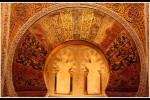
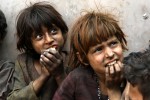
Fall of Granada and the Plight of Morisco


” My friends, say farewell to her as a noble place, or else entrust her to whomever her affairs [will] belong to [i.e. God]

We have neglected the rights of the Lord so he has allowed us to perish, all but a few of the bonds of Islam have been broken.

Our Muslim community has never distinguished what is right to do from what is forbidden; see how this disapproval is now [turned on us].

We have obtained what [God] has given us through what we have deserved; such is the evil life for those who lead it.

In our miser, splitting up [disunity] accompanies our unity; we have been brought to circumstances that are blameworthy.

Our enemy has gained power over us because of our sinfulness; the lions and leopards of the enemy have wreaked havoc upon us.

Yes, they have pillaged our homeland, our lives and our possessions; its abundance has been allowed [them] s legitimate spoils;

They have seized [ravished] her [Andalus] without providing a bride-price; no spears have been watered for them, nor have her menfolk fought them for her;

The Franks have howled down at us from every hilltop and their vows to Cross have been completely achieved

A lamenting poem by an Andalusian poet from Ronda, Abu al-Baqa’ al-Rundi. [1]


2 January 1492 marks the end of Muslim rule in Spain, which lasted for nearly eight centuries. It brought the Reconquista to close, consolidating Christian rule, although it took two and a half centuries for Granada to fall to Christian kings. It also marks the beginning of a dark chapter of religious intolerance to achieve the purity of land on the criterion of purity of blood, thus cleansing the Christian land of the impure infidels and heretics (Jews and Muslims) by their ultimate expulsion.

Fall of Granada was not by a sudden stroke of fate but was the last curtain of a long standing drama of disunity of Muslims, warfare between competing emirs, conspiracies within each dynasty, son rebelling against the father, civil wars, a financially decaying society as well as external aggression. Militarily weak, but protected geographically by Sierra Nevada, Granada was always at risk of being attacked and conquered by the stronger Christian armies. King Ferdinand’s full support to the last Muslim emir, Mohammad bin Ali’s (Boabdil or el Rey Chico i.e. ‘the little one’ in Spanish) rebellion against his father in 1483, that resulted in a civil war, weakened Granada even further. With Christian armies slowly pressing inside the Granadan land, only the city of Granada was left for Boabdil to rule when he took power in 1490. When King Ferdinand asked Boabdil to hand over the city to him, out of surprise and despair, Boabdil sought help from North Africa to assist him militarily, but none arrived. The war and drought stricken city could not resist any further in front of the mighty Christian kings and Boabdil officially handed over the city to Isabella and Ferdinand on January 2, 1492 thus closing the chapter of the Muslim rule in Spain.

Before the handover, Boabdil was in negotiations with the Catholic monarchs who offered him that he should abandon Granada and retire in the Alpujarras in exchange of income for him and his descendants. His mother, who was a converted Muslim, always resisted the idea, as she wanted him to ‘die a king’[2]. But a text from Cronica de los Reyes Católicos by Alonsa de Santa Cruz (1550), explains how, later, she herself tried to convince Boabdil to stay away from war and reach some kind of agreement with the monarchs to avoid massacre of his family and the misery of people and towns under his rule at the hands of the Christian armies, if he goes to fight and gets killed.[3] The city was stricken with hunger and Boabdil had lost many of his men and towns to the preceding military combats[4]. The people had no energy to fight in a state of hunger and desperation and they demanded peaceful negotiation with the monarchs. Some old Moors with military experience advised him to save his neck and pride by entering into a peaceful solution ‘for in this way their Majesties would respect their dignity, and treat him as a friend; if this were not done, they would surely all end up dead or imprisoned’[5]

 Unfolding events of history reveal unmistakably that it was a wishful thinking, and events in Granada, although kicked off with a hopeful start in the shape of a magnanimous treaty written in 1491, ended up in forced expulsion of the Moors in only a hundred years, with all promises broken only under eight years. The terms of capitulation[6] were very comprehensive addressing the tiniest of the concerns of Moors. Put to practice, it would have set a glorious example of accommodating a minority in an unprecedented way. Not only did it guarantee freedom to practice religion and protection of all the Moors, but also promised punishment to the Christians who try to make life of Moors difficult in any way. The properties of Moors would not be confiscated nor would their lives or estates be harmed ‘without due legal process or without cause[7]’. Mosques, minarets and Muezzins were to stay, and actually be respected. ‘The Moors shall be judged according to the code of Sharia, under their judges and qadis[8]. There were promises of protection of customs, traditions, prayers and rituals. Muslims were given a choice of relocation to North Africa for free, for coming three years, and at a small price thereafter. ‘No Moor will be forced to become Christian against his or her will’. The promises were big and no one would have wanted to leave their homes and their beloved land of memories of their forefathers if they were offered such bountiful assurances. These clauses meant that effectively nothing would change for Moors, and there would only be better days to come.

All the Jews of Spain were expelled in 1492 because their conversion to Christianity did not materialize as they ‘apostatized” to Judaism again. The Spanish Inquisition took to task, the ‘heretic’ Jews who secretly practised their faith, and also the Christians converting to Judaism. The Charter of Expulsion of the Jews (1492) cut off all interaction between Jews and Christians to prevent the ‘corruption of the Holy Catholic faith and its followers’ from ‘the evil and wicked purpose that Jews continue wherever they live and congregate.’[9] The intimidating language warned the Jews never to return to the kingdom.

The terms of agreement for Moors were strikingly different. Full of leniencies and freedom to practice faith and retain property, language, dress and custom; it was a remarkable contract. But what did this mean? Were Moors relatively acceptable to the Holy Catholic faith as compared to the Jews, or were the clauses of treaty only a political move with an ultimate goal of pulling the Moors to the Inquisition with ‘a due legal procedure’ and with ‘a cause’, or was the conversion of Moors and their faithfulness to Christianity, not tried and tested until then?

The truth is that Moors were no better than the Jews in the eyes of Christian kings. Sancho IV (1295–1312) of Castile, in his book of advice that he compiled for his son wrote, ‘The Moor is nothing but a dog… Those things which Christian considers evil and sinful, he considers goodly and beneficial for salvation; and what we think beneficial for salvation, he considers sinful.’[10] According to sixteenth century Granadan historian Luis de Mármol Carajaval, in the early period after the fall of Granada, Spanish bishops urged Ferdinand to give the same choice to Moors as given to Jews i.e. conversion or exile, but the king rejected these demands as it would mean a return to war. According to Mármol, the king opted the policy of relaxation so that ‘through domestic communications with Christians, debating and discussing religious matters, [the Muslims] would understand the error they were in and abandoning it, …come to a true knowledge of the faith and embrace it, as many other barbarous nations had done in the past.’[11]

In an under-populated land due to its geographic limitations, Muslims were a source of revenue for Spain. They were hardworking and able craftsmen and losing the entire Muslim population by a radical and absurd move would have resulted in loss of actual manpower to run the country at the grass root level. Also with years of war, Ferdinand wanted to stabilise Christian Spain with a policy of moderation. Thus, the first archbishop of Granada, Hernando de Talavera, was chosen for his saintly reputation and policy of moderation. Although conversion to Christianity was a goal, but persuasive methods, and not coercion, was his policy. He tried to learn Arabic and insisted the priests to do the same in order to get close to the Moors for their assimilation, as Christianising of the Moors meant civilising them. Pedro de Alcalá who composed his Art for Learning Rapidly the Arabic Language, states in his prologue that its purpose was to ‘bring the recent converts out of darkness and many errors induced by that evil, vile, and accursed Muhammad.’[12]

Talavera’s gradualist approach was too slow. Hence, Francisco Ximenez de Cisneros, the archbishop of Toledo was sent to assist him. His strategy, initially, was bribing the Muslim nobles, and later, conversion by harassment. Failure to convert would mean death. Arabic religious books were burnt and main mosque of Albaicín was converted to a church. Cisneros’ radical methods led to the first revolt of Alpujarras (1499-1500). The revolt finally made the terms of Capitulations null and void. The impressive clauses of the treaty were practised only initially, as a cautious political move, not to grant full religious freedom but to win Muslims towards integration into the Catholic faith by conversion. So, were they put on paper with a clear intention of giving freedom? Or were they ever truly practised to the core as ‘live and let live’; the evidence is hard to find with the attitude of the clergy, and the complacency of the monarchs towards it.

The year 1501 marks the beginning of Royal ordinances calling Muslims to disarm[13], to choose between exile and baptism, and abandonment of Moorish dress and customs. 5000 Arabic religious books were put to flames in a public bonfire with thousands of Qurans and texts of ‘Muhammadan impiety’. Moors transformed from Mudejars to Moriscos, a lowly class of converted Christians separate from the Old Christians who enjoyed purity of blood (limpieza de sangre).[14] It was easier for the people, who did not have the means to migrate, to convert to Christianity and keep practising Islam secretly. They were subject to Inquisition on the slightest of suspicion of apostasy or secretly practising their own faith, just like with the Jews earlier, as described by Professor B. Netanyahu quoting an eyewitness account of the time:

Those of them who refused to accept baptism were immediately slain, and their corpses, stretched in the streets and the squares, offered a horrendous spectacle.[15]

This was re-enacted upon the Muslims just a few years after the fall of Granada. As the agreement put in clear words that no Moor would be harmed ‘without a due legal process or without cause’, the due legal process was now the Inquisition, where people would be brought to ‘swift justice’ by torture until they confessed and when they confessed, they would either be baptised or killed any way. ‘The cause’ why they could be harmed or brought to Inquisition was justified by the crime i.e. heresy and apostasy.

Heresy could mean anything i.e.; taking bath on a Friday, wearing clean clothes, eating couscous, dancing on a Berber music, fasting in Ramadhan, retaining Arabic names, working on Christian holidays, refusing to eat pork or drink wine etc. The treaty did have loopholes, which were exploited by the clergy. No Christians who had converted to Islam before the capitulation, were to be abused but Christian women, who had married Muslim men, were subject to be questioned. Prior to the surrender there were incidents, where the converts were tied to stakes and killed with cane spears. Granadan converts were protected, in theory, against such treatment, but Cisneros took advantage of the loophole and started summoning the convert wives of Moors to which people revolted and one of Cisneros cardinals was killed. While Ferdinand was furious of the policies of the archbishop, Cisneros was unrepentant, convincing him that pardoning the rebels against the offer of conversion to Christianity would be a promising political move, to which Ferdinand agreed[16]. It hints that while Ferdinand disliked Cisneros’ radical approach, he never disagreed to conversion of the Moors to Christianity and the terms of the treaty were a pragmatic and political way of gradually Christianising the population, united under the Cross.

Moriscos were considered a hindrance to the unity of Christian Spain due to internal reasons, but they were also considered a threat because of their links externally with the global family of Muslims. They were a force that could potentially get help from North Africans, Egyptians, French, Turks, pirates of the Mediterranean, or other Christian heretics. Discovery of America and Spanish expansion made Spain dangerous to England, France and the Ottomans. Out of these, Turks were the biggest threat to Spain, with a mighty force that had conquered Constantinople and were making way to North Africa. The rise of Protestantism also had its repercussions for the Moriscos who, the Catholic Clergy thought, could conspire with them to weaken Spanish power. Thus, the attitude toward the Moriscos was hardened due to the multiple potential threats to the Peninsula. The irony was that, while in Spain, they were considered as bad and unreliable Christians, they were bad Muslims who had given up their faith and accepted that legitimacy of Trinity and the Church, for their co-religionists outside the Peninsula. Moriscos appealed to both Turks and North Africans for intervention. A letter written in the form of Qaseeda (praise) to Sultan Bayazid[17] in 1501, explained in an unusual way, as to why Moors of Spain were made to convert to Christianity against their wills, and under the fear of death. It was a composition of praise for the Sultan, prayer for his success, plight of the fellow brethren, and plea to him to intervene in the dire situation where young girls were raped by priests, and ‘slaves’ in Andalus had been ‘smitten by misfortune’, forced to eat pork, oppressed in a shameful way and struck by an ‘enormous calamity’. He also protested, subtly, of a total lack of help from those whom Muslims looked to, as their ‘brethren’. He conveyed that all promises of the kings were revoked and books of religion were burnt and to be mixed with dung and filth. The Muslims were asked to curse the Prophet Muhammad and faced beatings, fines and humiliation if invoked or chanted his name. The dead would not be buried (in Islamic way) but left ‘on a dung heap like a dead donkey’ or ‘burnt like charcoal’.

The Morisco was very much a Spaniard. In the words of Spanish historian, Américo Castro, he was ‘heir to the glorious tradition of race that dominated almost the entire Spanish soil’ who ‘maintained a patriotic sentiment for the native country like the sailor, who prefers all sort of danger to the abandonment of ship. No doubt, the Morisco were Spaniards and no less so than the Castilians and Aragonese’.[18] But in the post-1492 Spain, he was considered impure and ignorant and everything attached to him including his customs and lifestyle was seen with contempt. Aznar Cardona, an anti-Muslim Catholic priest depicted Morisco as

‘the vilest of people, enemies of letter and sciences, far from courteous and polite manners and customs who brought up their children as animals without any education or hygiene. They were barbarous in language and ridiculous in dress, ate on the floor and lived on vegetables, grains, fruits, honey and milk. Sensual and disloyal, they marry young and multiply like weeds overcrowding places and contaminating them.[19]

Early in the new century, edicts were issued prohibiting Morisco music and songs, traditional weddings, Moorish clothing, circumcision and slaughtering of animals. The laws also ordered destroying public baths, obliging Moriscos to leave their doors open and unveil their women. Francisco Núñez Muley, an old Morisco nobleman, wrote in protest to the president of the High Court, a comprehensive letter arguing as to why he thought the clauses of the edict were unreasonable[20], but it fell on deaf ears. The next revolt of Alpujarras (1568-70) was a disastrous one. The Granadans burnt churches, killed Christian clerics and innocent people, while the government responded with pillage, rape, mass killing and enslaving people[21]. The text by Huraldo de Mendoza, who was a diplomat, soldier, scholar and a poet, written between 1571-75, clearly depicts what was in store for the Moriscos thereafter. Arabic use was totally banned even among the Moriscos, and their exodus was imminent[22].

It became clear with time that the policy of forced conversion had not worked and would never do. After the Alpujarras revolt, pressures mounted on both sides and co-existence became impossible. The memorandum by the Bishop of Segorbe (1587) to Philip II summarised how Moriscos had failed the repeated efforts of the Church and Monarchs towards their assimilation into society. It all went in vain over time, as the Moriscos still repented to their God instead of confession, practised polygamy and divorce, killed Christians, circumcised their children, performed their own prayer and ablution, buried their dead in virgin lands and refused to go to the church. They conspired with the Turks and North Africans and persisted in following the ‘abominable sect of Muhammad’. They, therefore, must be considered heretics, worse than Jews and expelled the same way[23].

In 1609-10, Phillip III issued the edicts of expulsion. Archbishop of Valencia Juan de Ribera (1609) delivered a sermon in which he said that the land would not become fertile again until these heretics had been expelled. The justification of expulsion was put forward by depicting the Moriscos, as a threat to security of Christian territory, as they had allied with 150,000 Turks for the coming spring to slay the Christians in the name of Muhammad, thus convincing his listeners of the ‘admirable remedy, king had employed.[24]’ Orders were issued to landlords to deliver the Moriscos working for them to the port of departure, only with portable things, which they could carry on their backs[25]. The question of their children[26] was an interesting one. The state was confused whether the children should be allowed to go with their parents in exile or not. The letting go would be sinful and embarrassing as they would be raised as Moors and ‘hell would swallow so many innocent lambs.’ Ribera suggested that children under ten years should remain in Spain to be educated by priests. Infants should be given to Christian wet nurses. But after some negotiations with other theologians, he changed his mind. Children above seven would be sold as slaves to Old Christians as they are old and would be difficult to raise them as Christians. Slavery was morally wrong but would save children from apostasy, hence became an acceptable deed.

The reasons behind expulsion were multifactorial. Apart from lack of transformation successfully into a different faith and set of customs, on the part of the Moriscos, they were a demographic threat as well. According to Ribera, ‘Morisco only thinks about reproducing[27], and would soon outnumber the Christians. Population growth would ultimately make Morisco successful without arms or help from abroad. Ribera described them to Phillip II as an imminent danger, ‘wizened trees full of knots of heresy, who needed to be uprooted before they send out new shoots that quickly grow into trees[28]. Also, Moriscos were hardworking, thus an imminent danger forever, as they retained the possibility of a ‘comeback’ with strength if they were given room to flourish. Danvila wrote about the incompatibility of the two races. He called it justifiable and unavoidable. ‘Humanity and religion fought, but religion emerged victorious. Spain lost its most industrious sons; children separated from the lap of their mothers, and from paternal love. There was no pity or mercy for any Morisco, but religious unity appeared radiant and luminous in the sky of Spain. Happy is the nation that is united in all its sentiment.’[29] And the resultant Spain was like Henry Lea described,

‘The fanaticism which expelled the Jew and the Morisco hung like a pall over the land, benumbing its energies and rendering recuperation impossible… transformed Spain into a paradise for priests and friars and familiars of the Inquisition, where every intellectual impulse was repressed, every channel of intercourse with the outer world was guarded, every effort for material improvement was crippled’[30]

Such was the dramatic end of a realm that the world sees with romance as well as nostalgia. Was it a war of religions or a ‘clash of civilizations’ as fashionably called? Was it a unique story of history that only occurred between Islamic and Christian forces? Was it the last encounter between the mighty and the weak, on the basis of religion and race? The case of this particular century must be viewed in a broad context of eight centuries as a constant struggle of claiming and reclaiming of territories, justified by a religious sentiment and arousal of the competing people with a hope of salvation, that lies in the eradication of ‘the other’, ‘the impure’ and ‘the infidel’. A call to save what belongs to ‘us’ and eradication of what belongs to ‘them’ has been running the political scenario of the world since ever and even to this day. Victory is a shower of support from God just like Christians thought at the Reconquista, and humiliation is a punishment from Him as Muslims interpreted at the time of persecution. Religious supremacy, territorial hegemony, economic benefits, and conspiracies to achieve these, have driven the world vicious. It was a turning point in the history of ‘Islam and the West’, which continues to shape attitudes, affiliations and trust or mistrust in treaties and promises etc. The tragedy of the Morisco is a small component of a bigger picture which manifests itself repeatedly whenever a minority is at the mercy of a powerful ruling majority that makes the use of racial superiority in order to establish a national identity, free of corruption of ‘the other’.

History is very much alive with same or similar manifestation of expulsions, exclusion, walls, denial of rights, separation of children from parents, and other forms of persecution, none of which is new. Fear-mongering, stereotyping the other and justifying the mistreatment in the name of saviourship, worked well throughout history and are still the most useful rules of the game in the world of power. The mighty and the powerful find one way or the other to justify the oppression by portraying ‘the other’, a threat to ‘our’ faith, ‘our’ values and ‘our’ freedom..


References: 

[1] S. Mohammed, ed., Une élégie andalouse sur la guerre de Grenade (Algiers, 1914, 1919), pp. 60-65, C. Melville & A. Ubaydli, Christians and Moors in Spain Vol. 3 (Warminster, 1992) pp. 182-85

[2] C. Melville & A. Ubaydli, Christians and Moors in Spain Vol. 3, p.145

[3] Ibid, p.147

[4]Nubdhat al-asr, trans. L.P. Harvey, Islamic Spain, 1250-1500 (University of Chicago Press, 1990) pp. 307-314 in O. R. Constable, Medieval Iberia – Readings from Christian, Muslim and Jewish Sources (University of Pennsylvania Press, 1997) p.350

[5] C. Melville & A. Ubaydli, Christians and Moors in Spain Vol. 3, p.149

[6] L.P. Harvey, Islamic Spain, 1250-1500 (University of Chicago Press, 1990) pp.313-315

[7] O. R. Constable, ed., Medieval Iberia, Readings from Christian, Muslim, and Jewish Sources, p. 345

[8] Ibid, p. 345

[9] Ibid, p.354


[10] R. Fletcher, Moorish Spain, (London, 1992) p. 135

[11] L. Mármol y Carajaval, Historia de la rebelión, p.63, in M. Carr, Blood and Faith, The Purging of Muslim Spain 1492-1614, (London, 2009) p. 64

[12] Pedro de. Alcalá, Arte para ligeramente saber la lengua arábiga, (Granada, 1505) in A.G. Chejne, Islam and the West: The Moriscos (State University of New York Press, 1983) p.6

[13] ‘The deprivation of arms was not only humiliation but it left them defenseless at a time when violence was constant and to an Old Christian the blood of the deprived race was little more than that of a dog’, H.C. Lea, The Moriscos of Spain, Their Conversion and Expulsion (Philadelphia, 1901) p. 190

[14] A.G. Chejne, Islam and the West: The Moriscos, p.7

[15] B. Netanyahu, The Origins of the Inquisition in Fifteenth-Century Spain, 2nd Edition (New York, 2001), p. 159

[16] M.Carr, Blood and Faith, The Purging of Muslim Spain 1492-1614, p.70-72

[17] O. R. Constable, Medieval Iberia – Readings from Christian, Muslim, and Jewish Sources, p.364

[18] A. Castro, Espána en su historia: Cristiano, moros y judíos. (Buenos Aires, 1948), A.G. Chejne, Islam and the West: The Moriscos, pp. 7, 176

[19] A. Cardona, Expulsíon Justificada de los Moriscos españoles, cited in G. Arsenal, Los Moriscos, (Madrid, 1975), A.G. Chejne, Islam and the West: The Moriscos, pp. 8, 176

[20] K. Garrad, The Original Memorial of Don Francisco Núñez Muley Atlante, 2 (1954), C. Smith, Christians and Moors in Spain Vol. II 1195-1614 (Warminster, 1989), pp. 160-163

[21] A.G. Chejne, Islam and the West: The Moriscos, p. 11

[22] C. Smith, Christians and Moors in Spain, Vol. II, pp. 164-67

[23] P. Boronat y Barrachina, Los moriscos españoles y su expulsion. (Valencia, 1901), A.G. Chejne, Islam and the West: The Moriscos, p. 12

[24] H.C. Lea, The Moriscos of Spain, Their Conversion and Expulsion, (Philadelphia, 1901), p. 325-26

[25] Ibid, p.320

[26] Ibid, p. 322-24

[27] D. Fonseca, Justa expulsión de los moriscos de Espana (Rome, 1612) pp.161-62, R. Boase, ‘The Morisco Expulsion and Diaspora’, Cultures in Contact in Medieval Spain, ed. D. Hook, & B. Taylor (London, King’s College, 1990)

[28] B. Ehlers, Between Christians and Moriscos: Juan de Ribera and Religious Reform in Valencia, 1568-1614 (Baltimore, 2006), M.Carr, Blood and Faith, The Purging of Muslim Spain 1492-1614, p. 246

[29] M. Danvilla y Collado, La expulsion de los moriscos españols, (Madrid, 1889) in A.G. Chejne, Islam and the West: The Moriscos, p. 15

[30] H.C. Lea, The Moriscos of Spain, Their Conversion and Expulsion, pp. 400-401


Bibliography

Boase, R., ‘The Morisco Expulsion and Diaspora’, Cultures in Contact in Medieval Spain, ed. D. Hook, & B. Taylor (London, King’s College, 1990)

Boase, R., Muslim Expulsion from Spain, The History Today, Vol. 52, Issue 4, 2002 http://www.historytoday.com/roger-boase/muslim-expulsion-spain

Carr, M., Blood and Faith, The Purging of Muslim Spain 1492-1614 (London, 2009)

Chejne, A.G., Islam and the West: The Moriscos (State University of New York Press, 1983)

Constable, O. R., Medieval Iberia – Readings from Christian, Muslim, and Jewish Sources (University of Pennsylvania Press, 1997)

Fletcher, R., Moorish Spain (London, 1992)

Harvey, L.P., Islamic Spain, 1250-1500 (University of Chicago Press, 1990)

Harvey, L.P., Islamic Spain, 1500-1614 (University of Chicago Press, 2005)

Harvey, L.P., ‘The Political, Social and Cultural History of the Moriscos’, The Legacy of Muslim Spain, ed. S. K. Jayyusi (E.J. Brill, 1992)

Huntington, S., The Clash of Civilizations (1993)

Lea, H.C., The Moriscos of Spain, Their Conversion and Expulsion (Philadelphia, 1901)

Melville C., & Ubaydli A., Christians and Moors in Spain Vol. 3 (Warminster, 1992)

Smith, C., Christians and Moors in Spain Vol. 2 1195-1614 (Warminster, 1989)


I Know Why the Caged Bird Sings – Final Thoughts on Junaid Jamshed

jjI know why the caged bird sings, ah me,

When his wing is bruised and his bosom sore,

When he beats his bars and would be free;

It is not a carol of joy or glee,

But a prayer that he sends from his heart’s deep core,

But a plea, that upward to Heaven he flings –

I know why the caged bird sings

Sympathy, Paul-Laurence Dunbar


I was a year younger than my son when I first got to know him. “Why can’t he come over to our house?” was the unreasonable question. Four year olds are, after all, unreasonable. And sometimes inconsolable. I was both. Still am, thirty years later. It’s good to keep that child stubbornly alive in you. It’s good to keep something pure and simple in you. And a lot of that comes with memory. The past never lets you rest in peace. And that was Junaid Jamshed’s tragic flaw. As a nation, we mourn the loss of an icon that represented an entire generation. But most of us have unfortunately not forgiven him. Some for the past he chose to walk away from; some for making that choice; some for the alternative he chose. There was something fireworkish about his life. And now that he’s gone, he has left behind a strange silence, the kind of emptiness that gets more pronounced when fireworks that are gasping for breath, are still engulfed by darkness. From Dil, Dil Pakistan to Dil Badal De – what a complete and calculated life. And to those of us who subscribe to the choice he unabashedly embraced – what a complete and calculated death.

Out of the four Vital Signs, he always shone as the brightest. The looks, the voice, the charisma. His songs cannot be forgotten. And he was always a figure who aroused attention. I had seen him perform only once. Not as Vital Signs, but as Junaid Jamshed the solo artist. And then slowly and strategically, he delved deeper into his choice of being alone. His journey as an individual is incredible. Why are we all upset? Because he was a heartthrob. He was a celebrity who was celebrated by all for his music, and by some who could feel the difference. He deliberately chose to be different. The good looking, tall guy who befittingly sang poignant ballads and national songs somehow grew that long, dark beard. Then the cap followed. Then the long robes followed. And the songs changed. The Beloved now was different. For him it was an active choice, a shift from the ridiculous to the sublime, from the profane to the sacred. But somehow – apart from a very tiny minority that enjoys its fair share of hostility in this divided nation – he was never embraced for it. He was always a troublesome figure. He would always blurt out something inappropriate. He would always be questioned. Why was his business a success? Ufff he’s such a misogynist. God, these mullahs are hypocrites. He’s just a commercial sell-out. He has three wives. He’s such a party animal…..And the verbal bashing for some religiously fervent even resulted in literal bashing.

We as a nation are deeply dissatisfied. We are increasingly becoming a nation of nitpickers. We are deeply unkind to each other. Life is another matter, we are ruthlessly unforgiving in death. It’s not a matter of a caustic comment. It’s not a matter of a crass dismissal. It’s not a matter of cynicism and wit that we laud as good journalism or regurgitate as drawing-talk. It shows how deeply divisive our biases are. And yet we profess to be rational, logical, intellectual, and – I daresay – liberal. It’s grim irony to see how those who preach tolerance are the most intolerant of us all. A singer turned televangelist who has a beard: obviously he’s a woman-hater, and so has three wives whom he subjugates in his home and so makes clothes for women as a commercial business. What a loss. What a loser. Why oh why did he go to that super brainwasher of a man who sits in the no-man’s land of Raiwind who (oh em gee) doesn’t sport a cap but a turban! Why doesn’t he go back to music? And so he dared not to. And we have not forgiven him. The most common observation I came across was how almost everyone was lamenting over how Junaid Jamshed was an integral part of their childhood. Some even went so far as to say that they would never forget who he was “before”, and would never forgive who he became “after.” As a public figure who was constantly under the litmus of limelight, this was obviously part of the package. Such is the curse of being famous. But if we see a little more closely, it unveils this troubling truth: either, how we whitewash all religious figures (and may the Lord help them if they are religious icons) as demonic and dangerous misogynists using miswaks, or how we elevate all religious figures to the divine status of being infallible, and therefore Prophet-like, completely free of all possible human weakness. What a tug of war. And perhaps no public figure could feel this friction more than Junaid Jamshed. His death has unearthed this friction. As a friend noted, the secular celebrate his songs, the religious celebrate his naats, and both continue to hate each other.

I have a major regret that I missed an opportunity to hear this man speak (rather than sing), twice. I too was unsure of his faithfulness, perhaps. I too believed that he’s just a sham who’s taking advantage of his fortunate fame. I too was divided. But only until I rediscovered the singer just like he rediscovered himself. I listen to his naats on repeat while driving. I sing his new songs to my son who knows both Dil, Dil Pakistan and Dil Badal De. I had always taken him and his presence for granted. Even when I was told about the deadly crash, my initial reaction was dismissal: of course he’ll survive. But he didn’t. And it’s haunting to hear someone’s voice talking to you, and you suddenly realize that they’re gone. They’re gone away. And only a meteor shower of memories remain. There was a time when his songs would make me sway. There is a time when his songs still make me sway, but to a different tune. I remember his songs. I remember his nasheeds. I sing them both. I’m sure he did too.

And that’s why I am inconsolable about this loss: because in Junaid Jamshed I see my own struggles. I witness the outward and inward tug of war. The choice to change. The attendant backlash. The dismissals. The sticks, the stones, and the words that ever hurt. And then there’s the slippery slope of spiritual strife. The anger. The envy. The arrogance. The ingratitude. The lack of forbearance. The entire catalogue of spiritual ailments that make you a “bad” person when you look like a “good” one. He left a lot behind when he made his choice to rethink his life. And he would stumble. And so, to me, he humanized this lofty claim to be an invincible Muslim. His friends and followers remember him for the goodness he had in him, which was aplenty. His haters and skeptics remember only the bad, or the good that once was and that is why he must be moaned. But a life cannot be celebrated in parts. Life is an uneasy mix. I for one will remember him for selfish reasons alone: how we are fallible and faltering individuals, fumbling on a path of becoming something that we feel to be better. And therefore, right. And judgment is no-one’s business, save One.

Chalo ishq ka kaha maan kar,

Apna Sanam pehchaan kar,

Kisi aisay Rang rang jaayein

Sab se juda nazar aayein…


Hum kyun chaleyn uss rah par

Jis rah par sab hee chaleyn;

Kyun na chuneyn Woh Raasta

Jis par nahin koi gaya…


Love Conquers The World

Love-Conquers-the-worldLove Conquers The World

(محبت فاتح عالم)

I thought of contemporary love as a feeling of deception that you have for somebody, enslaving you to inferior desires. It was not until I read عشق کے پانچ درجے1 by Khurram Ali Shafique and discovered Iqbal through his Marghdeen2. This change introduced me to that powerful love through which beloved says بتا تیری رضا کیا ہے (What is your wish?)3.

My original thought was a reflection of the society, a society having boys and girls eager to talk to each other, spending sleepless nights on phone and offering useless gossip about girls/boys in gatherings. It is an ignorant world view to which youth is forced to believe in; this world view of lust, promulgated by media. It is nothing but a means of profiteering from the masses.

Love is much more powerful than all this, it is that curiosity for an infant to take the first steps; it is in those sleepless nights of mother taking care of her child; it is in those scholars who persevere to preach goodness; it is in those martyrs who stand for their countrymen. It is this love  in the universe that holds it all together.

Love is quite a real phenomenon. It exists physically. It is tangible and can be felt and sensed. It can be experienced and then held. It is supreme power of love is that constitutes ‘humanity’ today. It is the foundation of human existence: ‘He placed between you affection and mercy’4.

Iqbal wanted to revive this love, this ‘nigah-e-shoq’ to reach for the ultimate love for the Creator, The Sustainer. We often talk about wrath of Allah Almighty, obscuring His forgiveness, His love and mercy. This introduces to people a God-King who would punish them for wrong doings and reward them for obedience. However, the basic element in this is missing; love. Quran’s message is not the rulings of a King, but a code to search and see in Him the muse ‘So remember Me; I will remember you’.5

This conception is a shared reality with Christianity that ended in a complete denial of the basis of religion. Karen Armstrong writes:

“When I was about eight years old, I had to memorize this catechism answer to the question, ‘What is God?’: ‘God is the Supreme Spirit, Who alone exists of Himself and is infinite in all perfections.’ Not surprisingly, it meant little to me and I am bound to say that it still leaves me cold. It has always seemed a singularly arid, pompous and arrogant definition. Since writing this book, however, I have come to believe that it is also incorrect. . . . As I grew up, I realized that there was more to religion than fear.”6

Islam’s concept is based not on fear; rather it regards fearlessness as the supreme attribute of a Musalman. This love is what inspires freedom from all that restrains the true goodness in humanity. The greatest obstacle Iqbal say ‘that restrains man’s ethical progress is fear’.7

“. . . and no fear will there be concerning them, nor will they grieve.”8

Due to centuries of decline negativity has been embedded in the genes of Musalmans of today. We do not let any incident go without criticizing it, blaming someone or something, and a widely heard line would be:

“Everything happening is because of a third evil power”

It is a loveless life we are living. It was the primary objective of Iqbal to set mankind free of dogmatic following, to think freely and to reach out for goals far reaching the capability of humans fulfilling the prophecy of God:

کنتم خیرامت اخربت للناس تامرون بالمعروف و تنھون عن المنکر

“You are the best nation produced [as an example] for mankind. You enjoin what is right and forbid what is wrong.”13

Our society tends to seek reality in those ‘out of the box’ opinions and theories (end of times, illuminati, etc.). Instead of focusing on love for the society, and love for the Creator, our conversations are confined in brackets with a negative outside. Popular belief defines a society, popular actions defines their goal and it is these goals and beliefs in which Iqbal wanted to see growth of a collective ego. Pakistan was founded on the basis of this collective ego and it is still forming our society.

There is also an argument that suggests Iqbal ‘said’ many things but he didn’t materialize them in his own life or:

افکار تازہ سے جہان تازہ کی نمود نہی ہوئ

Iqbal became the President of Muslim League, Pakistan was his conception and it was his goal (that he envisioned through collective will). How can we point fingers on his actions when we are ourselves in deep pessimism? Iqbal believed in a melioristic attitude towards life. He believed man has an innate quality of expressing and developing. He saw in man the infinite possibilities to expand his consciousness and will, to completely change what they believe in, to pursue and dream new worlds, worlds that have new possibilities.

اس ذرہ کو رہتی ہے وسعت کی ہوس ہر دم

یہ ذرا نہی، شاید سمٹا ہوا صحرا ہے

This speck remains incessantly ambitious of expansion

Not a speck but perhaps the constricted wilderness he is

چاہے تو بدل ڈالے ہئیت چمنستاں کی

یہ ہستی دانا ہے، بینا ہے، توانا ہے

If he wills he can change the face of the garden

This entity wise, clear‐sighted and powerful is.9

Another argument that is widely spoken in our society when compelled to do something instead of criticizing, they would say:

آپ سہی کہتے ہیں، ہمارے ٹھیک ہونے سے کیا ہوتا ہے جب تک اوپر سے لوگ ٹھیک نہ ہوں، ہم کیا کریں؟

You are right but nothing would change unless the rulers change, what can we do?

This attitude aggravates the inactivity. It is that state which Iqbal said about Musalmans of that time:

“Truly economic dependence is the prolific mother of all the various forms of vice. Even the vices of the Indian Muhammadan indicate the weakness of life-force in him. Physically too he has undergone dreadful deterioration. If one sees the pale, faded faces of Muhammadan boys in schools and colleges, one will find the painful verification of my statement. Power, energy, force, strength, yes physical strength, is the law of life. A strong man may rob others when he has got nothing in his own pocket; but a feeble person, he must die the death of a mean thing in the world’s awful scene of continual warfare.”10

He points out the degraded state of Musalmans of that time as ‘a mean thing in the world’s awful scene’. Unfortunately we still have to conceive a powerful Musalman in our society whose character is the key to happiness of a freeman/freewoman. Freedom that allows the sterling character to grow in a person, making him fearless of everything that enslaves him. Instead of giving in to such notions we have to think hard what we can give to this society.

The character of a Musalman seems to be incomplete without this integration of love for Allah.  And this love is not instinctive; rather, it is intellectual and conscious in nature, attained through knowledge of His existence. This knowledge must have unadulterated ‘nigah e shoq’ (Fervent Glance) in order to reach for the buried pearls deep down. If this ocean is murky with ‘complexes’ of any sort it would be difficult to witness the shimmering light of the reality of those pearls.

نگاہ شوق میسر نہیں اگرتجھ کو

تیرا وجود ہے قلب و نظر کی رسوائ

If fervent glance and vision keen You have not met or ever seen;

Your being is a source of shame on heart, and sight can bring a blame.11

So, instead of rendering every activity of our society null by disclaiming its effectiveness, complete transformation of thinking is needed to be that Musalman. The natural melioristic attitude, however, can only be achieved if we unlearn what we have learned. It is one of those hardest things we are capable of doing. Let us revive this spirit to adopt a positive, collective goal, by treading the road of shared love for humanity.

ضمیر لالہ میں روشن چراغ آرزو کر دے

چمن کے ذرےذرے کو شہید جستجو کر دے

Make the lamp of desire bright in the heart of the tulip!

Make every particle of the garden a martyr to search!12


References:

1. http://panipatnow.com/archives/314

2. Marghdeen Learning Center (www.marghdeenlearningcenter.com)

3. Iqbal: Khirad Mandon Se Kya Poochun Ke Meri Ibtada Kya Hai, Baal-e-Jibril [Translation from: http://iqbalurdu.blogspot.com/2011/04/bal-e-jibril-053-kirad-mandon-se-kya.html]

4. Quran: 30:21*

5. Quran: 2:152*

6. Karen Armstrong: A history of God

7. Iqbal: Islam a moral and Political Ideal, 1909

8. Quran: 2:62*

9. Iqbal: Insan, Bang-e-Dra [Translation from http://iqbalurdu.blogspot.com/2011/04/bang-e-dra-113-insan.html)]

10. Iqbal: Islam a moral and Political Ideal, 1909

11. Iqbal: Nigah e Shouq, Zarb-e-Kalim. [Translation from http://iqbalurdu.blogspot.com/2011/04/zarb-e-kaleem-119-nigah-e-shauq.html]

12. Iqbal: Tulu-e-Islam, Bang-e-Dra [Translation from: http://iqbalurdu.blogspot.com/2011/04/bang-e-dra-163-tulu-e-islam.html]

13. Quran: 3:110*

* The translations are taken from www.quran.com of Sahih International.

Khadijah – The Beloved of The Prophet Muhammad (SAW)

KhadijaHe was young, handsome, of noble lineage and of impeccable character. He was known as “The Truthful” and “The Trustworthy”. Yes, he was born an orphan and his financial standing was not the best when Khadija (ra) met him. But he, nevertheless, was the best of the best. The epitome of the human race, when Khadija (ra) proposed to him, was a young 25, when she was 40 and widowed twice before, having borne children from both earlier marriages. He could have had any younger girl, any virgin who did not carry with her the baggage of widowhood and children. So why, then, did he accept her proposal?

Two reasons come to my humble mind.

Firstly, the “he” in question was Muhammad (pbuh), a young man but not just any man. Although he had not yet attained prophethood, he could look beneath the surface….the superficial. Khadija (RA) even on the apparent was a beautiful woman. “Ameerat-Quraish” or “Princess of Quraish” as she was called, she was rich, beautiful and had social standing. Yet, for Muhammad (pbuh), it would have to be more than riches and beauty that drew him towards the decision of accepting this proposal. Khadija had qualities that were unmatched, as time would prove; Maturity, wisdom, intelligence, loyalty, generosity and courage.

Secondly, this was the woman (like all of his other wives) who was chosen to be his wife by Allah in His infinite wisdom. She was the only wife who bore Muhammad’s (pbuh) children and had the longest singular companionship with him – a companionship of almost 25 years. She was to be the backbone of Islam, the foundation stone of Islam, the first ever Muslim who believed in Muhammad (pbuh) as Allah’s last and chosen Prophet. If it were not for her unflinching support for him and unequivocal faith in him, Muhammad (pbuh) would have still done what Allah destined for him to do, but without Khadija (ra) beside, it would have been a lonelier and even more tedious journey.

Whenever I read about Khadija (ra) I am amazed, always, by how much she loved and supported him.

She opened the doors to her home and heart to him. She shared her wealth with him. She took into her home his cousin, the young Ali (ra) And then there was Zaid ibn Harith (ra). And then, there were their own children – Qasim (who died young), Zainab (ra), Ruqayya (ra), Umm Kulthum (ra), Fatimah (ra) and Abdullah (who also died very young). And this blessed home’s doors were open to all – charity was a norm – an abundant norm. As a couple, they complemented each other so beautifully and thought so much in synch, that goodness was what their world was full of.

The years before and around prophethood of Muhammad (saw) would have been tough for her. Imagine how she felt when he disappeared into the cave of Hira and did not come home for days. Any wife in her position would cease to see the bigger picture and let the desire to own her man and his time take over. But Khadija (ra) knew her man. She allowed him the space he needed to grow inch by inch and day by day towards prophethood and her support remained unequivocal. There are reports that she would climb up to the cave of Hira and carry food and water for him. She was not exactly young at that time. But she did what it took to support him.

Perhaps the most well-known and yet never deplete of lessons and emotional impact is the incidence when the Muhammad (pbuh) returned after he received the first revelation from the cave of Hira, having witnessed the angel Gabriel (as); shivering, and scared. Realizing somewhat what a massive responsibility laid ahead of him, understanding that his life would change forever, fearing for his safety, and in those moments as he asked her to cover him with a blanket. It was Khadija (ra) by his side – to comfort and calm him down.

Her words at this moment have gone down in history. In Sahee Bukhari, is mentioned:

“Then he went to Khadija bint Khuwailid and said, “Cover me! Cover me!” They covered him till his fear was over and after that he told her everything that had happened and said, “I fear that something may happen to me.” Khadija replied, “Never! By Allah, Allah will never disgrace you. You keep good relations with your kith and kin, help the poor and the destitute, serve your guests generously and assist the deserving calamity-afflicted ones.”

She was the first to believe in his prophethood and therefore the first Muslim. Today, Muslims are a 2.1 billion strong, and growing. At that time, in those crucial moments that were to alter history, it was just her.

We all need that one person, at least, to believe in us implicitly, to know our mettle, to bring out the best in us and to be our fall-back. We need to know in moments of fear and insecurity and vulnerability that there is someone who will stand by us, no matter what. And the bigger and more important a human’s intended task or goal, the better will be the person Allah chooses to complement us, to facilitate an ultimate aim. For Prophet Muhammad (saw), Allah chose Khadija (ra).

It is then no small wonder that one day, Gabriel (as) came to the Prophet (saw) and said:

 “O Allah’s Messenger! This is Khadijah, coming to you with a dish having meat soup (or some food or drink). When she reaches you, greet her on behalf of her Lord (Allah) and on my behalf, and give her the glad tidings of having a palace made of Qasab in Paradise, wherein there will be neither any noise nor any toil, (fatigue, trouble, etc.).” [Al-Bukhari]

Muhammad (pbuh) included her in the four foremost ladies of the universe: Khadija bint Khuwaylid (ra), Fatimah bint Muhammad (ra), Maryam bint Imran (the mother of the Prophet Isa) and ‘Asia bint Muzahim (the wife of the Pharaoh).

The richest woman in Makkah sacrificed all her wealth for the cause of Islam. The Princess of Quraish had to sustain the hardships of the 3 years of political and economic boycott, during which the Muslims had to stay in Shaib e Abi Talib, at times surviving by eating mere leaves! Yet, she did not complain or let go of her sabr.

It is no wonder, then, that Muhammad (pbuh) never really got over her death. He called the year of her death “the year of grief”. A Companion of the Prophet narrates that whenever any gift was brought to him he would immediately send it to some lady who had been a friend of Khadija (ra). Ayesha (ra), a favourite wife of Muhammad (saw) says that whenever a goat was slaughtered the Prophet (pbuh) would send some meat to Khadija’s (ra) friends; when she remarked about this on one occasion he told her that he had great regard for her friends, as she had a special place in his heart. Ayesha said she never experienced such a feeling of natural feminine jealousy for any other wife of the Prophet (saw) as she did for Khadija. She also narrates that whenever Muhammad (pbuh) spoke of her he would talk at great length and praise her qualities, and pray for her forgiveness.

Once the Blessed Messenger (pbuh) mentioned Khadīja (ra) before Ayesha (ra), the latter responded: “She was not but a such and such of an old lady, and Allah replaced her with a better one for you.” He replied:

“Indeed Allah did not grant me better than her; she accepted me when people rejected me, she believed in me when people doubted me, she shared her wealth with me when people deprived me, and Allah granted me children only through her.”

Ayesha (ra) says, after this incident, “I learnt to keep quiet, whenever Khadīja’s name was mentioned by Muhammad.” (Sahih Muslim)

Her place in his life can easily be understood by the fact that till she lived, the young Muhammad (pbuh), in the prime of his youth, did not marry any other woman.

She fulfilled all his needs and gave him the happy content married life that is required for anyone who wishes to achieve or do anything great in life. Khadija (ra), Mother of the believers, took care of the home front and gave Muhammad (pbuh) support in the worst of times, enabling him to do what he did. For her part, she understood and appreciated him and his responsibility. For his part, he cherished and appreciated who she was and what she meant to him. Together, they complemented each other, working hand in hand for a cause bigger than anything.

Such a companionship, then, is the material of the truest love story ever.

A Quiet Grandeur: An Appraisal of The Tableeghi Jamaat

TableeghMy attempts at landing upon an official Tableeghi Jamat statement on the attacks on a Tableeghi centre in Khyber-Pakhtunkhwa (Pakistan) and on Tableeghi Jamat members in Karachi fell in vain. I ceased to wonder when I chanced to meet a lady who was an acquaintance of one of the victims of the mosque target-killing in Karachi. With remarkable serenity and a muted delight on her face that was almost transcendental, she mentioned how the deceased from South Africa had always harboured the hope to die in Pakistan- the place where the work of Tableegh had been revived after the first generation of Muslims, and upon the same model.

It was one of those moments one feels so foolish, one does not have anything to say as one tries to grapple with a sublime yet humbling understanding. I understood why my attempt to look up Tableeghi Jamat’s ‘official statement’ on the targeting of its associates was incredibly unintelligent and utterly in vain.

 In my search for an anchor and handhold in this Roller-coaster Ride to Nowhere that life sometimes seems to become, I had been in and out of a dizzying variety of religious groups and organizations: big and small, spiritual and political, militant and pacifist, sectarian and pluralist… yet it never seemed a final homecoming, and I was always an unsettled, restive maverick- desperately seeking, perpetually and hopelessly unfulfilled. But the long, exhausting and frustrating journey was never in vain_ because I read the pointers all along the way. I experienced, I learnt, I understood…

 Travelling on life’s winding ways eventually afforded a rare opportunity for close, firsthand observation of a phenomenon I had always had a blind spot towards: the silently grandiose project of the Tableeghi Jamat. The work of Tableegh hinges on fundamental Islamic ethics and values, and demonstrates great spiritual discipline. The Tableeghi Jamat operates with mindboggling organization and efficiency which becomes even more awe-inspiring given the fact that it is entirely autonomous with no source of external funding or even any necessary financial contribution from workers. In fact, there does not even exist any rigid organizational structure, any formal administrative hierarchy or even a membership procedure. This is also why there is no official record of the number of workers in Tableegh- Wikipedia estimates it at 120 million, but it is highly likely for the numbers to be much vaster- the footprint of the work of the Tableegh is literally everywhere- from the remotest areas in rural Pakistan to nations abroad- with workers ranging from every social class, group and ethnicity, striving for personal spiritual purification and that of fellow beings. A tableegh associate from the US observes: ‘Unlike Christian missions with millions of dollars of funding these people include the likes of people I have heard about who polished shoes in a bazaar in Pakistan, sold their clothes and walked on foot in East Africa with barely any food-  to call people to Allah.’

 During my years of self-discovery and my informal study of Islam I had often wrestled with obstinate questions for which answers often remained elusive. The stunningly simple, incredibly straight, quiet and consistent way of the Tableegh addressed and even resolved most of those.

 I used to wonder why I, having been raised in Islam should have a privilege over those raised in other faith traditions, when my choice to be born with the Islamic faith handed down to me was not a witting one. So how can eternal salvation depend upon an inherited faith or a privilege of upbringing as we self-righteously damn those denied the same.  I began to see faith less as a privilege and more as an enormous trust and responsibility that had to be shared_ and that mankind’s deprivation from the sweetness of Eeman is the burden of those entrusted with it. Tableeghi Jamat, with its simple emphasis on ‘Dawah’ (Invitation to Faith) and reinvigoration of faith through sharing and including concedes to the idea that faith is a responsibility towards mankind and the world, and that the misguidance and evil of this world is our problem; and that for the purgation and salvation of mankind every iota of individual effort must be spent. This intense spiritual drive is not born out of religious chauvinism or self-righteous, narcissistic proselytism, but out of a sincerity that is inherently humane and compassionate (khalis) towards fellow beings; a selflessness that beautifies. The characteristic humility and heartwarming gentility of those working in the path of the Tableegh thus stands explained.

 Many who proclaim religious association use it for a comfortable sense of self-righteousness that lulls and dulls the self-reprimanding conscience; or for other selfish purposes, since religiosity is highly venerated in this society. Yet the demand and the right of religion on us is that it be submitted to; that we give ourselves to it and in the process learn to give up all that is profane and degenerate. The essence of faith is submission, which is attained when we learn to let go of the self and forego its selfishness. The highest expression and evidence of this submission is sacrifice. The work of Tableegh in the path of God and His people is essentially a sacrifice every step of the way, requiring precious time, energy, financial contribution and distance from one’s nearest and dearest. It requires dealing with adverse and hostile circumstances and with all kinds of people while keeping one’s poise and spiritual largesse for the sake of Allah. This is in the footsteps of the first generation of Islam. Walking in this blessed path means that in turn one receives spiritual bounties, rising to a higher station of spirituality.

 The Tableegh brings together a rare and perfectly blended mix of individualist and communitarian approaches. While the prime focus is the tazkiyah (inner purification) of every individual, and individuals rather than groups are reached out to, yet there is a strongly communitarian dimension. The work involves connecting and bonding with others for naught else but compassion and a shared faith and vision. The purity and selflessness of this bond gets people together indissolubly. The beauty of the connection can only be experienced.

 A particularly interesting regular Tableegh activity is the weekly ‘Gasht’- walking on foot door to door to invite others to pray in the neighbourhood mosque and to stay for a short religious sitting afterwards. A Pakistani-American approached by some participants of a Tableeghi Gasht says, ‘The knock of a few simply dressed men asking me to come pray in the mosque right across my house may have been the very way to the corridor to change I wished for…’ He goes on to add: ‘In all major cities in the US they do some work- very humble, peaceful and honest people who have doors slammed on their faces but do not get discouraged. May Allah protect the sisters and brothers associated with it.’

 But while the Tableegh is primarily a spiritual enterprise, it strongly bears upon society and politics with its characteristic quiet persistence. While many contemporary religious groups prioritize political ascendancy and power, making all else conditional upon that, the Tableegh has a sounder basis more in tune with the Prophetic method.

The understanding is based upon the idea that our collective affairs are a sum of our individual states; therefore the means to purge and mend society is through spiritual purification at the personal level. Through this individual spiritual revival all levels of society can be impacted and dented into. With this bottom-up approach, individual moral purification radiates towards the echelons of power and authority as the work of Tableegh quietly pervades.

 Restraint from direct involvement in the business of power politics also brings the additional advantage of safe operation without raising suspicion and alarm. Some months ago when the Interior Minister Rehman Malik accused the Jamat of harbouring terrorists, prominent politicians from a number of parties with no religious associations denounced the statement and defended the activities of the Jamat as purely a moral-spiritual project. The widespread support from all sections of society that the Jamat garnered in the wake of the recent heinous attack at its centre in Peshawar is overwhelming and something to speak of, as no other contemporary religious group in Pakistan can match this level of deep-rooted acceptance and appreciation among the masses.

 The Tableegh’s enthusiastic renunciation of ideological/political associations or any sectarian posturing and its exclusive emphasis on basic religio-spiritual values make its approach an antidote to virulent sectarianism gnawing into this society. It even serves as an effective antidote to militancy which rejects traditional Islamic scholarship in favour of a literalist, inflexible and revisionist interpretation. The Hanafi madhab is largely followed in the subcontinent, which is why the Tableegh has become well-entrenched in the society, owned by the generality of the population, and capable of the mass appeal it has garnered.

 On the question of Jihad, the Tableeghi Jamat believes that the option of using military means cannot be used when the spiritual and social project of Islam has not been taken up effectively and the mission to convey the Message completely and universally (itmam ul hujjah) not yet fulfilled. Moreover, with the prevailing moral degeneracy in Muslim societies, Jihad in the field is irrelevant and self-defeating. Ignominy and oppression will crush Muslim subjects as long as there is no genuine effort at moral and spiritual uplift, as Allah says: ‘God does not change the condition of a people unless they change what is in themselves.’  This understanding is also inspired by a humane concern and compassion.  Jihad against the infidel without having tried to present the Message in its entirety and pristine character is a poor substitute for the more compassionate overture towards the enemy_ that is, winning him over to faith through upstanding moral conduct, sincerely reaching out and striving for the establishment of peace and justice. A senior of the Tableegh is said to have remarked something to this effect to someone seeking clarification on the Jamat’s stance on Jihad: ‘You Jihadists help fill up the hellfire with infidels while we change hearts to get candidates for paradise.’ Contemporary Jihadists, according to the Tableeghi Jamat, betray the gradualism of the Prophet (SAW)’s way.

 Yet the Tableeghi Jamat is part and parcel of the societies it is engendered in and operates in. The patriarchal social structure of society in this part of the world has sought religious cover in the ranks of many religious groups, the Tableeghi Jamat being no exception. The work of Tableegh primarily involves and addresses men_ their wives, daughters, mothers and sisters are provided with a ‘parallel universe’ in which selected tableegh activities are replicated within a strictly closed, segregated environment. The mainstream fieldwork of Tableegh as well as the mass instruction is dominated by men, with their women relegated to a subsidiary role. Besides, the gender segregation to an extreme degree deprives women of a holistic and wholesome experience of life and the world and limits their sphere to the domestic and familial alone. This has resulted in a narrowness of perspective and superficiality of insight characterizing women of the Tableeghi Jamat. This is particularly so in second and third generation Tableeghis who have had cloistered upbringing and few opportunities for self-development through education and experience. Besides, second and third generation tableeghis inherit the religious lifestyle without having the liberty to make personal choice, often taking up Tableegh and religious practice as habit and ritual rather than as actions of the heart.

 The literature used for religious instruction and tazkiyah (purification) as well as the methodology with which it is delivered is dated from the earlier half of the previous century. While it has inspired millions and continues to do so, the outmoded language and style limits its outreach and appeal to the younger generation and fails to address their dilemmas and questions about religion, modernity and secularity in this day and age. There is an absence of content that can present an alternative discourse to respond to or even recognize the innovations and challenges of the current milieu.

 An insurmountable problem with Muslim education in the subcontinent is the disconnect between ‘maqulat’ (the rational sciences) and ‘manqulat’ (transmitted knowledge). Religious education has entirely jettisoned the ‘maqulat’ as secular and profane, and this in turn has sharpened the artificial gulf between ‘Deen’ (the religious worldview and way of life) and ‘Dunya’ (the secular/worldly domain) in society. As a result, the religiously educated are consigned solely to the business of the seminary and pulpit whereas those with a modern secular education become the movers and shakers of society – a sort of privileged elite. The disconnect between the religiously educated conservative Muslims and the secularized therefore runs along the lines of social class. As a result, the religious are generally viewed as a lower social group deprived of social prestige, disengaged from decision making and opinion leadership, pigeonholed into the narrow realm of strictly religious affairs with little to do with the business of the world. Most do begin to reflect this relegation of ‘deen’ to the unworldly and otherworldly. In the process they become insular, islandic and static utopias in a rapidly changing, complex world. The malaise infects all religious groups and its repercussions are visible in the rank and file of Tableeghi Jamat in Pakistan.

 The Gulen Movement in Turkey shares with the Tableeghi Jamat its non-sectarian, non-ideological spiritual and social project. It shares the all-embracing mass appeal and loose structure giving individual space and freedom, as well as the refusal to politicize and confront. Very insightfully, both movements refuse to ghettoize religion under a narrow, exclusivist, parochial banner. However, the Gulen Movement has chosen to do some things differently. It has taken on modernity and its exigencies, risen to its challenges while ensuring the relevance of religious ethics as the panacea for the evils of materialistic, permissive, libertarian secular societies. The Gulen Movement promotes social activism and rights advocacy as religious causes and is dedicated towards healing, harmonizing, building bridges and problem-solving. It makes issues of social justice, rights and liberties the business of religion- a sacred calling of the faith. This, alongwith the contemporaneity of language, style and content has given the Gulen Movement a progressive outlook and an incredible popularity among Turkey’s younger population_ a monumental achievement for any essentially religious movement in this day and age. It is an example we have much to learn from.

 Given the Tableeghi Jamat’s vision, direction, spiritual appeal, inclusiveness and wide outreach, it has tremendous potential and promise. It can and ought to lend itself to the project of chiselling faith-inspired minds in positions of leadership and decision making in the academia, public administration, economics, media and politics. For this it must engage itself with the intellectual challenges that impede the spiritual journey of many bright young minds privileged with education in institutions for the English-speaking urban elite who are trained into critical inquiry. Any religious movement aiming for the establishment of Islam and its values in society which feels that it owes a debt to the future must prioritize leadership development among Muslim youth. For this, the concerns and questions of young minds with leadership potential need to be explicitly and directly addressed.

 An unwillingness to adapt to the exigencies of the times is symptomatic of stagnation and regression which characterize the length and breadth of modern Islamic movements in the Muslim world, with few exceptions. This leads to an intellectual stuntedness that repels our brightest and most promising minds as these groups fail to answer their questions about the role and engagement of religion with the world, life and society. Dr. Muhammad Iqbal resented this stasis as a result of a stubborn refusal to win space in the medley of competing ideas. He sees it as a harbinger of perpetual irrelevance. He writes, ‘The claim of the present generations of Muslim liberals to interpret the foundational legal principles in the light of their own experience and the altered conditions of modern life is in my opinion perfectly justified. The teaching of the Quran that life is a process of progressive creation necessitates that each generation – guided but unhampered by the work of its predecessors- should be permitted to solve its problems.’

Down to Earth – With a Bump

laurenbooth_profileIt doesn’t happen quickly, it takes time.

For a long time you can’t imagine it happening at all.

Then one morning, you wake up and it’s living within you. A spiky, pebble in the midst of joyous certainty; disappointment.

Disappointment in the Ummah, you are now a part of.

For ‘born Muslims’ the acknowledgement that those who try to follow the teachings of the Prophet of Mercy, (May Allah The Most Merciful bless him) always fall short, comes with the territory. If you are from Pakistan or Bangladesh or Egypt or Palestine, or any other majority Muslim nation, you will have most likely experienced all manners of corruption from the political level down.

Family members, being human beings after all, will have done as we all do; raised their voices, gossiped (probably), missed Fajr and failed in a thousand, small, yet visible ways, to fully embody the teachings we are directed to follow in the Quran. Teachings that if taken to heart, absorbed into the very core of our understanding and then translated into our daily lives, would make this testing reality, dunya, so much easier to bear.

‘Born Muslims’ inevitably try and warn those of us who take testimony of faith as adults, in a variety of ways about the disappointment to come:

“Not all Muslims are good, be careful”; “We don’t keep our promises, pray for us.”

And always my favourite: “Facial veil is no guarantee of piety!”

New Muslims can’t and don’t listen. It is as if our eyes only seek out the good in our brothers and sisters. We are blinded by love, filled with joyous hope.

Finding Islam through the Kindness of People

This apparent ‘naiveté’ seems to jar many brothers and sisters. It is almost as if they can’t wait to burst the bubble of our new found admiration for this community. This family-in-faith, remain stunned, as I announce in lectures that: “I came to Islam through the incredible character and kindness of the people.”

Yet, it’s true.

In 2005, I first set foot in the Holy Land, Palestine. There, in homes, of which the wealthiest I was invited to would be considered the poorest in the West, I learnt about love, patience and generosity; And how to host guests; And how to bring up children; And how to be a good human being.

Time and again, I would make excuses to go back to Falastin, treading the fertile grounds of Jenin, Nablus, Bethlehem. All because my heart yearned to spend time with the most remarkable people I had ever met.

After one such visit to the Gaza Strip, I experienced the terrible humiliation visited upon Palestinians, even in old age, at the Israeli ‘Crossing’ known as Erez; Half a mile of concentration camp style watchtowers, barbed wire, concrete and turnstiles cruel for livestock – terrible for human beings.

An elderly Gazan grandmother, traveling to America for a spinal operation, was turned back time and again at the crossing, without explanation, until she missed her flight and her operation. It took the rest of us; UN workers, Fatah government ministers, business men, five hours to pass through the hellish process.

I had booked a Palestinian taxi driver, Jamal, to collect me at around 11:00 am. It was now past 5:00 pm, dark, winter. My mobile battery had long ago died.

Suddenly a car sped towards me in the empty parking lot. It was my taxi.

“I booked you for 1:00 pm” I said aghast.

“Yes” replied Jamal “I waited from then”.

“For five hours?” His response made me weep all the way to Jerusalem, Al Quds.

“A Muslim man would never leave a woman on her own in danger.”

Subhan Allah!

These inspiring moments have not been limited to a land under occupation, nor to those whom hardship and poverty has cleansed of arrogance.

From Palestine to the UK

Back in London, my path continued to cross gentle women, whose manners were unlike any I had encountered before, with sweetness from another, purer, age and time. Women who despite working in highly regarded professions, as lecturers, doctors and teachers, greeted me, an unbelieving stranger, with greater love than many I had known all my life.

Then I took my shahadah and I waited for the change (that all my born Muslim friends warned me) was certain to happen.

One morning, in February this year I woke up to find that it had arrived. Suddenly, not everyone around me was shiny, amazing. Everywhere I looked Muslims were bragging, lying, gossiping, drinking alcohol, stealing, flirting and every other sin, major and minor.

What happened guys?

On reflection, two realizations occur within the revert that finally bring this grim moment to fruition. The first is that we, ourselves, start to fail more and more. In our ibadah, in our speech, in our deeds. From those glorious first days and months when we are immersed in learning Islam, where constant dhikr creates something like an invisible force-shield, around the believer who practices. It keeps us in check, protects us from harm.

Oh how we fill our waking hours with the Quran, reading books on Hadith and downloading inspirational lectures by people of knowledge. A person, who accepts Islam wholly and completely, cannot be late for prayer. It is unthinkable. Clutching a sheet of paper or a donated book, the newbies nervously, cautiously, hearts swelling with love, work the way through Salah. They will painstakingly mouth each alien vowel, respecting every sacred syllable. How direct is the unwavering gaze downwards – which is an imitation of the blessed Prophet’s own concentrated eye line during prayer. How the grateful, saved heart cries towards Allah, The Merciful, who has cleared away all our previous sins.

“Ihdinas Sirat al Mustiqeem”

 Do we seek shortcuts in our wudhu? No!

Do we watch TV shows which may show kissing or drinking alcohol? No!

Do we hang out with chatty (gossipy) friends – No!

This is the moment born Muslims may see us as ‘extreme’ in our practice.

This is the moment too when our ‘khushoo’, sincerity in seeking Allah’s face, is at its highest peak. Love is everywhere, peace is possible, and faith is all.

As I say, then we begin to falter. You know how it goes. First you drag your feet a little, to the prayer mat. A week later, barely noticed, all your prayers are last minute and rushed. Soon after that Fajr is done ‘before going to work’ and not pre-dawn. And here we all are together at last in our weakened, stumbling, frail, version of faith.

A second powerful blow is delivered as experience means we must realign our expectations of our community. What I mean is this.

You are Already a Kinder Person 

Compared to the world outside the Ummah; great sections of our community are and always will be, inshaAllah, amazing. Whole villages are known in far flung places to be beacons of hope to the traveller and seeker of knowledge. Whilst in every city in every nation on every continent, humble servants of The One, quietly support friends, neighbours and strangers as best they can, even if it means personal hardship.

 ‘They (the true believers) give food, out of love for Allah, to the poor, the orphan and the slave, saying: We feed you only for Allah’s pleasure – we desire from you neither reward nor thanks.’ (Al Qur’an 76:89)

 Coming from the cold, hard, materialistic, half drunken, non-Muslim world, I can tell you that thanks to the teachings of Prophet Muhammad (peace upon him) you are already a kinder person than you otherwise would be. How quickly sisters jump to one another’s aid where children are concerned for example. I never had the kind of support I now have, outside the Ummah. How quickly we rally together to help a family if a member falls ill and times are hard. Did I see this so routinely outside? Not at all!

In February the differential, the gap between how good we all manage to be and what we should be, was simply made clear. The natural goodness of those around me has become something I now take for granted.

Yusuf Islam is famously credited as saying: “Thank God I learned about Islam before I met Muslims”. I can understand that.

The question we must answer as disappointment in everyone else pecks at the grains of our faith. Have we already become one of ‘those’ Muslims – more likely to put others off this complete way of life, than be an example of its high principles?

Also published on OnIslam.net

Am I Not Your Lord?

adfadf

Apart from what theologians have taught you what do you know of God yourself?” asked a new found friend. I reflected on the question and thought some more, during the early morning showers, the long drives to work, a lunch completed in solitude, the gratitude and the atmosphere of reflection that is born in the silence of a house that moments ago was alive in the laughter of children and the bliss still hanging in the air. The contrast of one’s own abundance becomes the very quest for a prosperity that must be beyond material, inherent differences in ability and free of predisposition. I began to formulate an answer.

In the outstretched hands and sunburnt faces I would see my father disappear till the homemade food to be distributed on a Friday evening would run out. There was never enough for everyone and in the rabid capitalism of our times, there never will be. A sense of relief at seeing him return to the car unhurt would give way to a twinge of guilt at asking for a simple treat, a bottle of Pepsi or an ice-cream, the contrast all too fresh in our minds. I must have found Him there or thereabout, perhaps even in half-eaten sweets my sister had packed away taking literally the teaching of sharing with the less fortunate what you like for yourself. As an adult I am obligated to spend two and a half percent of what I save in charity but I learned long ago that I am a mere custodian of the rest. It was not until years later in an atmosphere of my identity being hijacked that I would actually learn:

“And they feed, for the love of Allah, the indigent, the orphan, and the captive,-. (Saying),”We feed you for the sake of Allah alone: no reward do we desire from you, nor thanks.” (Quran 76:8-9)

Yet what was being taught in the Friday sermons resonated with an inherent truth. I don’t recall a distinct conversation about who God is or an encounter with a “theologian.” There was perhaps no need, for God was never a mystery. He revealed Himself in the stories told by my parents at the end of a 12 hour work day; Noah, Abraham, Jacob, Joseph, Job, Moses, Aaron, David, Jonah, Jesus and Mohammed (Peace Be upon them) – all stories much similar but different in significant ways than the scriptures before the Quran. Again, it was much later that I would learn:

Say: “We believe in Allah, and in what has been revealed to us and what was revealed to Abraham, Isma’il, Isaac, Jacob, and the Tribes, and in (the Books) given to Moses, Jesus, and the prophets, from their Lord: We make no distinction between one and another among them, and to Allah do we bow our will (in Islam).” Quran (3:84)

Surely, He is not the author of confusion for He fit the simple mental construct of a fifth grader. Promises of being good and praying regularly made with devotion as one went in to collect the annual examination results – convinced of a God that can erase and redo answers to algebra and fill in the ones you left blank. Looking back I could have sworn He did just that.

Of course, come summer vacations, the promises would quickly be forgotten in the fun and games with siblings and cousins. Until, one would find in a second hand bookstore the “Choose your own Adventure” series. In space or undersea one would find dilemmas like choosing to fight aliens or futuristic pirates versus the alternative of making a run for it. The book was written, but could end many different ways depending on the choices that we made. I struggle to find a better analogy for life.  I learned about predestination much before I discovered it as an article of faith. I must have by then heard the story of our parents, Adam and Eve, the free-will which is the singular feature that distinguishes humanity from the rest of creation, a gift that makes us capable of much evil but when submitted totally to the One Creator can make us stand alone against the mockery of our times like Noah, be willing to sacrifice that most beloved to us like Abraham, find patience rewarded with reunion like Jacob, go from wells to thrones like Joseph, thank Him endlessly in suffering like Job, find the courage to stand against a mighty Pharaoh like Moses, find the wisdom of Jesus and the strength to deliver a complete code of life in a little over two decades despite incredible odds like Mohammed (Peace be upon them all). I must have learned by then the story of original forgiveness by a God that gives you the very words to ask for it, even though it would till decades later that I would read:

Then Adam received from his Lord Words. And his Lord pardoned him (accepted his repentance). Verily, He is the One Who forgives (accepts repentance), the Most Merciful. (Quran 2:37)

Salvation must lie in faith in an All Forgiving God, despite Whose Mercy, we could never find it for the Prophet (PBUH) himself taught

Narrated Abu Huraira: I heard Allah’s Apostle saying,

“The good deeds of any person will not make him enter Paradise.” (i.e., None can enter Paradise through his good deeds.) They (the Prophet’s companions) said, ‘Not even you, O Allah’s Apostle?’ He said, “Not even myself, unless Allah bestows His favor and mercy on me.” So be moderate in your religious deeds and do the deeds that are within your ability: and none of you should wish for death, for if he is a good doer, he may increase his good deeds, and if he is an evil doer, he may repent to Allah.”  

(Sahih Bukhari Book #70, Hadith #577)

I can’t recall ever being explained that in our quest to return to our original abode, Heaven, we must pay heed to our deeds as much as rely on The Most Compassionate, The Most Merciful. It seemed to be a truth we were born with the knowledge of, a logical conclusion given the one gift that sets us apart – the free will, for which the universe was fashioned to perfection so that we may reflect and know Him through his attributes.

Blessed be He in Whose hands is Dominion; and He over all things hath Power;-

He Who created Death and Life, that He may try which of you is best in deed: and He is the Exalted in Might, Oft-Forgiving ;- He Who created the seven heavens one above another: No want of proportion wilt thou see in the Creation of (Allah) Most Gracious. So turn thy vision again: seest thou any flaw?(Quran 67: 1-4)

Sadly, what was as clear as the starlit night, a fringe benefit of sleeping on the roof during a power outage, got lost in the illusion that love, wealth, career needed to be “pursued.” The stars disappeared behind the clouds and the very romance of existence got corrupted and still does for surely we are creatures of much error as the Prophet (PBUH) taught us:

“All the children of Adam constantly err, but the best of those who constantly err are those who constantly repent.” [Tirmidhi, Ibn Majah, Ahmad, Hakim]

The events of the last over a decade provide an opportunity to relearn the known. Not only returning to the Quran and Sunnah to reclaim our identity but to learn about our history and most importantly being thankful for the questions asked of us; both by the deviants claiming to speak in our name and those who fail to understand the futility of freedom of speech without a right to be heard. Ultimately,  to learn about my Creator comes naturally, for all of beauty and knowledge has already passed through and all Prophets came to remind us of the straight path that we have known before the beginning of time:

When thy Lord drew forth from the Children of Adam – from their loins – their descendants, and made them testify concerning themselves, (saying): “Am I not your Lord (who cherishes and sustains you)?”- They said: “Yea! We do testify!” (This), lest ye should say on the Day of Judgment: “Of this we were never mindful (Quran 7:172)

Reclaiming Rainbows

rainbow

Human thought finds a rather romantic metaphor in a rainbow. With reflection one may find more in it than a fleeting comfort. Perhaps find even a way to reconnect with our purpose and reassurance that God ordered the perfection of Angels to bow to the ‘imperfection’ of humanity.

“Behold, thy Lord said to the angels: “I will create a vicegerent on earth.” They said: “Wilt Thou place therein one who will make mischief therein and shed blood?- whilst we do celebrate Thy praises and glorify Thy holy (name)?” He said:I know what ye know not.” Quran Surah Al-Baqarah (The Cow): Ayat 30

The majestic arch across the horizon is a reminder of the futility to reduce the expanse of the earth in to one thought for it was never meant to be such. Our essential task is to outdo each other in good and being in a state of constantdawah’

“If Allah had so willed, He would have made you a single people, but (His plan is) to test you in what He hath given you: so strive as in a race in all virtues. The goal of you all is to Allah; it is He that will show you the truth of the matters in which ye dispute” Quran Surah Al-Maeda (The Table Cloth): Ayat 48

Rainbows beg the question, “If all are wronged who is right?” They set a deep contrast to the black smoke billowing from towers reduced to rubble in the west or houses turned to ash in the lands where the Abraham walked, oblivious of whether it marks the loss of material or a child. A proud Afghan standing in a queue for ‘compensation’ becomes as irrelevant to peace as those led to believe in moral wars on ideological evils, for self-righteousness comes in many guises, the absoluteness of dogma, conviction of being free from it or more still, having defeated the eternal conflict between physical temptations and spiritual quests through absolute sincerity to a constitution.

One man’s righteousness can be another’s white-washed tomb and vice versa. This is why ultimately one understanding of faith and its place in society cannot be imposed universally.

Woe to you, teachers of the law and Pharisees, you hypocrites! You are like whitewashed tombs, which look beautiful on the outside but on the inside are full of the bones of the dead and everything unclean” Matthew 23:27

For I tell you that unless your righteousness surpasses that of the Pharisees and the teachers of the law, you will certainly not enter the kingdom of heaven.” Matthew 5:20

The rainbow is not an ascetic argument. Beauty is really in the eyes of the beholder. The Unseen is infinitely beautiful to all of us and should be the very reason to neither oppress nor be oppressed. God, may therefore, be sought individually in some societies and collectively in others but all too often we lose sight of this Rainbow. Ethnocentricity brings with it a religious ‘transference’ and a complex world of hate and greed becomes an a half-sincere call for ‘reformation’ not willing to understand that there is no central authority or hierarchy for a Muslim Martin Luther to abolish material exploitation through ‘indulgences’. For the very same reason there is no ‘ex-communication’ of terrorists – simply because there is nothing to excommunicate them from, their actions are sufficient to identify their deviousness. Yet, hypocritical cries of ‘Muslims not denouncing terrorism’ emanate from our TV screens while by and large simultaneously denying any forums to people who don’t fit in to a ‘this or that’ classification.

The world gets ugly in monochrome. The diversity of a rainbow promises otherwise, where we can differ on everything including happiness being an overstocked refrigerator or a stomach half empty, a house by the lake or a modest abode, the enjoyment of losing ourselves to head banging in a concert or the content of a prayer said in solitude. Whether it is religions inspired by scripture or systems such as socialism or capitalism to manage our collective affairs, our inspiration or intent should not be questioned, nor reduced to a black and white convenience. Helen Keller for instance is remembered for what she taught us rather than her sympathy for communism.

Ultimately, the truth is not something to be imposed, nor can it be denied by a nation to another, a religion to another religion. Reducing a faith to distortions on a select few issues like Jizya, treatment of women or status of minorities is seeking refuge in a black and white for we cannot acknowledge the good in others. It is the self-deception of setting conditions for dialogue after a monologue with our own bias. The general good in us becomes a crowd in a company of extremes. But the good in us is unmistakable despite our ability to be incredibly wrong, for he breathed his spirit in us

“Then He fashioned him in due proportion, and breathed into him the soul (created by Allah for that person); and He gave you hearing (ears), sight (eyes) and hearts. Little is the thanks you give!” Quran Surah As-Sajda (The Prostration) Ayat 9

We deny this goodness to ourselves when we assume reasons for our choices are universal truths that apply most to those who disagree. It for this reason that we point to the inheritance of women but fail to take in to account that the same faith granted inheritance rights to women 1200 years before England and that the very same faith allows the women to keep the inheritance for their own business or pleasure without needing to pledge any part of it to the household. Jizya becomes an evidence of discrimination when we do not acknowledge it as part of a collective social security system and in lieu of the 2.5% of savings Muslims would give to charity, including equal protection under the state.

Religion is a sensitive subject but not in the sense of banning crosses, skull caps and head scarves. For secular extremism of this sort is a return to first century Rome, as decades after Jesus PBUH walked the earth and some years after the destruction of the second temple, Josephus Flavius (Yusuf ben Matityahu), a Jewish man who after the second destruction of the temple of Solomon (PBUH) became a Roman citizen through a peculiar set of circumstances wrote

Antiochus …. He compelled the Jews to dissolve the laws of their country, and to keep their infants uncircumcised, and to sacrifice the swines flesh upon the altar, against which they all opposed themselves and the most approved among them were put to death.

The hate-mongers of our age are like mercenaries that ambush the values of others but hide behind the general good of the religion they claim to represent, at times mere convenience and at times a very deliberately measured act. The worlds turns black and white as explanations and accusations are exchanged and anger rises, just the way a few among us wish it to be. For instance, when one mentions the massacre in Jerusalem of 1099, the role of the church in the Holocaust, that about 3% of Muslim men are polygamous and that the average sexual partners in the US alone for men is 7, that the ottoman empire under the millet system allowed personal laws to govern affairs of minorities, this seems to split the world further in to an “us” and “them.” We instantly become parties in a conflict that had seemed distant. The clash of civilizations narrative continues at a time when faiths have no distinct borders. To justify wrong’s of our age on the basis of history is to not know our own past. Humans have hard enough time agreeing on the present let alone over 1400 years of history which has seen war, peace and even luminous coexistence such as La Convivencia .

What is just and right is not divine violence, nor a nations interests over others but a signature of monotheism that guides us to treating others justly, perhaps related to the concept of Carl Jung’s collective unconscious that has been expounded by some to represent a collective ‘known’ truth.

“When thy Lord drew forth from the Children of Adam – from their loins – their descendants, and made them testify concerning themselves, (saying): “Am I not your Lord (who cherishes and sustains you)?”- They said: “Yea! We do testify!” (This), lest ye should say on the Day of Judgment: “Of this we were never mindful” Quran Surah Al-Araf (The Heights) Ayat 172.

In seeking moral superiority or denying others the right to differ, we return to a pitch dark. We become exceptional for some tough questions follow if we have to follow what the scriptures teach us.

“So in everything, do to others what you would have them do to you, for this sums up the Law and the Prophets.” Matthew 7:12

“Nor can goodness and Evil be equal. Repel (Evil) with what is better: Then will he between whom and thee was hatred become as it were thy friend and intimate!” Quran Surah Fussilat: Ayat 34

The rainbows become a rarity in the polluted skies of our times, not just because of obscure hate filled videos from fringe elements hiding in mountains and killing more of their coreligionists than the “evil” they claim to be battling, but a very systemized narrative of convenience unleashing overt wars or covert subversion in the name of an equal conviction of being the keepers of “the way.” The irrationality of being absolutely right and absolutely wrong has played out all too long. Yet, the gray clouds, the thunder and lightning at times, are the very harbingers we hope for. It is in our children’s eyes that the secrecy of tomorrow will reveal itself. We owe them  rainbows – for they are a rather romantic metaphor.


Losing Our Religion

Losing Our Religion

 That’s me in the corner

That’s me in the spotlight

Losing my religion

Trying to keep up with you

And I don’t know if I can do it

Oh no, I’ve said too much

I haven’t said enough…

(R.E.M., Losing My Religion)

 The meandering mythologies of the Greeks have some insightful truths that are relevant even today. Take Narcissus, handsome and definitely hard-to-get, but really a lonesome fellow. His raison d’être was solely gazing at his own image in a still pond. And then he fell for himself – quite literally – and was transformed into a flower. Poor beautiful flower with such an arrogant name. Narcissus was not the only one condemned to become something else. Races before him were condemned to become monkeys. Races after are further at risk of losing their real selves should they choose not to mend their ways. Glory and its grandeur never truly last. In Narcissus’s case, glory, which was the cause behind the condemnation was nothing but delusion.

Self-love is the first ‘lesson of life’ we teach ourselves. “I come first.” “I matter.” “I’m special.” “Why should I care?” The culture around us is no different from what Echo would do for Narcissus. It resonates a subtle and subliminal, almost hypnotic allure, telling us how unique we are: “Because you’re worth it.” “You should be happy.” “Be what you want to be.”  We hear such feel-good phrases all the time. The curse of our time is nothing but the nuisance of narcissism. Celebration and promotion of the self is the rule of thumb for being a happy ‘you.’ Rooted behind this hubris is a deep and mocking truth: the other is nothing, because I am everything.

 Sayyidna ‘Umar bin Khattab (RA), came to the Prophet (SAW) and openly confessed his self-love despite his submission to the faith. And the Prophet told him that you cannot have complete faith unless you love me more than you love yourself. In effect, the Prophet was trying to weed out self-love from Sayyidna ‘Umar’s personality. Why would he do that? Because self-love is the final hurdle towards fully submitting to faith. It’s our self that becomes the ultimate ‘ghuroor’, the ultimate delusion.

 Those of us who claim to have full faith in our faith are deeply and darkly in love with our own selves: our narcissism lies in this claim that we have full faith. And these Words should really put our faith in place and perspective:

Say, You have not [yet] believed; but say [instead], ‘We have submitted,’ for faith has not yet entered your hearts. [49:14]

The same message is echoed in the opening lines of the said chapter: “O you who have believed, do not put [yourselves] before Allah and His Messenger but fear Allah” [49:1] 

Today none of us who believe will have the brash honesty to say that we love our selves (two separate words) more than Allah and His Messenger. No one will have the audacity to even believe in that. So shameful. Unthinkable. Hurmat-e Rasul par jaan bhi qurbaan. But here’s how the dark truth becomes a deeper darkness: because we have believed, we have a right to be in love with our selves even more. I read the Qur’an every day. I take the hijab. I keep my trouser above my ankles. And then we point our finger of shahadah like a dart on to the ‘other’: tsk tsk, look at her in that skimpy top, look at him chatting away with that girl, sigh, you can only pray for them, he’s just a lost cause… on the surface we are innocently indulging in what may think is sorrow for the heedless ummati. But deeper inside, there is less sorrow but more satisfaction – rather schadenfreude – that I’m not in that skimpy top, I’m not with some random girl, I’m not a lost cause. Poor them, but at least it’s not me. I’m (therefore) better than them. This is our delusion, this is our ghuroor, this is our hubris. Our arrogance for our own selves at the expense of our fellow Muslims’ apparent outlook is not just irksome. It’s infectious and injurious for the general well-being of ‘our’ ummah as a whole.

We feel satisfied by the well-known fact that so many people are coming to the deen. But the real sorrow is the ignored fact that so many people are leaving the deen, because of this narcissism of ours. We, who claim to be religious people, are making our fellow ummatis lose their religion. We conveniently forget that we all took our sweet, slow time to stumble towards to the deen, understand it, and then fully submit to it. Or so we believe. Yet we are in this rash rush to make all those around us magically and miraculously ‘come back to the deen’, usually with just one polemical discussion focusing on what we think is right and wrong. Usually such discussions are tempered with a strange, evangelical zeal which somehow is used to justify the admonition. We are so frantic and desperate for the ‘other’ to leave the dark side and come to the light (in which we fortunately bask) that we forget to use an important and integral principle: wisdom. So many people simply reject the idea of faith because they are ‘put off’, or rather ‘told-off’ by religious people. And rightly so; religious people do put people off by showing off this evangelical zeal. One inspiring book, one heartening lecture, one exemplary person is not enough for me to become a master of a truth as complex as faith. With my new-found inspiration, I set out on a mission to call others to my side. But my inspiration is nothing but this: new-found and therefore, half-baked. But more importantly (and I would say detrimentally) it’s not just that my message is not motivating enough because of its inadequacy; my message very soon leaves all motivation behind and becomes nothing more but a play of power: I am right, you are wrong, and only one of us can win. It’s a match of wills. Each will as undefeatable and indefatigable as the other.

 This play of power is what is putting even religious people off by religion. Claimants of religious truth in our day and age range from Dr. Amir Liaquat to Dr. Tahir ul Qadri, and a mass array in between. Each is claiming the truth for their own self. Each is claiming – therefore – that I am better than you. One clarification is necessary: the infamously famous Sunni versus Shia, Salafi versus Sufi, Deobandi versus Barelvi schisms and other such various dichotomies are not the focus of the present discussion. This power-play is ironically running deep within each of these schisms themselves: Sunnis lashing against Sunnis, Shias against Shias, Salafis belitting Salafis, Sufis mocking Sufis and the battle goes relentlessly on… the truth now is not about ideology. It’s about power. “My” truth should triumph. And this truth is nothing but an empty and usually an autonomous assertion. And an assertion can never wholeheartedly convince and give comfort. And truth – Islam – is a matter of the heart, and should bring comfort.

An ummah is in his own right, Sayyidna Ibrahim – peace upon him – is one of the many from whom we – his greatest grand-children, his ummatis – can find valuable lessons on how to monitor ourselves from this power-play which has developed into narcissism. In the 26th chapter of the Noble Qu’ran, The Poets, Sayyidna Ibrahim in his signature style makes the most comprehensive of prayers beginning from the eighty-third to the eighty-ninth verse. The opening and closing of this discourse is most pertinent to us today.

My Lord, Grant me knowledge/authority/wisdom/ and join me with the righteous. [26:83]

Islam was never of a case of winning others over through assertion.

And had your Lord willed, those on earth would have believed, all of them together. So, will you then compel mankind, until they become believers? [10:99]

Here, Allah is advising His Prophet that as much as he would love to have every single soul seek peace in faith, compelling them would not work. With some, even sensible arguments never helped. They don’t even now. Again and again in the Noble Qu’ran, we are told that for some of those who do believe, faith has not ‘yet’ entered your heart. And no one, none of us, can have the authority to truly and rightly know which heart is true and right enough to have itself submitted peacefully in the peaceful submission of Islam.

Islam, like love – is a matter of the heart. The Prophet (SAW) knew this all too well. Several narrations that were voiced for us – the careless caretakers of the deen – focus on this idea and goal that faith dwells in the domain of the heart. The Prophet did not need to make prayers for purifying his heart. He, like Sayyidna Ibrahim, already had that. He phrased those prayers so that we could also aim to attain a detoxified heart. It is narrated by Sayyidna ‘Abdullah bin ‘Umar, may Allah be pleased with him, that the Prophet, Allah’s peace and blessings upon him, said, “Verily the hearts of Adam’s progeny lie between the two Fingers of Ar-Rahman, just as one man’s heart, and He makes the heart turn in whichever direction He Wills.” And then the Prophet made this prayer – “O Allah, the Turner of hearts, turn our hearts towards Your obedience.” [Muslim].

In another narration, Sayyidna Usama bin Zayd, may Allah be pleased with him, says, “The Messenger of Allah – peace and blessings upon him – sent us to [fight] a group of people from the Juhayna tribe. I came across a person and was about to spear him, when he shouted, ‘There is no deity but Allah.’ [without paying any heed] I speared him and killed him. When I returned and informed the Prophet, he said, ‘You killed him even though he testified that there is no deity but Allah?’ I said, ‘O Messenger of Allah, he did that only to save himself.’ He asked, ‘Why did you not split his heart [to verify your assumption]?’” (Bukhari, Muslim). Commentators claim that the last part of the narration expresses a tone of censure and indignation. Sayyidna Usama offers a perfectly logical justification for killing the man. But the Prophet condemns the act by saying that if the tribesman had made the declaration of shahadah, who were you to mock the authenticity or the validity of his declaration by killing him? Did you tear open his heart to verify if he was telling the truth? So even if the tribesman said the shahadah, in the very last minute of his life, who were you to judge? This narration shows us that faith is a choice made by the heart, and it is the heart, the qalb-e saliim, that can vouch for its truth.

If Allah has therefore made our other fellow ummatis declare the shahadah, if most of us by sheer accident of birth have been born into Muslim households, who are we to judge the state of anyone else’s heart? Before we are quick to judge – making the slip from righteousness to self-righteousness – we should remember that faith was given to us by Allah in the first place: whether by making us being born into families whose forefathers were fortunate enough to take up the faith, or by making us get in touch with that one inspiring book, lecture, person, or incident that moved us enough to get back to the faith. We all are reverts, in one way or the other. And this reversion of heart was nothing but an endowment from Allah. We didn’t do anything to deserve this endowment. It was Allah’s choice for us. And we must remember also that Ibliis was the right-hand man, long, long ago. His devotion and worship was unprecedented. As was his slip from righteousness to self-righteousness: I am better than him. From being “Taoous al Malaikah” – the Pride of the Angels – he literally descended to the level of being “Rajiim” – the Disgraced. The pride and plume of the peacock – the literal meaning of the word ‘Taoous’ – his hubris, was the very reason behind the disobedience, and the concomitant and consequent disgrace. We too should be aware of this narcissistic tendency lest we lose the glory of Guidance and Grace given to us, and become disgraced and misguided. Why do we forget that we all take our time to get to what WE believe is immaculate faith. So why the rush to make the “lesser” others revert with a wink of an eye or a raise of an eyebrow? Why the smugness that our faith is so immaculate that we challenge the faith of another?

A contention now might rightly arise about the commandment in our deen to Command Good and Forbid Wrong. How can one just stay quiet when s/he can see a fellow believer blatantly in error? Is that not selfish that you are in a state of salim satisfaction and you let others suffer in their ignorance? The real concern should be to remember:

O you who believe! Let not a group scoff at another group, it may be that the latter are better than the former… How bad is it, to insult one’s brother after having Faith [i.e. to call your Muslim brother (a faithful believer) as: ‘O sinner,’ or ‘O wicked’]. And whosoever does not repent, then such are indeed Zalimun (wrong-doers) [49:11] 

Clearly, such condescending attitude has no place in the deen. If one admittedly believes, then s/he cannot and should not be belittled by another. Forbidding wrong and commanding good is all-good. But the way it is done today, the demeanor in which it is conducted is problematic. We are so quick to label the other person as “misguided”, “sinner”, “deviant”, and as we do that, we are reflexively comparing ourselves with the other. What we are essentially saying is this: you are not as guided as I am. Therefore you are misguided. And I am oh-so-well-guided. We project our preferences for others, meaning good, but we really mean to feel empowered. This polemical and often belligerent approach needs to be corrected. For those of us who subscribe to such a demeanor are being narcissistic about their belief. Ironically, we sought to correct someone’s faith; however, the attempt was not really to correct. But simply to feel good about the tenacity of our own faith. And during this whole process, we ended up making the other question their faith, and by looking at the face of religion that we are putting up so proudly, we have made the subject who was put under our omniscient microscope lose faith in religion, and in their self – even if it’s just a bit. Interestingly, even when Sayyidna Musa and Harun – peace upon them – were sent by Allah to correct Fir’aun, they were categorically asked to speak gently to him:

Go, both of you, to Fir’aun, verily, he has transgressed.

And speak to him with gentle speech that perhaps he may be reminded or fear [Allah]. [20:43-44] 

Prophets were being told to speak gently and not to get combative with a tyrant like Fir’aun. We need to exercise greater caution, care and comfort in how we deal with others whose hearts we are seeking to win over. Several narrations from the Prophet – peace and blessings upon him – focus on the same idea: care and concern for fellow believers. This narration from Sayyidna ‘Abdullah bin ‘Umar cannot be emphasized enough:

The Prophet of Allah – peace and blessings upon him – said, “The perfect Muslim is that from whose tongue and hand another Muslim is safe.” [Bukhari, Muslim]. It would be instructive to note that the words used for ‘safe’ in actual text of the narration are ‘salima’, and the mention of the tongue precedes that of the hand.

We are living in an age and time in which the easiest and most expedient thing to do is set yourself apart from the rest. In one way or the other, we are being compelled to focus on our differences. And this focus is doing nothing more but making the Muslim world and all its voices divisive and defiantly defensive. In the finality of the final analysis, what matters now is that Muslims really need to engage with Islam at a personal level, and focus on what unites us as Muslims – not what separates us. The hackneyed saying that Islam is perfect, Muslims are not is awfully trite, but also awfully true. Islam is correlated with clichés like terrorism, extremism, conservatism. Hardly anyone talks about the face of Islam which is caring and comforting. No one talks about Islam and love, Islam and care, Islam and peace, perhaps because Muslims are showing none to each other. Charity, really begins at home. We are just comfortable with our own self-celebration. And, like pretty much everything else, even Muslims are picking petty battles of power. That really was not the point of Islam and its spread. The goal of Islam – the ultimate and immaculate Favor of Allah – was to spread peace through submission. If Islam is the Favor of Allah, and this submission is to Him alone, then why the fuss?

Allah has not put for any man two hearts inside his body…[33:4] 

Narcissist was condemned to become a flower only after he stooped so low in his self-love. He deluded himself into believing that he alone mattered, he alone was enough. His desperate attempt to love his own image brought about his own downfall. Shaytan had the same fate. As did Fir’aun. As did Bani Israeel. As do Muslims now. Rooted in narcissism is arrogance. And arrogance was the first wrong which could never set things right again. And from it rippled the whole pool of what we call wrong.

In Islam, like in love, there is no room for self-love. Either you love Allah, or you love another – and in most cases, you love your ‘self’. The heart can just house One Love. No other. And all of us who claim to be Muslims, who claim to believe and be faithful to our faith, have already made that precious claim to love no other but Him.

The ‘Begum’ and ‘Saheb’ Culture

Come, visualize with me..

Sakeena, a 10 year old who has never been to school, never enjoyed playing with dolls let alone the funky hi-tech gadgets,  is carrying a 1 year old in her lap, sitting on a table distant to begum saheba’s. Her dull glitterless clothes, unadorned arms and ears tell us, she’s the odd one. Sakeena’s job is to take care of the child who she can hardly carry, feed him, change his nappy and make sure he doesn’t cry while begum saheba enjoys her lavishly decorated table and socialising exercise. Sakeena has no right to run around, play or enjoy with her age-mates at the dinner and absolutely no sharing the table. She may get some food though.

Najma, a 28 year old who looks to be 40, skinny and dark is sweeping the floor of a ‘bangla‘ (a huge mansion). Her two-year old has an ear infection and she does not have money for antibiotics. Her concentration is everywhere. She has to finish work and get her child’s ailment sorted somehow. She takes a day off next day to see the doctor and to take care of her child who does not have proper clothes on his body and no footwear whatsoever whether it’s summer or winter. She gets told off as there was a grand dinner at saheb’s place and begum saheba was in thick soup when Najma didn’t turn up as there was a big mess in the kitchen to be sorted after dinner. She was scolded, insulted and eventually fired.

A child surrounded by a garbage heap, sorting paper and recyclables and eating our rotten left-overs from it at the same time – A child covered with houseflies sleeping on a pavement outside a jeweller’s shop (where jewellery of millions of rupees is being chosen). He dozed off while waiting for his father to go home, who sells Kulfi outside a popular shopping centre – A child who sits outside a fast-food restaurant and begs usfor roti and cannot afford a chicken wing let alone a mighty burger – A child who cleans our windscreen for a few rupees and we shun him away because his water is dirty and would ruin our car – A baby sleeping in the lap of a begging mother unaware of the cruel world he has come to. She covers his face to avoid bright headlights of the cars passing by but we can see his beautiful but muddy feet sticking out of her chaadar – A child who sells a rose bud outside a restaurant where we spent thousands of rupees for what? Yes, one meal –

A woman who washes our expensive branded and imported (etc.) dinnerware, breaks a small chip and is shouted at, beaten and declared unfit for her job – A woman who cleans our extravagant dining table, but is never allowed to share it, dusts our sofa but can’t sit on it and we love it when she sits on the floor near our feet – A driver who drives our luxurious car but waits for a bus for hours around midnight to get home and see his children on the weekend – The guard/chowkidar who sleeps outside on the next door plot under a tent or in our car porch while we sleep in our air-conditioned room away from heat and mosquito bites – The labourer who builds our beautiful house in scorching sun, just to sleep in a place one can hardly call a room, but it’s all-in-one home for him (kitchen, bedroom, lounge etc.).

Close your eyes..

Imagine the muddy feet, the dirty smelly clothes, no surety of food for the day, no money in the pocket, let alone banks, no transport. Recall their mistakes and shortcomings; recall our anger, lack of forgiveness, zero tolerance, and humiliation they face every day. And now, switch sides.Imagine they were us and we were them. Scary thought, isn’t it? They didn’t choose their fate neither did we. So why not fear the Creator who put us in a MORE difficult test than them by giving us authority over them.

The dehumanization of the society has reached its limits. The above examples are complacently accepted. Humans are not equal. They are unequal just because they were born to parents of different social statuses. And the one who has money and authority is superior. The kings and queens found everywhere in our society show their grandeur with harshness and humiliation towards the subordinates at home as well as the less fortunate outside home. Softness, empathy and forgiveness are considered weaknesses.

But this is not what we were taught, is it? ‘We are Muslims and we are proud’, ‘we love the Prophet (SAW)’ and ‘we are ready to die for him’ etc., but are we ready to live in a way he taught us to and follow his footsteps if it kills our big ego? Forgiveness, controlling anger and ignoring mistakes were compared by the Prophet (SAW) with strengths of a wrestler. He taught us that superiority came with piety and not money. Do we think that the mighty and wealthy Arab leaders who lashed and tortured the bodies of Khubab and Bilal (RA) were superior to them? No! Bilal, the black, the poor, the slave, the worthless was the most precious in the eyes of the Prophet (SAW). Did he eat in a separate corner, in different plates, a left-over food? Dig out something that supports us doing so with our servants. But, sharing tables is probably too much to ask for as far as our magnificence is concerned.

“When the slave of anyone amongst you prepares food for him and he serves him after having sat close to [and undergoing the hardship of] heat and smoke, he should make him [the slave] sit along with him and make him eat [along with him], and if the food seems to run short, then he should spare some portion for him [from his own share]” (Muslim).

Remember, Zaid Ibn Harith (RA) who was a slave and the Prophet (SAW) freed him and gave him the choice to go with his father, who had come, to take him, but he refused to go with his father and preferred to stay with the Prophet just because he was loved and cared for. He says he was never told his mistakes and the Prophet (SAW) used to cover what he did wrong without even mentioning it to him.

Once the Prophet (SAW) reprimanded a companion like this,

 ‘O Abu Dhar! Did you abuse him (your slave) by calling his mother with bad names. You still have some characteristics of ignorance. Your slaves are your brothers and Allah has put them under your command. So whoever has a brother under his command should feed him of what he eats and dress him of what he wears. Do not ask them (slaves) to do things beyond their capacity (power) and if you do so, then help them.’(Sahih Bukhari)”

Gentleness and kindness are rare traits, very valuable in the scales of Allah. They are not weaknesses. They are actually extremely difficult traits to stick to in this materialistic world where everyone can get their mission accomplished at the point of a gun, money or a big tongue which cause similar damage to the weak ones. Kindness is a forgotten virtue. To kill an enemy might be easy in the current times, but killing ego is a hard job. But it raises us in the eyes of Allah and we are actually following the Prophet (SAW) when we do it. What a deal and what a surely victorious way. He went on to say, ‘Seek me among your weak ones, for you are given provision (or help) only by reason of the presence of your weak ones’.

Once a man came to Prophet Muhammad (saw) and said, “O Allah’s Messenger! How many times should I forgive the mistakes of slaves?” The Prophet (SAW) kept quiet. The man repeated his question three times, and the Prophet replied at the third time, “Forgive them seventy times every day.”

We are in a more difficult test than they are. Their hereafter is easier, while we have to answer for every word that we uttered that broke them, every opportunity that we missed to help them and every action that we did to look down upon them as inferior human beings.  It was the equality, justice and liberty Islam talked of that attracted the poor and slaves to the call of the Prophet (SAW). We must correct ourselves and create a society that cares, loves and forgives shortcomings of each other.

“O God, grant me life as a poor man, cause me to die as a poor man and resurrect me in the company of the poor.” His wife asked him why he said that, and he replied: “Because (the poor) will enter Paradise (before) the rich. Do not turn away a poor man even if all you can give is half a date. If you love the poor and bring them near you, God will bring you near Him on the Day of Resurrection.” – Al-Tirmidhi, Hadith 1376