Worshiping Idols

While reciting Kalma-e-tayyaba, every Muslim knows that he is negating all idols and testifying that he will worship none other than Allah (SWT).

But do we negate all the idols in our life? Especially those hidden modern day idols which we worship knowingly or unknowingly.  Love for anything blown out of proportion is start of idolism.  At times we are not even aware of these invisible idols. Here are few of them.

Capitalism is the main idol we are worshiping. Our entire economy is revolving around and worshiping this idol.  The fact is that the wealth itself is one of the blessings of God, the problem is with capitalistic mindset. One of the main concepts in capitalism is ‘self interest’ instead of mutual interest. Adam Smith, while giving this concept of self interest, argued that it will increase the efficiency and productivity; but actually it paved the way for cut-throat competition and criminal attitude towards humanity. Another concept of capitalistic economics is to manage the scarcity of resources to fulfill unlimited wants. Every Muslim believes that Allah has ensured his ‘rizq’, capitalism make him strive for capturing and accumulating the resources to have an absolute control over them. Capitalism has inculcated the phenomenon in the hearts and minds of the people that ‘money is power’, no matter how it is accumulated. The merit for honour, dignity and influence is the amount of capital one possess. And the aftermath of this capitalism is that UNDP reports that more than a quarter of the inhabitants of developing countries still have nothing to live on and 20% of the world population in industrialized countries account for 86% of the world consumption. The gap between haves and havenots is widening and Occupy Wall Street movement is one reaction to it.

The problem with the idol of Capitalism is that people are trying to ‘islamize’ this concept of sheer oppression and brutality. Capitalistic economy is snatching bread n butter from the poor while the rich elite is enjoying their lives to the fullest. Islam has clearly forbidden interest and usury, which is the basis of capitalistic economy. Islam discourages accumulation of wealth and usage of unfair means to earn money. Also, the system of Zakat is given in Islam to help the poor and take them out of their miseries. So the philosophy of Islamic economic system is entirely different from capitalism.

Careerism is another significant idol and focus of all of our efforts. Its related with capitalism, but more importantly, its related to our lust for money and worldly desires. Islam has given prime importance to the teaching that this life is temporary and a testing field for the permanent hereafter; yet all of our efforts are directed towards achieving a wonderful career with a bright future and healthy fortunes. The career we pursue pretty much decides what sort of a life we will lead and whom will we marry.  Earning ‘rizq-e-halal’  through fair means is strongly appreciated in Islam; but running  blindly after the worldly career is problematic. We tend to spend the best of our time in building a career and in the meanwhile we forget how to live a life. Bill Gates and Steve Jobs are ideals for a vast majority and are actually idols being worshiped. The purpose of life for a Muslim is to please Allah almighty. If career becomes the purpose of life, it is surely turning into an idol.

Media has become an idol itself. Media portrays itself as a holy cow which is above all ethical and moral standards. It propagates whatever the corporate giants (capitalists) dictate and then people believe it as if it’s a word of God. It is the media which has objectifyed women as a sellable commodity and people have started believing in it. Labeling anyone as terrorist and sparing anyone else is their major contribution towards spreading hate and earning money. Electronic media in specific is a massive propaganda machine. It is badly affecting the lifestyles of the people. Advertisements worth billions of dollars only focus to tell people what do they need which infact they do not need.

Freedom is another one. Capitalistic economy and media has influenced us so much that we want to twist the religion as per our own desires. Unfortunately, a lot of muslims want to defy every order of Quran and Sunnah, and yet they want to be champion of faith.  While its mentioned categorically in Quran that don’t cherry pick the issues and accept the religion in a holistic manner; yet people want to blindly follow their desires in the name of personal freedom. It must be clear that after reciting the Kalima, we have surrendered the freedom to Allah (SWT) and now every muslim has to live in the framework of Quran and Sunnah. Once a person exercises his freedom to choose Islam, then he must follow Islam in its true letter and spirit. Thus the liberty for every muslim is limited and not absolute, therefore, those who recite Kalima and choose to be Muslims, should follow Islam, instead of following their own desires and twisting the religion for their own wishes.

Last but not the least, our so called leaders are idols in most cases. The followers won’t listen even a single word against their leader no matter how corrupt or unethical he or she is.  This is worst form of slavery we are facing in Pakistan. Be it any fake ‘pir/fakir’ or a party leader, almost everyone has his quota of blind followers. This creates a chaotic situation when people do not listen to any argument against their favourite personality. Specifically on social media, if you dare touch the holy cows, their followers will be at you, using all the abusive language they can. This is worst form of mental slavery and unfortunately, alot of our countrymen are slaves mentally.

Having testified Kalma, It’s a commitment that we will get rid of all these idols from our lives and only bow in front of Allah. They are present in our daily lives, invisible though and most often they are unknown. May Allah help us to get rid of these idols (ameen).

Is it Urdu?

A couple of days back I was walking back to home from my workplace when I overheard two students talking to each other…“Itni Tension horahi hai, kal assignment submit kerna hai aur test b hai.” Being a linguist, I was compelled to observe the switching of language by the students and therefore it made me observe the fact that the utilization of the vocabulary of English in Urdu discourse is the norm these days. Every now and then such formation of sentences can be heard or if we take notice of our own speech we will realize that we ourselves are engaged in such kind of discourse. These days we hardly hear or speak a sentence that can be said to be entirely of Urdu words. Either we watch a talk show, an interview, a drama, tune it to our favourite fm channel or pick any local Urdu daily; we will find scores of English words and phrases and sometimes even complete sentences.

There are many reasons behind this emerging trend of the usage of English in Urdu diction in such a way. Scientific technology, sports jargon, names of organizations and designations have not yet found their Urdu replacements and people find it easy to borrow these words and make them part of our own language and with frequent exposure, these words are learnt by everyone including those who don’t even know English. In this manner such words become part of the lexicon of our language, gain entries in the dictionaries and with continuous usage we don’t even feel the foreign sense attached to them.

Another important reason for their usage is for the clarity or exactness of the concept associated with a particular word. Consider for e.g., the word ‘stadium’, if we use the word ‘maidaan’ as its Urdu replacement then it will strike another mental image in our mind. Hence for such reasons it is necessary to select a word that best suits the need, topic and context. But what is of significance to note is that sometimes we find people using words from this foreign language even though we have substitutes or synonyms readily available in Urdu. Also sometimes such usage of language is mainly to impress upon people that you know the language very well. This happens when the culture or language is a dominant one and is considered superior and English, as we all know is considered in this part of the world, a mark of highly educated and belonging to the elite class.

It is high time we realize that this present trend of using English lexical items in our national language is responsible for its rapid change of vocabulary, although it might not sometimes be a conscious process or a deliberate phenomenon, but still it is contributing largely in the deteriorating standards of the language and in its distortion and the need is to desist from using English words in Urdu discourse as much as possible so that we are able to maintain our language and what we pass on to our coming generations is in a standardised form.

Also the need is to coin more words as replacements of the currently borrowed words of English language and to raise awareness among people about it. Media (both print and electronic) need also to play a positive part in elevating the standards of the language instead of being part of the deterioration process and we as individuals can start owning our language and try to stop ourselves from unnecessary insertion of English words. It is high time we realize and act wisely before it’s too late.

Froth upon the sea

Islam is the second largest religion of the world with around 2 billion followers. It is the most practiced religion with followers in almost every part of the world.Its followers, Muslims, are generally very proud of their religious identity. But the plight of the Muslim nation,the Ummah as they call it, is not as it should be considering their size.

Being a Muslim, and especially a practicing one can sometimes be difficult.You will be the first one to be blamed if there is any bombing in a public place, you wont be accepted easily as an immigrant and you won’t be trusted easily.

The other and the probably the most disturbing fact is the “Decline of Muslim blood prices in the International market”. A phrase that can be used to describe the killings of innocent Muslims all over the world. Let it be Kashmir, Palestine, Afghanistan, Iraq, Chechnya, Syria and now Myanmar, it is this very nation whose bloodshed can be justified by almost all laws of the ‘civilized world’. Whatever the reason be, Muslim lives are claimed in the name of ‘restoration of democracy and rights’ or ‘collateral damage’.

It looks like the saying of the Prophet Mohammad (PBUH) were meant for today’s time.

“Very soon, other nations will invite others and fall upon you to attack and destroy you just like people while inviting others, fall upon a dish of food”. The companions of the Prophet (May ALLAH be pleased with them) asked ‘Oh Prophet of Allah (PBUH)! will this happen because we will be lesser in number at that time?’ “No.” The Prophet (PBUH) answered, “You will be great in number, but you will be like froth and scum like that carried down by a torrent (of water),. Allah will remove, from the hearts of your enemies, your awe and terror, and He shall fill your hearts with cowardice.” The companions  asked “What is cowardice?” and the Prophet (PBUH) “Love of the world, hatred for death,”

An authentic hadith recorded by Abu Dawud and Ahmad

Such a little thing

I felt the freshness in the air; of the evening merging slowly into those blessed first moments of the first night of Ramadan. I felt the vigour in my step as I walked out the gate just after the pre-Ramadan study circle in my neighbourhood had finished. We had studied a collection of Hadith on Ramadan_ of the springtime of faith and the ethereal blessedness it comes wrapped up in. And it had touched some deep buried cord somewhere in the recesses of the soul.

I have walked the short distance from the neighbourhood weekly Quran study circle back home many times. Meeting on the way many a sidewalk bystander ogling to pass the hours away. I have met many a prying gaze of a passing vendor, a house guard, an urchin. Outside my weekly ‘haven’, another world awaits. From the surreal to the rudely real, the eyesores of a degenerate society. Sigh!

There he comes, yet another; a street vendor perhaps. I braced up for the unnerving stare, catching in the process, a glimpse of a face_ the kind that expunged the tautness, putting me so strangely at ease.

It struck. Instantly! The white prayer-cap and the beard removed the ‘otherness’. The gaze that lowered itself, the humble step that gave a freer passage, the innocence, nobility written all over was strangely comforting_ unlocking, decoding, and bringing home a message: a beautiful heart. The recognition came in an instant.

It unfurled an identity. I noticed the deep sun-tan with those long days of labour. I noticed the rough white Shalwar Kameez well-worn, having endured many washings, creased up, patched in places. I noticed the loosely hanging empty jute bag slung across the back of his bicycle and the two folded up paper bags of used cement. Clearly, this scrap seller hadn’t made a business today. Yet he persisted as the day receded,  still calling out to the many affluent perhaps still dozing away amidst the buzz of the air conditioners behind thick walls and locked doors. ‘Loya raddi waich lau’ (Sell off scrap metal and paper), he called out in the empty, darkening street, perhaps the only listener to his own persistent cry. He pedalled on speedily, not completing his round to the end of the street but turning round half way to make his way back_ perhaps having learnt that there were no listening ears behind the thick walls, no one to hear or make out his locally accented cry; to notice that hole at the border of his Kameez, the empty loose sack or the well-worn, cracked up, mud-stained slipper quickly pedaling on_ perhaps to make it to the masjid in time for Maghreb prayer.

It was in seconds. I felt the connecting, the bonding up. I didn’t think it up but surprised myself by suddenly calling out to him as he rode on past me, ‘Bhai!’ ‘My brother’_ effortlessly, in a spontaneous outpouring came the words. ‘Bhai zara rukna. Aap raddi bechtay hain?’ (Brother, please stop. Do you sell and buy scrap?)
He couldn’t perhaps register it as he cycled on, used to the stony, unrelenting, indifferent silence in affluent localities. For an instant, I thought I had missed, and I felt the heart sink. Till, having rode a few yards ahead, he turned back to look and finally stopped, getting off the bicycle, dusting off his hands and shirt and, still with that ‘Muslim’ gentility and modest gaze that had held me, waited for me to approach. ‘Ji baji.’ (Yes, sister).

The evening cast darker shadows, the first night of Ramadan waited in the wing to gradually suffuse. These sacred moments…

And this muddied scrap seller here with his sunburnt face irradiated, ennobled, beautified by the Sunnah. I saw it all in one radiant flash. ‘Ramadan Mubarak!’ I said. ‘Mere paas yeh Ramadan ka chhota sa tuhfa hai aap ke liye,’ I said (I have a small Ramadan gift here for you), handing out whatever I could rummage through my pockets.
Visibly surprised and at a loss for words, he said, ‘Jazakallah khair baji.’ Silence. And then, gathering himself, he added, ‘Allah aap ko iss ka bohat ajar dei. Aap ko bhi Ramadan Mubarak.’ (May Allah reward you greatly for this. Ramadan Mubarak to you too.) I noticed the flawless, unaccented Urdu and wondered where he had got it from. The labyrinth of destiny, who can make out?

Realizing perhaps the insufficiency, the inadequacy of my gesture, the unspeakability of that strange link, I added, ‘Bhai duaon mein zaroor yaad rakhye ga.’ (Brother, do remember me in your prayers).

As I made my way on, I felt lighter, unburdened, relieved. And I saw his frail figure, the beard, the cap merging into the twilight’s colours, soon a silhouette against the far end of the road.

And I wondered who he was, what was his name, where he lived… regretting not having asked. ‘Bhai’ (brother) I had called him, not feeling the need to call by a name, not feeling the need for statistics to identify. ‘My brother’, striving on life’s rocky road, striving among the pain and toil to keep to the straight and narrow, a lover of my Prophet (SAWW), a slave of my God.

As I sat on the prayer mat on the night of first Ramadan, I thought of the nameless scrap seller who must also be engaged in prayer somewhere. And I knew that the power of prayer, the faith we share creates the sacred link_ undying. I felt the indissoluble, ever-present link of Muslimhood, that thing called ‘love for Allah’s sake.’

‘What a little thing
To remember for years,
To remember with tears!’

Burma is Burning

Burma is burning and most of us are conveniently silent ….

Some believe that death toll is not high enough to condemn the killings because  few dozens have been murdered and few women have been raped; not a big deal because they were muslims. Some others say that we are far away from Burma, so leave them alone and try to solve our own problems first while some are confused to believe the atrocities did actually happen or not.

Media (international and local)  is silent because it has not received the dictation from its real masters to show ethnic cleansing of Muslims as a breaking news. Media didn’t even recognize the problem unless Amnesty International reported it. And all of those who want to keep mum are blaming social media for raising voice for the oppressed. Those who are against any check and balance on their own ‘freedom of expression’ want to have checks on social media, so that the issues like Burma are never highlighted anywhere. They are blaming the social media networks like facebook and twitter for propagating fake pictures, while forgetting their own fake stories and fake programs. The problem with electronic media is their capital influx, which they get from multinationals and governments and due to which they cannot go beyond a certain limit set by their sponsors.

Social media on the other hand has given voice to general public.  Common people can use  twitter, facebook and youtube to express their views and get their views across. Although in countries like Pakistan, internet access and social media usage is still limited, it is good enough to send a few shockwaves across the country. True that social media doesn’t have the access to reliable information some times and anything can get viral without authentication; the problem is not as severe as traditional media which feeds in sponsored news and deliberately corrupt the mindsets. Anything wrong if gets viral on social media, immediately a rebuttal is launched and most of the time people correct themselves.

But why do we need to speak against Muslim genocide in Mayanmar (Burma). The reason is simple, we need to speak up against all oppression, or we can be the next target. If I don’t speak against drones today, a drone can bomb my house tomorrow. Its not a matter of choice now, its an obligation.

Will merely highlighting the issue stop these atrocities? Of course not!  But raising our voice is the first and least we can do, so let’s do it. It may not be enough to stop the genocide, but surely its enough to gain the momentum, pile up the courage and cry halt. It will give us strength to do more and definitely will weaken the oppressor.

It is a legitimate question that we should not be silent over the problems prevailing in our own country. We have lawlessness, bombings and target-killings coupled with economic crisis in our country. Therefore when people say that lets sort out our own mess first, it sounds logical. But my take on this is that we need to have a collective approach. We cannot address issues one by one because a long list of issues will pop up when one is resolved. This is a continuous battle, between the oppressed and the oppressor. We have to choose on which side we are standing and then continuously play our role in a collective manner. Cherry picking selective items won’t serve the purpose.

Another question which is asked by our liberal elite in same context is ‘what’s this fuss called Muslim Ummah’ ? Well Muslim Ummah doesn’t mean a bunch of rulers or a few traitors. It’s about the masses of Muslims whose hearts beat together. If any Muslim anywhere in the world is suffering, all Muslims feel the pain and if someone claims to be Muslim but not feeling the pain he should recheck his belief.

So, if Bangladeshi government led by Haseena Wajid is not feeling the pain of displaced muslims of Burma, it doesn’t mean that Muslims of Bangladesh or the world are not concerned. If OIC is silent, it is because most of the people sitting in OIC are not true representatives of Muslim Ummah. The role of UNO is also shameful. It has multiple standards for different religions and regions.  Muslims being killed never get their attraction unless ‘oil’ is involved.

So in short, Buddhists, who are known to be peaceful so much so that they won’t crush an ant, are killing muslims, raping women burning villages. Thousands have been displaced so far and forced to live in concentration camps.  The military of Burma is fully involved in ethnic cleansing of Muslims. The numbers are not important, what’s important is that Muslims are being oppressed and we should raise our voice at least; therefore, raise it now as its already too late.

My Hijab – My life

Having grown up in England I knew that there will always be people who would not know what hijab meant and many view it as oppression to women. I was however, lucky enough to grow up in a multi-cultural environment where a girl wearing the hijab was normal to see. So I didn’t know that people may react negatively to my hijab until I started university.

My hijab is so much a part of me that I feel naked without it, but it does come with its own challenges. I faced my biggest challenge when I started university, studying Physiotherapy.

In a class full of non-Muslim students who didn’t really know what the concept of hijab was or why I wouldn’t wear shorts or pairing up with boys to practice the treatment techniques we learnt in the class I often felt left out and somewhat uncomfortable. People were awkward around me and I didn’t feel like I belonged in this class. But I was determined to become a physiotherapist whilst still maintaining my hijab.

As the course progressed, my classmates became used to seeing me and the way I dressed so I wasn’t so much of a strange sight anymore and they became more comfortable around me. I was so glad, Alhamdulillah, that I hadn’t been tempted to compromise my hijab to ‘fit in.’ I had been able to maintain my hijab, gain more confidence and still complete my degree. Especially coming from a Pakistani background where many people think physiotherapy is an inappropriate career for a Muslim girl due to the university environment and professional requirements.

There are a few things that I had to remind myself time and again, and helped me get along in a totally challenging environment.

• Be confident in wearing and maintaining your hijab, it is a gift from Allah.
• Discuss with the tutors your hijab at the beginning of your degree to get rid of any concerns you or they may have.
• Be strong and try not to compromise your hijab out of fear that you may be seen as strange and not fit in. Remember the hadith of the Prophet (saw)

“Islam began as something strange and will revert to being strange as it began, so give glad tidings to the strangers.” (Muslim).

• If you respect your hijab, so will the tutors and your classmates.
• Discuss the hijab with your classmates to help them understand and remove any misconceptions they have. Provide them with leaflets or booklets..
• Study and learn about the hijab, why you wear it, how you should wear it. It will help to maintain your hijab and even teach others about it. Remember it is not just a piece of cloth that covers your hair.
• Join the Islamic society at your university, they can help and support you throughout your university life.
• Constantly renew your intention of wearing hijab. Remind yourself what you’re wearing is for the sake of Allah and it will insha Allah become easier for you to maintain your hijab.


A Profane Spirituality

Pakistani private television channels glamorously sport sensational televangelists to satiate the public appetite for spirituality amidst tawdry entertainment galore. The trend rockets in Ramadan when popular media faces don sobriety in cotton shalwar kameezes of subdued hues, skull caps and most alluring beaded scarves and chiffon dupattas. It sells!

This year once again we have on screen with all his guns blazing one of these popular televangelists known for his versatile talents in speaking, singing, making dramatic invocations and tear-stained supplications as well as skills one cannot mention at the family dinner table. The latter came to light in a leaked video that had recorded this ‘aalim’s behind-the-camera antics and escapades. There was great shock and horror at this most dramatic volte face from a simple-minded populace that loves hero-worship. The wiser ones chuckled, saying, ‘I told you so.’ The ‘aalim’ carried on with classic composure, invoking divine retribution for the liars behind the scandal in his usual flowery and flamboyant language. The dexterous televangelist carries on with his repulsively seductive religious rhetoric aimed at the simplistic mass mind-set.

Notwithstanding the public humiliation he underwent and the aggravated sentiment of his massive fan-following (largely female), the aalim stuck to his guns and emerged unscathed. There you have it- the aalim (dis)graces the screen of Pakistan’s most popular private television channel this Ramadan with an unbelievable audacity. In your face. What adds a flabbergasting twist to the tale is the fact that the earlier video had been allegedly publicized on youtube and elsewhere by this very channel which now advertises his program as its Ramadan highlight. The channel also must be credited with putting up this ignoramus of abysmal moral standing and dubious background as an ‘aalim’ before the Pakistani public in the first place. After his metamorphosis into an ‘Aalim Online’ thanks to this channel, the so-called aalim reappeared on a similar evangelical show on another channel having quit his mentors in the previous one. That is when appalling off-camera clips from his programs recorded for the first channel went viral. In a mind-boggling move, the aalim returns to this channel he had quit, reaffirming his loyalties and once again using his odious eloquence to seduce gullible minds.

The entire episode reeks of a most worrying and dangerous trend in Pakistani society. The commercialization of the mass media has taken a heavy toll on our most sacred values, marketing spirituality. Religion too is to be sold, like soap or whitening creams or cheap powder. It is embellished with a deliberate spirituality calculated to keep the viewer glued to the screen, packaged under brand names, presented by alluring faces in lighter shades of lipstick framed by an oceanic-blue-green or pristine white sequined scarf. For a more dramatic touch, the camera captures a little tear droplet streaming down the lightly painted face at the precise time when the camera zooms in. It is a winning advert- sure to guarantee a sizeable viewership of semi-literate housewives from all over the country.

The ethos of Islamic culture is simplicity. Spiritual practice is an intensely private matter, and when it is brazenly flaunted by exhibitionists it loses all sanctity. The individual’s faith is a matter between him and his Creator, and humility is the defining trait of the believer. Religiosity dripping from phony appearances, hairy faces appropriate for the occasion, titles, and headgear exposes the emptiness, superficiality and hypocrisy of the trade. According to a hadith,

‘Allah does not look at your appearances, but He looks into your hearts.’

The Pakistani media has reached the lowest point of depravity with this commercialisation of spirituality. It steers directionless, blinded by the commercialist and competitive imperative, leading a nation wired into the matrix, frozen into a hypnotic trance like sleepwalking starry-eyed zombies.

The artifice, pretentiousness and even shameless hypocrisy of it all is a damning verdict on our collective morality as a society. I fear for the generation that grows up in and is socialized into this morass of values. When the persona of the ‘religious scholar’ is tarnished with debauchery, hypocrisy and showmanship; when spirituality is worn and flaunted for appropriacy according to the occasion; when our most sacred values are presented in such blatantly superficial and distasteful ways, I shudder to think of what we are dwindling into as a society and a nation, what papier mache ‘role models’ and inspiration we are leaving behind for our children.

Are You as Pious as Me?

Have you seen those people who look very pious and virtuous, but at the same are very arrogant, violent and stubborn? They create repulsive vibes and people  try to stay away from them. There must be some problem with those guys who practice and preach religion, but turn more people away then they attract towards religion.

The ‘conceit of piety’ may sound odd; but it happens. It’s a disease actually, better known as ‘kibr’ ‘ghuroor’. Satan (Iblees) was the first one who conceited, thought he is the better one. So, indeed all Muslims should try to refrain from conceit and repent whenever such thoughts come into their mind.

The strange thing is the link of piety with conceit. Those who are pious are never supposed to be arrogant; those who are arrogant can never be pious. So from where comes the amalgamation? That is something to ponder upon.

When a person follows the ‘rituals’ religiously, he develops a feeling that he is better than others; certainly better from those who are not performing religious obligations. This develops a sort of superiority complex, in which a person feels himself superior to others. Such a person becomes big-headed and looks down upon others. It naturally takes away humility and the person becomes more arrogant. In his beliefs he is preaching religion, but actually he is repelling people away.

This conceit is a result of our ‘competitive’ mind-set. We tend to compete and quantify everything in monetary terms. While Allah Almighty has encouraged the sense of competition for paradise, the ‘real value’ of each virtue will be decided by Almighty Himself. It does not matter whether a person has given away a million in charity or a penny, what’s really important is his intention.  It’s not like scoring grades in college, where A grader can mock the B grader. Grades would be decided on the Day of Judgment by the Almighty Himself; and till then it’s not disclosed that who will enter Heaven or Hell. Every virtue should take us closer to God doesn’t mean that it is guaranteed that we are closer to God. A famous quote of Hazrat Umar Farooq (RA) in which he said that

‘If on Day of Judgement Allah announces that only one person will enter paradise, from the blessings of Almighty I expect that I will be that one. But if Allah announces that only one person will enter the hellfire, I fear that I will be that one.’

The concept of ‘holier than thou’ repels people from religion. The notion that ‘I have achieved a religious status’ and now I am ‘closer to God than you’ is a problem in itself.  When we tag others as lesser than us in terms of piety, it surely serves a detrimental purpose. For the opponents of faith, it serves double purpose. First, it turns people away from the faith. Second, it gives the opponents a chance to mock the religion and those who stand for religion.

When we preach religion and perform the role of Dawah, again it is very important that we have humility and lovely attitude. There can be no example betther than the Prophet (SAW) himself.  Prophet of peace (SAWW) shown the most humility in his actions.
Quran says

“And who is better in speech than him who prayeth unto his Lord and doeth right, and saith: Lo! I am of those who surrender (unto Him). The good deed and the evil deed are not alike. Repel the evil deed with one which is better, then lo! he, between whom and thee there was enmity (will become) as though he was a bosom friend.” (ch-41: v 33-34)

Our actions should speak louder than our words. Our words will be effective only when our actions follow them. Those who have the conceit of piety, usually have multiple standards; different for themselves and others. It has more of social aspects. When such a person is in command of the situation, who thinks that others are not equal to him in piety, he actually makes life miserable for others. And what is the end result, people are repelled from God and His word, just because of that particular person and his pharaoh like attitude.

All of us should safeguard our virtues from conceit. Whether small or big, whatever our contribution is, it should make us more humble and more God-fearing.

Prophet (SAWW) gave same message in a hadith narrated hazrat Haritha bin Wahb Al-Khuzai:

“May I tell you of the people of paradise? Every weak and poor obscure person whom the people look down upon but his oath is fulfilled by Allah when he takes an oath to do something. And may I inform you of the people of the Hell-Fire? They are all those violent, arrogant and stubborn people.”


To Him we shall return

For the past few weeks, I was planning to jump in the world of blogging.  There is certainly no dearth of topics when you come to talk about problems being faced by Muslims and my homeland Pakistan. As nobody can predict death, events in Pakistan may unfold in a similar fashion.  Despite finding numerous topics around, I was finding myself in a midst of a situation where I have not been able to decide (although procrastination played and continues to play a significant role) the topic for my first ever blog.

It was just 5 days ago, when I was talking to my younger brother on Skype in Pakistan, when he quickly ended the conversation by saying that our father is not feeling well. He was rushed to the hospital where he walked himself into the emergency department but the moment he was shifted to the bed, he took his last breaths and his soul departed forever.  My whole world along with my family’s turned upside down.  It was mere half hour which had changed the shape of life forever for us.

I believe many of us must have experienced the same at some point of their lives. I may not be able to depict that emotion in writing as nobody can fully words when you lose a loved one. Initially, it was sense of disbelief, denial, many “ifs” and “buts” many question starting with “why” but eventually it was the verse 156 of Surah Baqarah which at that breaking moment strengthened and deepened my Imaan and it says while describing the one of the important traits of a Muslims who say, when afflicted with calamity,

“To Allah we belong and to Him we shall return” (Al Qur’an 156:2)


In the increasingly materialistic world, even as a Muslim, it has become difficult to ponder and comprehend the meaning and the whole philosophy of Islam and the concept and purpose of life.  Although, we often say that “Death is a reality” but ironically our lives and actions do not depict the faith.  The Prophet Muhammad (SAW) says

“Remember the eliminator of all pleasures i.e, Death”

Umar bin Khattab (RA) used to say “There is no preacher/reminder better than death”.

The reminder in the Qur’an that “every soul shall taste death” is enough to put us on the right track if we have faith in the word of God.

We read newspapers and watch news of many people dying by different reasons but just move on and remain oblivious to the fact as if it will never ever happen to us.  I just saw one of the two doors of mercy has been closed on me and before that day I had never envied those who have both of their parents alive around them.  It is time that we all should really take care of them and let’s pray for all those who lost their lives by any reason that may Allah rest their souls in peace and grant their families abundance of patience. We must not forget life is very short and our day may be near too. Are we prepared to face the Creator?


Welcome Ramadan

By the grace of Almighty, the holy month of Ramadan is here. With every beginning of Ramadan, the environment suddenly changes in Islamic world and the bond between Muslims gets stronger and more beautiful. It’s a month of virtues, repentance, charity, forgiveness and blessings.  The month gives us opportunity to reconnect with our family and friends as well and rethink about our priorities in life.  This month gives a chance to everyone to be closer  to the Lord.  The opportunity is for everyone to utilize; to reflect, repent and cleanse the inner self.

Prophet Muhammad SAWW delivered a beautiful sermon to welcome the month of  Ramadan which is narrated below.

On the authority of Salman al Farsi (May Allah be pleased with him) it is narrated that during the last Jumu’ah of the month of Sha’ban the Prophet (Peace be upon him) recited a Khutba (sermon) in which he said:

  • ‘O people there comes over you now a great month, a most blessed month in which lies a night more greater in virtue than a thousand months. It is a month in which Allah has made Fasting compulsory by day, and has made Sunnah the Taraweeh by night. Whosoever intends drawing near to Allah by performing any virtuous deed, for such a person shall be the reward like the one who had performed a Fardh (Obligatory act) in any other time. And whoever performs a Fardh, shall be blessed with the reward of seventy Faraa-idh in any other time.
  • This is indeed the month of patience, and the reward for true patience is Jannah (Paradise). It is the month of sympathy with one’s fellowmen. It is the month wherein a true believer’s rizq (sustenance) is increased. Whosoever feeds another who fasted, in order to break the fast at sunset, for the feeder there shall be forgiveness of sins and freedom from the fire of Jahannum (hellfire), and for such a feeder shall be the same reward as the one who Fasted (who he fed) without that persons reward being decreased in the least.”
  • Thereupon we said, “O Messenger of Allah, not all of us possess the means whereby we can give a fasting person to break his fast.” (They were at the time under the impression that Rasullulah(saw) referred to a full meal). Rasullulah (saw) replied:
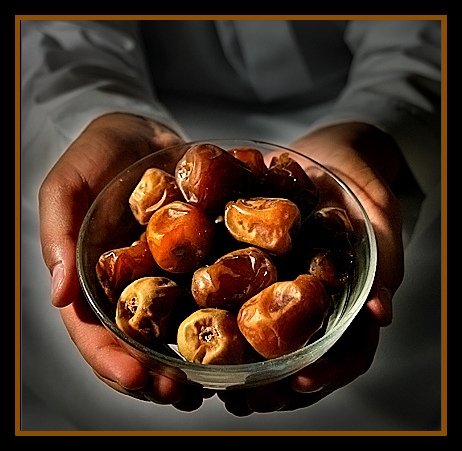
  • “Allah grants the same reward to the one who gives a fasting person to break the fast a mere date, or a drink of water, or a sip of milk (for Iftar).”
  • “This is a month, the first of which brings Allah’s mercy (i.e. the first 10 days), the middle of which brings His forgiveness and the last of which brings freedom from the fire of Jahannum.”
  • “Whosoever lessens the burden of his servants (d cor those under his authority) in this month, Allah will forgive him and free him from the fire of Jahannum.”
  • “And in this month four things you should continue to perform in great number, two of which shall be to please your Lord, while the other two shall be those without which you cannot do. Those which shall be to please your Lord, are that you should in great quantity bear witness that there is no deity to worship except Allah (i.e. recite the Kallimah Tayyibah Laa ilaha illallah) and make much Istighfaar (repentance, beg Allah’s forgiveness with Astagfirullah). And as for those without which you cannot do, you should beg of Allah, entrance into Paradise and ask refuge in Him from Jahannum.”
  • “And whoever gave a person who fasted water to drink, Allah shall grant that giver to drink from My fountain, such a drink where after that a person shall never again feel thirsty until he enters Jannah.”  [Ibn Khuzaimah in his Saheeh]

This Hadith not only signifies the value of Ramadan but tells us how to behave during the holy month. Ramadan takes us out of the usual routine life and places us in a total different scenario while we are doing the same routine tasks. Our behaviour totally changes. Its like a breath of fresh air. Syed Maududi rightly said that it’s a litmus test to check the ‘life’ of a Muslim society.  If there is some life left in a society, it will be evident during Ramadan.

One thing which we should ensure is that we must continue the virtues even after Ramadan.  This is a training workshop of unity, tolerance and piety for 30 days for entire Muslim society and we should learn from it and continue these good habits throughout the year. If we can refrain from ‘Halal’ (permitted) things when ordered by Allah and when we work together in unison, then it’s not difficult to stop ourselves from the ‘Haram’ (forbidden) if we are willing to obey and please the Lord.