Muslim Schools, Hijab and the Media

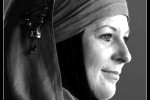
laurenbooth_profile‘I’m not wearing that!’ My 12 year old daughter winces as we examine the bathing suit she must wear for swimming lessons at her private girls school in Manchester. A whole section is cut away from rear ribs to the (very) lower spine. As for the front, well, the thighs of the suit are so high cut the overall effect is less year 8 swim club, than a Rihanna photo-shoot. It serves me right – for not sending my daughter to a Muslim secondary school.

Despite the negative press you may have read about (dread phrase) ‘Muslim Schools,’ both my daughters and I have found the establishments near us to be welcoming, inspiring and (as a mum of teenage girls), with a dress code that is refreshingly, modest.

Our views, based on solid experience of local Muslim schools, are far from the media portrayal of the norm. Just take a look at the headlines. In recent days, two Islamic schools have featured unfavourably. Al-Madinah in Derby, a new 4 -16 Muslim Faith state school, opened just a year ago has been temporarily shut down after its first Ofsted report, closed the gates due to a “health and safety issue.

At the same time one of the only other state Muslim schools in the country, Tauheedul Islam Girls’ High School has been criticised in the press for its dress code. Girls who attend Tauheedul Islam’s High are expected to wear a headscarf to school. And it is this uniform code which has incited negative coverage against this otherwise highly successful state, establishment.

Whilst the mainstream media were seeking a way to tarnish Tauheedul Islam’s Highs excellent reputation, the school, quietly, at the same time, topped a league table of 3,000 UK state establishments. Trinity Mirror’s data unit, backed by academics compiled the list seeking to give a ‘comprehensive’ view of the quality of schools UK wide. The data focused on academic results, teaching quality, and – crucially – the behaviour and prospects of its pupils. Tauheedul ranked the best in ALL these departments.

It is a sign of the mainstream media’s political agenda that to date no daily paper has followed up this story with a positive request (as would usually be the case) for glossy interviews with faculty staff and headteachers.

Thus British readers of anything but a single newspaper are unaware that an Islamic School in Britain currently ranks as the best in the country according to the most recent and very comprehensive study, a school that also has the highest approval of parents, pupils, local government and policy makers in Whitehall. No mean feat in the current climate.

Bizarrely, when I speak to a department editor she insisted that; That league table was from years ago. It’s not recent. It’s old. But I’ll check.’

I call back sometime later and point out that the report was printed two days earlier and is new.

‘Hmm, still can’t verify it’ which is odd as the page is easily found via a way out new-fangled gizmo called Google. Why is she so reticent to repeat the findings? What she said next was both offensive and revealing We just don’t believe everything that head teacher tells you, Lauren, so make sure you check these things carefully.’

Hinting that a head teacher is massaging figures that have been released in a national daily independently of the school is a stunning insult. One I cannot imagine being made of any other head teacher of high standing. Or anything bar criminal standing for that matter.

In the end it took a personal interview, to accompany the article I wrote – recognising the legitimacy of Tauheedul’s great results, to push the Sunday Times to revisit the theme of modesty in school uniforms for girls. Oh and my actual piece? In the end did not appear in the actual paper but only in the online edition and even then it is only available to subscribers. Meanwhile, my interview on girls modesty in schools being a positive was published in the corner of a page whose main story was British imams willing to marry girls of 14 in secret.

British papers want readers to fear the ‘spectre’ of  Islam. Yet, the argument for firm moral guidance and a sense of community, being central to schools is completely ‘on message’ with current government thinking.

Michael Gove the Education Secretary has spoken clearly about the role of schools in effecting positive changes in students’ lives beyond the national Curriculum norms and well into the realms of social mentoring. He has insisted that schools have a major role to play in “promoting stability” in children’s lives.

“There’s nothing worse if you’re a child than not knowing when bedtime and meal time is, not knowing where mum and dad will be at a particular time,” he said.

“But if you are in a school that’s well run then people insist on discipline and timeliness and they insist that you are polite in the lunch queue and eat with your friends.

“And that discipline is evidence of someone really taking an interest in you; they care enough about you, enough to want you to be part of that community and part of that ordered life.”

During my research it became clear that newspaper editors are using the governments agenda for ‘inclusiveness’ try to focus fury on this element in relation to Muslim schools.

‘After all Lauren, which non-Muslim girl will wear a headscarf?’ asked the editor of an educational supplement.

Certainly inclusion for all who wish to enter a school is an important marker for the right of a faculty to receive state funding and must be observed.

It is not the right of local children to attend the best school whatever their faith I question here. After all Muslim children in the UK have gone to CofE schools and continue to do so. But if we are talking about fairness then let us look at the coverage another faith school received when it was found to have a clearly non inclusive policy. Yesodey Hatorah Senior Girls School in Hackney is a state funded Jewish school. In a recent survey it was found that whilst 37.82 of local community children are amongst the poorest (in need of free school meals). This state school has a quotient of just 1.62 per cent at this level of need, a clear example of selection by stealth – The media response to this scandal?
Silence!

Meanwhile the schools website states that: Charedi homes do not have TV or other “inappropriate media”, such as the internet. Families will also dress in accordance with the strictest standards of modesty’. Now let’s hear what the media had to say about Tauheeduls dress code and pupil expectations.

The Daily Mail, following the lead of the Sunday Times, wrote (Sept 29th 2013); ‘Pupils have to wear hijabs in and OUT of class for the first time at a state-backed school in Blackburn.

The cover-up was ordered at the 800-pupil Tauheedul Islam Girls’ High School where students already have to dress in long purple tunics over black trousers to ensure flesh is not seen. Under the rules, pupils must ‘wear the hijab outside the school and home, recite the Koran at a least once a week’ and not have stationery which shows ‘unIslamic images’ like pictures of pop stars’.

Sounds terrifying right? Let’s break this down.

Pupils must wear hijab at school and home. The school dress code includes hijab, a legally acceptable requirement for a faith school. But no one at the school or on its literature makes the outlandish claim that they would somehow ‘police’ girls once they leave school premises. The school brochure merely states that it is a hope, an expectation that good school practise travels into the home environment. A far softer statement than that made by Yesodey Hatorah Senior Girls School in Hackney which makes it clear that the homes its girls come from shun TV and the internet. A statement of certainty, not of expectation, regarding the way its pupils live outside school.

Tauheedul Islam’s Head teacher Mr Hamid Patel denies the accusations regarding what pupils wear outside school saying ‘This story is wrong. It is totally incorrect to say that pupils are ‘forced’ to wear hijab outside of school.’ And.
‘We are extremely sorry that despite repeated attempts by us to make sure the Sunday Times got their facts right, this newspaper chose to wilfully misrepresent our school.’

Meanwhile, British children are crying out for greater guidance and support. A report released this week reveals a 30 per cent rise in 10-14 year olds who self-harm. Let’s be clear what this means; a growing number of our teenagers are taking sharp objects and gouging their skin in an attempt to cut away psychological misery. Young people in the UK are, the report finds, traumatised by a maelstrom of modern pressures. These are listed by the children’s organisations responsible for the report to include; Cyber bullying on social networking websites ‘sexting’ and sexual relationships. The director of campaigns at the Young Minds charity calls the emotional climate our children live in “unprecedentedly toxic” with ever younger children being affected.

There is no doubt that the pressures on girls to be ‘hot’; to wear ever skimpier clothes in order to impress hormonal boys (and male teachers), plays a large part in this environmental disaster. We, as parents, play our part, when we ignore or even endorse this sense that school must be cool, including the uniforms.

My girls and I accepted Islam as our religion, three years ago. And after watching me change from a mother, who drank alcohol to a parent at peace (and teetotal), and with their own growing understanding of the basic tenets of Islam (the essential one being that; ‘God is One) both Alex and Holly embraced, this lovely, clean living, faith. My 10 and 12 year old daughters have before (and particularly since) revealed a natural instinct – and a confidence – in their preference, towards covering themselves up in public. Walking down the high street yesterday, Alex noted the school girls with skirts hiked up mid-thigh. Instead of envying the girls physically she said;

The poor things, how horrid to feel you have to be half naked to impress boys.’

As the Northern drizzle pounds our car, Holly puts it more simply. ‘That looks stupid AND cold.’
Sounds weird to our ears doesn’t it? Like our grandmothers speaking rather than modern adolescents. And that’s the point.

The strength of my daughters views on the subject of modesty. A theme of contention in homes, which causes parents either agony or outrage – has surprised me. In a society where so much of ourselves is wrapped in how we are ‘packaged’ or how much ‘beauty’ we can create with modern hair and make-up products. Children are increasingly the victims of a culture that creates female insecurity and sexual victimhood whilst dressing it up as ‘freedom’ and ‘liberation.’ But isn’t it us, and our weak institutions, who put them at risk first?

Instead of being repelled at the idea of modesty at girls schools, British parents should be welcoming a return to uniforms which, to be frank, are not so far off what we ourselves were ‘forced’ to wear.

It is Islamic schools which are a part of a growing positive march towards greater sartorial modesty for girls at school. And they are far from alone. The grotesque pressure on young women to adopt the ‘sexy schoolgirl’ look now a fashion staple from pop videos to men’s magazines has secondary and even primary head teachers making radical uniform amendments. This summer, parents nationwide cringed at the case of Jeremy Forest and the 15 year old pupil he seduced. Now the school he taught in, Bishop Bell Church of England School, East Sussex, wants pupils to have the ‘highest standard’ of appearance. We aren’t talking a new school badge here we are talking about a ban on make-up for girls below school year 10 (ages 14 to 15). And further, a directive to parents from the school office read: “Figure-hugging tight, skinny-fitting styles are not acceptable. Trousers are required to be loose around the ankles without Lycra or similar.”

Nail varnish, body piercings and most items of jewellery have also been deemed ‘not acceptable’.

Yet should a Muslim school outline such a dress code, there is an attempt to create a public and a political outcry

Far from being outraged, a growing number of parents will agree that there are ethical, moral reasons for strict clothing rules for secondary school girls. Indeed skirt bans currently exist in 63 secondary schools nationwide. The overwhelming majority NOT Islamic.

When I was at Copthall Girls school, sometime in the last century, I remember being sent home by Deputy dragon Mrs Wilson for ‘not wearing a skirt but a PELMET Booth!’ I also remember the girls flirted so much with the Sting lookalike Geography teacher he had a nervous breakdown.
In hindsight, how innocent our hitched skirts and batted (bare) eyelashes seem to the hyper sexy looks adopted by this generation. Aided and assisted not only by peer pressure but a weakened sense of social morality across the board in our society.

As for my daughters.
The eldest has chosen to wear hijab to her non Muslim secondary school. Teh faculty of which are very receptive to girls religious choices. Alex says the hijab makes her feel ‘clean and protected.’ My youngest, Holly, is keen to attend the Manchester Muslim High school and currently wears hijab at the Islamic Prep she attends – as part of the uniform.
At the end of the day, back at home, they both take them off to do their homework changing into sweat pants and t shirts.
We are all delighted that no one outside the family will see their knobbly knees or any other part of their girlishness in the coming years and certainly NOT on school grounds where the institution has a duty to protect both their wellbeing.

How I Came to Love the Veil

YvonneRidleyVeilPoliticians and journalists just love to write about the oppression of women in Islam … without even talking to the females beneath the veil.

They simply have no idea how Muslim women are protected and respected within the Islamic framework which was built more than 1400 years ago.

Yet, by writing about cultural issues like child brides, female circumcision, honour killings and forced marriages they wrongly believe they are coming from a point of knowledge.

And I am sick of Saudi Arabia being cited as an example of how women are subjugated in a country where they are banned from driving.

The issues above have simply nothing to do with Islam yet they still write and talk about them with an arrogant air of authority while wrongly blaming Islam. Please do not confuse cultural behaviour with Islam.

I was asked to write about how Islam allows men to beat their wives. Sorry, not true. Yes, I’m sure critics of Islam will quote random Qur’anic verses or ahadith but all are usually taken out of context. If a man does raise a finger to his wife, he is not allowed to leave a mark on her body … this is another way of the Qur’an saying; “Don’t beat your wife, stupid”.

Now let’s take a glance at some really interesting statistics, hmm. I can almost hear the words pot, kettle, black. According to the National Domestic Violence Hotline, four million American women experience a serious assault by a partner during an average 12-month period.

On the average, more than three women are murdered by their husbands and boyfriends every day . . . that is nearly 5,500 women battered to death since 9/11.

Some might say that is a shocking indictment on such a civilized society, but before I sound too smug, I would say that violence against women is a global issue. Violent men do not come in any particular religious or cultural category. The reality is that one out of three women around the world has been beaten, coerced into sex or otherwise abused during her lifetime. Violence against women transcends religion, wealth, class, skin colour and culture.

However, until Islam came on the scene women were treated as inferior beings. In fact we women still have a problem in the West where men think they are superior. This is reflected in our promotion and wages structure right across the spectrum from cleaners to career women who make it into the boardroom.

Western women are still treated as commodities, where sexual slavery is on the rise, disguised under marketing euphemisms, where women’s’ bodies are traded throughout the advertising world. As mentioned before, this is a society where rape, sexual assault, and violence on women is commonplace, a society where the equality between men and women is an illusion, a society where a women’s’ power or influence is usually only related to the size of her breasts.

I used to look at veiled women as quiet, oppressed creatures and now I look at them as multi-skilled, multi-talented, resilient women whose brand of sisterhood makes Western feminism pale into insignificance. My views changed after the truly terrifying experience of being arrested by the Taleban for sneaking into Afghanistan in September 2001 wearing the burka.

During my 10-day captivity I struck a deal that if they let me go I would read the Quran and study Islam. Against all the odds, it worked and I was released. In return I kept my word but as a journalist covering the Middle East I realized I needed to expand my knowledge of a religion which was clearly a way of life.

And no, I’m not a victim of Stockholm syndrome. To be a victim you have to bond with your captors. During my imprisonment I spat, swore, cursed and abused my jailers as well as refusing their food and going on hunger strike. I don’t know who was happier when I was released – them or me!

Reading the Quran was, I thought, going to be a very simple academic exercise. I was stunned to discover that it clearly stated women are equal in spirituality, education and worth. A woman’s gift for child birth and child-rearing is very much recognised as a quality and attribute. Muslim women say with pride they are homemakers and housewives.

Furthermore The Prophet (pbuh) said that the most important person in the home was The Mother, The Mother, The Mother. In fact he also said that heaven lies at the feet of the mother. How many women make it into the top 100 power lists for simply being a “great mother”?

With Islam choosing to remain at home and raise children takes on a new dignity and respect in my eyes, similar to those sisters among us who choose to go out to work and have careers and professions.

I then began looking at inheritance, tax, property and divorce laws. This is where Hollywood divorce lawyers probably get their inspiration from. For instance the woman gets to keep what she earns and owns while the man has to stump up half his worth.

Isn’t it funny the way the tabloid media gets very excited over the prospect of some pop or film stars pre-nuptial wedding agreement? Muslim women have had wedding contracts from day one. They can choose if they want to work or not and anything they earn is theirs to spend while the husband has to pay for all the household bills and the upkeep of his family.

Just about everything that feminists strived for in the 70s was already available to Muslim women 1400 years ago.

As I said, Islam dignifies and brings respect to motherhood and being a wife. If you want to stay at home, stay at home. It is a great honour to be a home maker and the first educator of your children

But equally, the Quran states if you want to work, then work. Be a career woman; learn a profession become a politician. Be what you want to be and excel in what you do as a Muslim because everything you do is in praise of Allah (swt).

There is an excessive, almost irritating concentration or focus on the issue of Muslim women’s’ dress particularly by men (both Muslim and non-Muslim).

Yes, it is an obligation for Muslim women to dress modestly but, in addition, there are many other important issues which concern Muslim women today.

And yet everyone obsesses over the hijab. Look, it is part of my business suit. This tells you I am a Muslim and therefore I expect to be treated with respect.

Can you imagine if someone told a Wall Street executive or Washington banker to put on a t-shirt and jeans? He would tell you his business suit defines him during work hours, marks him out to be treated seriously.

And yet in Britain we have had the former Foreign Secretary Jack Straw describing the nikab – the face veil revealing only the eyes – as an unwelcome barrier. When, oh when, will men learn to keep their mouths shut over a woman’s wardrobe?

We also had Government Ministers Gordon Brown and John Reid express disparaging remarks about the nikab – both these men come from over the Scottish Borders where men wear skirts!!

Then we had a series of other parliamentarians enter the fray describing the nikab as a barrier for communication. What a load of nonsense. If this was the case can anyone explain to me why cell phones, landlines, emails, text messaging and fax machines are in daily use? Who listens to the radio? No one switches off the wireless because they cannot see the face of the presenter.

The majority of sisters I know who choose to wear the nikab are actually white, Western reverts who no longer want the unwelcome attention of those few leering men who will try and confront females and launch into inappropriate behaviour. Mind you, there are a couple of London sisters I know who say they wear the nikab at anti-war marches because they can’t stand the smell of spliffs.

I am afraid Islamophobia has become the last refuge of the racist scoundrel. But the cowardly, chauvinistic attacks launched – largely by men – is unacceptable to Muslimahs as well as their secular, female sisters from the left.

I was a feminist for many years and now, as an Islamic feminist, I still promote women’s’ rights. The only difference is Muslim feminists are more radical than their secular counterparts. We all hate those ghastly beauty pageants, and tried to stop laughing when the emergence of Miss Afghanistan in bikini was hailed as a giant leap for women’s liberation in Afghanistan.

I’ve been back to Afghanistan many times and I can tell you there are no career women emerging from the rubble in Kabul. My Afghan sisters say they wish the West would drop its obsession with the burka. “Don’t try turning me into a career woman; get my husband a job first. Show me how I can send my children to school without fear of them being kidnapped. Give me security and bread on the table,” one sister told me.

Young feminist Muslimahs see the hijab and the nikab as political symbols as well as a religious requirement. Some say it is their way of showing the world they reject the excesses of Western lifestyles such as binge drinking, casual sex, drug-taking etc.

Superiority in Islam is accomplished through piety, not beauty, wealth, power, position or sex.

Now you tell me what is more liberating. Being judged on the length of your skirt and the size of your cosmetically enhanced breasts, or being judged on your character, mind and intelligence?

Glossy magazines tell us as women that unless we are tall, slim and beautiful we will be unloved and unwanted. The pressure on teenage magazine readers to have a boyfriend is almost obscene.

Islam tells me that I have a right to an education and it is my duty to go out and seek knowledge whether I am single or married.

Nowhere in the framework of Islam are we told as women that we must do washing, cleaning or cooking for men – but it is not just Muslim men who need to re-evaluate women in their home. Check out this 1992 excerpt from a Pat Robertson speech revealing his views on empowered women. And then you tell me who is civilized and who is not.

He said: “FEMINISM ENCOURAGES WOMEN TO LEAVE THEIR HUSBANDS, KILL THEIR CHILDREN, PRACTICE WITCHCRAFT, DESTROY CAPITALISM AND BECOME LESBIANS”.

Here is an American man living in a pre-Islamic age who needs to modernize and civilize. People like him are wearing a veil and we need to tear that veil of bigotry away so people can see Islam for what it is.

Yvonne Ridley 

Why is My Hijab, Your Problem?

I am a woman, not a sexualized commodity; I am a human being just like you are.

I am a Hijabi and Hijab is my identity and my ideology.

I wasn’t a Hijabi by birth, nor did it come from an oppressing ‘Mullah’ father or brother. Oh no! No one can force me to do something which I do not want to do. It only came when I came to explore the message of God which I had been reading since childhood in Arabic and never knew what it meant as it’s not my first language. It started to make sense when I decoded it into a language which I could understand; Thanks to those scholars who made it a mission of their lives to transliterate the word of God for our convenience.

The importance of observing hijab for me gradually became connected to my belief in God and the question I asked myself often.

“I believe in God and His word, I love the Prophet (SAW) and for me the characters and dress code of Aisha and Fatima (Peace be upon them) are role models, then how come whenever I see a Hijabi,  I relate it to backwardness.”

All these claims don’t fit into one frame and there began the war of ideas in me:

“You tell me Hijab is backward and you still are a proud non-apologetic Muslim, it can’t be true!”

It’s a part of my personality just like a Jewish kippah and Christian and jewish ‘hijabs’, my message of peace that I wear with pride. It’s about letting the world know, not to mess around with me as I (try to) keep my chastity and obey my Lord.

I am no slave of the corporate capitalistic industry which is bent upon publishing a naked woman to sell everything from a cigarette to a racing car.

It gives me liberation; freedom from being judged on a scale of inches, skin colour and figure details. I am free from the shackles of man, eyes of the evil world who evaluate women according to the length of her skirt and depth of her neckline; intelligence and character being secondary. (Ask a competent man who was rejected by a multimedia company in an interview and his beautiful and sexy but dumb competitor got the job).

With this piece of cloth on my head, I feel empowered as a woman. But a section of our society seems to have a problem with it. Some self-proclaimed Pakistani liberals labelled Hijab as a “dinner table napkin “or “solution of a bad hair day”.What is the world scared of, I wonder?

Think!

If you think my hijab tapered my IQ and threw me into the desert of Arabia some 1400 years behind, I seriously doubt yours. Remember how the prehistoric man lived?

What was the killer of Marwah Al Sherbini scared of? Was this 32-year old, three month pregnant pharmacist, a loving wife and a mother of a two year old, a threat to the world? Oh, mind you she was called a whore, a terrorist and stabbed 18 times in the German court and killed.

Was Shaima Alawadi a hazard? The loving mother killed and turned into a pool of blood in her house in America with a note next to her saying: “Go back to your country, you terrorist.”, was she a terrorist? No; her killers were! Racists and myopic terrorists scared of a defenceless woman with a piece of cloth on her head.

Are Hijabis the biggest threat in the French and other European societies that are banning hijab? Think!

Oh you thought I don’t have a choice? No! I have one and hijab is my choice just as obeying Allah and disobeying Him in rebellion is my birth right due to being a human being and I choose the former.

And in case you didn’t notice, some very successful women in the West are turning to Islam and opting for covering their bodies with modesty and have found peace.

I quote Yvonne Ridley, a journalist who reverted to Islam after she explored the Quran as a promise she made to Taliban, her captors in Afghanistan.

‘My dress tells you that I am a Muslim and that I expect to be treated respectfully, much as a Wall Street banker would say that a business suit defines him as an executive to be taken seriously. And, especially among converts to the faith like me, the attention of men who confront women with inappropriate, leering behaviour is not tolerable.’

Think rationally and decide! Why is my Hijab, a problem for the world?

Hijab – A Responsibility

A man’s perspective on Hijab usually raises eyebrows from the leftist elite. It might be termed as male chauvinism immediately. A lot of women will say that it is our business so men should stay away from it. Is it really so that men aren’t affected with what women wear? Some self proclaimed Islamic scholars will immediately say that men should lower  their gaze before they talk about women’s clothing and they do not need see a woman if they cannot control their urge. Well if lowering the gaze was the ultimate solution, why the Quran made hijab mandatory for Muslim women at all? The source of attraction is there after all, so Quran ordered both men and women to be modest.

Much has been written about the fundamental rights of Muslim women observing hijab. Salutes to sister Marwah Sherbini who embraced martyrdom for hijab. She was the victim of racist attitude just because she was a Muslim obeying the orders of Allah. Many more sisters have faced similar issues especially after 9/11, making the debate of hijab a political one as well. It is ironic that no one has objection over Christian nuns who cover themselves in a certain way dawn to dusk, even when they are amongst fellow nuns but a covered Muslimah attracts all criticism.

There is another dimension to it. Hijab is not merely a piece of cloth. It’s a way of life. It is an entire package which revolves around the character which is required to observe it. Expectations immediately arise from all those who are practicing hijab. Wearing a hijab or growing a beard, for that matter, shouldn’t automatically mean that you are safe  or cleansed from sins. But people around you are more judgmental and keenly observing your attitude. Most people won’t bother if a non-hijabi ‘muslim’ woman is drinking alcohol, but will definitely question the morals of a hijabi girl who is drinking alcohol. The attitude and behaviour of those observing hijab becomes very important. Some women, who observe hijab and clearly preach religion to others fail to practice it in their personal lives and as a result, repel people away from religion. We have hypocrites among us, having double standards for themselves and for others which are creating more problems. I have come across women wearing headscarf but having worst morals. A friend of mine usually say ‘yeh pardah kabhi kabhi apno’n se kia jata hey k koi pehchan na le’, pointing towards the dating couples in which females use veils to hide their identity.

Does it mean that hijab or religion is to blame? Certainly not! Hijab (and beard) should not be taken as a synonym for religiousity. A change in mindset is a prerequisite for hijab. If anyone observes it without realizing the real meaning, she is not doing justice with it. Hijab is never meant for oppression, it is meant for protection. The concept of hijab, pardah, abaya should be well understood and followed in letter n spirit.

Women are being objectified in multi billion dollar fashion industry and advertisement world. Call it liberty, but it is worst form of slavery and no doubt even hijabis are falling for this fashion buzz.  Hijab is becoming a fashion statement.  No, Hijab is not a fashion. It’s purpose is to protect a woman and not to make her more attractive.

Those who object the hijab also have some weird reasons. Some say that they don’t want to wear their religion on their sleeve, therefore, they are not observing hijab. Others are frightened of being judged as backward. Well, a Muslim should look like a Muslim from his or her turnout. That’s what he or she is; a Muslim. Religion is not something to hide or being shy about. So if a Muslimah is practicing hijab, it is not something very unique; she is supposed to do that. Hijab doesn’t mean she is very virtuous and pious. Intentions do matter a lot in these cases. The point I want to make is that don’t make it something too big or too extraordinary, observing hijab should be a normal practice for all Muslim women. But there should be an understanding that it is a complete lifestyle which brings a lot of responsibilities and obligations as Muslims.

The good thing is that hijab is growing and more and more women are opting for it. But my request would be don’t judge anyone on the basis of hijab. Its an obligation for Muslim women, don’t politicize it. And if someone is misusing these symbols, don’t generalize.

My Hijab – My life

Having grown up in England I knew that there will always be people who would not know what hijab meant and many view it as oppression to women. I was however, lucky enough to grow up in a multi-cultural environment where a girl wearing the hijab was normal to see. So I didn’t know that people may react negatively to my hijab until I started university.

My hijab is so much a part of me that I feel naked without it, but it does come with its own challenges. I faced my biggest challenge when I started university, studying Physiotherapy.

In a class full of non-Muslim students who didn’t really know what the concept of hijab was or why I wouldn’t wear shorts or pairing up with boys to practice the treatment techniques we learnt in the class I often felt left out and somewhat uncomfortable. People were awkward around me and I didn’t feel like I belonged in this class. But I was determined to become a physiotherapist whilst still maintaining my hijab.

As the course progressed, my classmates became used to seeing me and the way I dressed so I wasn’t so much of a strange sight anymore and they became more comfortable around me. I was so glad, Alhamdulillah, that I hadn’t been tempted to compromise my hijab to ‘fit in.’ I had been able to maintain my hijab, gain more confidence and still complete my degree. Especially coming from a Pakistani background where many people think physiotherapy is an inappropriate career for a Muslim girl due to the university environment and professional requirements.

There are a few things that I had to remind myself time and again, and helped me get along in a totally challenging environment.

• Be confident in wearing and maintaining your hijab, it is a gift from Allah.
• Discuss with the tutors your hijab at the beginning of your degree to get rid of any concerns you or they may have.
• Be strong and try not to compromise your hijab out of fear that you may be seen as strange and not fit in. Remember the hadith of the Prophet (saw)

“Islam began as something strange and will revert to being strange as it began, so give glad tidings to the strangers.” (Muslim).

• If you respect your hijab, so will the tutors and your classmates.
• Discuss the hijab with your classmates to help them understand and remove any misconceptions they have. Provide them with leaflets or booklets..
• Study and learn about the hijab, why you wear it, how you should wear it. It will help to maintain your hijab and even teach others about it. Remember it is not just a piece of cloth that covers your hair.
• Join the Islamic society at your university, they can help and support you throughout your university life.
• Constantly renew your intention of wearing hijab. Remind yourself what you’re wearing is for the sake of Allah and it will insha Allah become easier for you to maintain your hijab.


To cover or not to cover – That’s the question!

Lately, I have read at least two well-written articles on the ‘hood and hijab’ issue, or the choice to cover and how that head-covering can lead to many conclusions: freedom, oppression, discrimination, objectification, and in some cases even death. The topic to cover or not to cover, to cover partially, to cover completely, to uncover partially, to uncover completely is a hot and debatable one; clearly, because there are at least five options to answer this elusive multiple choice question (MCQ). Everyone seems to look at this question with an objective stance, but strangely so, objectivity is a slippery slope, and somewhere down the journey to the summit of being purely reasonable, one slips into subjectivity. That is normal for everyone to have a bias. A choice indicates a bias. But when it comes to answering this MCQ, something more than a choice is needed to motivate any of those five options. And this is where the fallacy of the argument lies. To cover or not to cover (and other branching shades of opinion) is really not a matter of choice. It is a matter of belief.

Anything that is a matter of belief, quite simply put, cannot be and should not be evaluated through logic, although many people believe that all beliefs are logical, or should be proven through logic. Belief, however, is something purely emotional, and through the certainty of that emotion it might ascend to logic, or rather logical justification, but that in itself begs the question. An argument between an atheist and a theist is doomed to fail. They cannot be objective about their claims. An atheist believes that there is no God; a theist believes otherwise. And then they build their house of cards in which logic is appealed to, to justify and substantiate their beliefs. It is a matter of belief that God had a conversation with Moses. It is matter of belief that Jibrail had, and continued to have conversations with Muhammad (SAW). It is matter of belief that Holy Scriptures are not just stories written by idle minds and eloquent hands. It is a matter of belief that for someone they are just stories written and read to be inspired, or to inspire fear or love, that angels and God don’t exist and it is all a huge delusion of comfort and convenience. But even the delusionary are now questioning the authenticity of their claims, and so are recruiting to the idea of agnosticism, not either-or, but neither-here-nor-there. It all boils down to belief, and the conviction of that belief.

Now, the argument for the whole covering up issue is that it is professed as a matter of choice. Some can best define it as a moral choice. But then again who defines morality? Those who don’t do it think that it gives them liberation. Those who do it think it’s liberating. I came across a cartoony rendering of this idea: there are two women, one is dressed in a burqa with only her eyes visible, the other in a bikini, with only her eyes covered by sunglasses, and each looking at the other feeling sorry, the burqa-clad saying, nothing covered but her eyes, what a cruel, male-dominated world, and the bikini-clad saying, everything covered but her eyes, what a cruel, male-dominated world.” The choice therefore is an either-or, and the denomination, as claimed by one writer who wrote vehemently against covering up (while thinking all along how objective the analysis was): it’s a cruel, male-dominated world that motivates or compels a woman to cover. Well, there is no doubt that the world is cruel and male-dominated. But the motivation and/or compulsion felt by a woman to observe purdah is what really needs to be analyzed. In actuality for those who believe in the idea and the act of covering up, it’s not a matter of choice, even though it is now construed as such due to convenience (on part of the construer). It might become that, but the choice is rooted in a belief in the idea that morality is not secular, that morality comes from some direction, that direction has to be perfect, and that perfection cannot come from man who is fallible and is known to err, but from the Divine that is infallible, and is known to forgive.

I am not going to present elaborate and innumerable religious citations to justify this point of contention. But I will present a secular maxim that is quoted often enough: when in Rome, do as the Romans do. Now if we are to extend this maxim to a metaphor, and equate the idea of Rome to the faith Islam, then the principle that becomes operative is to do as the Muslims do. And those who believe in the idea, ideology and idealism that Islam has offered, achieved and sought would agree that the best and real Muslims were those when Islam actually came into being, historically speaking. And as it’s best to lead and easy to follow by example, we had Prophet Muhammad (SAW) demonstrate the faith in every way and form. And just as some things never change, we had a cruel, male dominated society even back then – that’s why it was called the Age of Ignorance that the ‘new’ faith sought to enlighten. But it was not the male voice of that enlightenment that asked the women to hush up their individuality, sit in a dark corner and cover up. The commandment, however, was just the last bit: to cover up. Hence it was not, and never a matter of convenient choice. The women heard not the voice of the man who forwarded this commandment, but the commandment itself. The women never followed the man in action; they had their own models and examples to follow and be led by i.e. the Prophet’s wives. So this current claim that covering up should be contextualized as being historically relevant with no place in current times and therefore should be shelved itself at least for those who believe in Islam, and the application of the Roman maxim.

And, now comes the troubling and ever-elusive subject of modesty – the rationale behind covering up. One of the authors expressed her disapproval by stating that modesty cannot and should not be achieved through covering up. I cannot agree more – at least with the former claim. Modesty is a state of mind, a humble mind. But that state of mind is purely subjective, like a bias. A woman from a Muslim nation can put up naked pictures of herself on her blog to reveal her justified rebellion. Her intention in her mind at least is perfectly noble. However, someone who is viewing her nakedness and reveling in what she is revealing renders the protest redundant: she is seeking to inform others of how she was objectified and sexually assaulted, but someone is just pleasing their virility by simply not lowering their gaze and looking at her. The sexual assault and objectification that she was protesting against is being repeated. Not physically of course. But mentally – and the mind knows no inhibitions especially when the stimulus is so graphic. Those who fuel the porn industry can testify to this. So, a pure intention is being marred by the action. You can cover or not cover, but you cannot guarantee what the onlooker is thinking or feeling or imagining. Wearing a burqa (or not) does not guarantee that you are exempted from being an object. That’s why men were asked to lower their gaze first, an expression that was to achieve modesty of the mind and body, intention and action. And the culmination of that claimed modesty – if it was there in the first place – should be manifested in totality, in all four: mind, body, intention and action. You can intend that my intention is not to arouse, but if you’re giving them something to look at (or even nothing to look at for that matter), they’ll still get aroused – a simple biological reflex, stronger in some than in others, but present nevertheless. The burqa can be considered as a necessary and convenient filter. But there are no guarantees.

To cover or not to cover, that is the question! That’s a matter of belief and your choice to subscribe to that belief – and its own package deal. Covering up does not guarantee that you’re ending up in heaven. Neither does not covering up. It’s a popular understanding, that those who cover their faces with a cloth or a beard are the most corrupt and vindictive scum of the earth, or even terrorists for that matter – a hasty generalization of course, as was the case with Travyon Martin and Shaima Alawadi. But the resentment is justified, for those who do cover in the name of faith are bearing an emblem of piety, and to not fully meet the standards of the piety that that emblem should’ve intended to generate in the first place is a mockery of both the emblem and the professed piety. And piety is a private matter of the heart. No human can or should be a judge of that. Piety cannot be achieved by merely donning a garment, or shunning it. One has their whole life to practice the part and to perform. The applause (or the boos) will follow later. And the choice to agree to the metaphor and be convinced of its truth is an open question: a matter of belief.