 1. Introduction

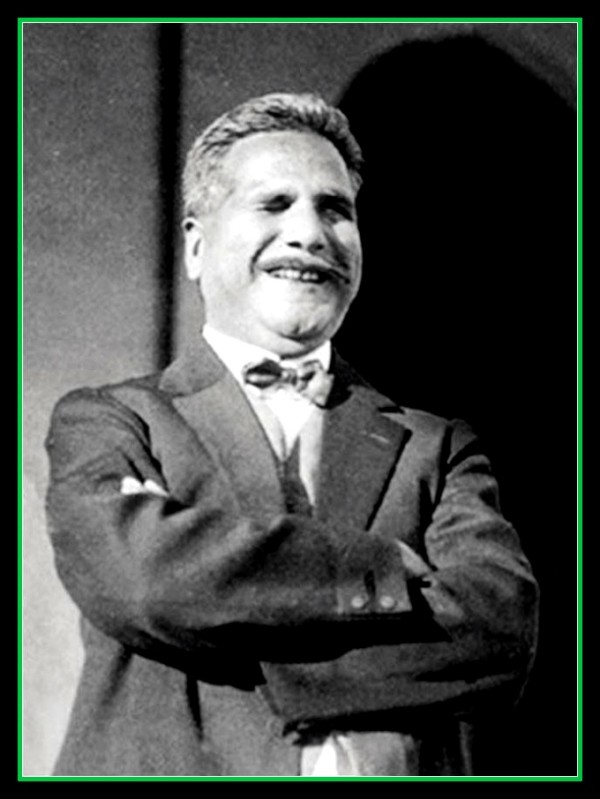
‘Muhammad Iqbal – lawyer, jurist, and poet – rests in a simple tomb just outside the main entrance to the Badshahi mosque in Lahore. That simple tomb is a place of pilgrimage to me. For Iqbal was a man who belonged to all races; his concepts had universal appeal. He spoke to the consciences of men of good will whatever their tongue, whatever their creed’. Justice William O’Douglas, Associate Justice, The Supreme Court of the United States of America.[1]
Iqbal (1877-1938) holds a place of remarkable importance among contemporary Islamic thinkers. He was born on 9 November 1877 in Sialkot, a small town in the Punjab region of British India in modern-day Pakistan. His early education was from Scotch Mission College, Sialkot and he learnt the Quran and the Arabic language in a local mosque school. Iqbal went on to study Arabic, English Literature and Philosophy at Government College Lahore, the best institute of higher learning of the time in the subcontinent,[2] and graduated cum laude in 1897 with a scholarship for further studies.[3]By the time he did his masters in Philosophy in 1899, Iqbal was already recognized as a promising young poet in literary circles of Lahore.[4] In 1903, he published his thesis on Economics titled Ilm-ul-Iqtesad (The Science of Economics). He left for Europe in 1905 and joined Lincoln’s Inn to qualify for the Bar and also enrolled at Trinity College, Cambridge while simultaneously submitting his PhD dissertation in philosophy to Munich University.[5] After returning to Lahore in 1908, over the next ten years, he emerged into public life, both in his province and in Muslim India.[6] Iqbal’s poetical works alone include four volumes of Urdu and seven volumes of Persian poetry.[7]
Professor Arberry remarks that no Muslim author in modern times has provoked so much discussion and varying interpretation – a sure proof of relevance and fertility of Iqbal’s ideas.[8] Smith claims that since Iqbal was anti-capitalist, and capitalism fosters intellect, hence Iqbal was anti-intellect.[9] On the other hand, Hussain argues that Smith’s concept is a misconstruction of Iqbal for the sake of defending capitalism.[10] Abbot was another objector to Iqbal’s views saying that Iqbal was unable to picture the West apart from imperialism[11] and that Iqbal was not immersed enough in Western culture to fully appreciate the various benefits of modern democracy, economic practices and science. Interestingly, Abbot himself mentioned in the same writing that Melville and Emerson found the same flaws in Western Civilization as Iqbal did.[12] This led Hussain to argue that Abbot’s objection is hollow and unfounded, since Iqbal was raised and educated in European institutions even in India, was taught by European teachers, and thoroughly studied Western philosophers and literature.[13]
Professor Anikoy, the Soviet biographer, states that Iqbal passionately condemns weak will and passiveness. He is angry against inequality, discrimination and oppression of all types: social, political, national, racial and religious. He asserts the noble ideals of humanism, democracy, peace and friendship among peoples.[14] According to Kiernan, Iqbal’s poems reflect a complex personality depicting the complexity of a time of changes, attacking a static and torpid thinking and mode of living.[15] While concerned first and foremost with the destiny of his own community, Iqbal seems concerned with the human race in its entirety, which has given his work a universal relevance.[16] Vahid writes that the greatness of Iqbal lies in the fact that he wants to see human life stand on its own dignity, and set itself free from narrow tribal, racial, regional or class bonds and to evolve a brotherhood of man linked together by the ties of humanity’.[17]
Iqbal’s work is an eclectic mix of history, spirituality, philosophy and politics. While glorifying the past and longing for a better future for Muslims, he focuses on spiritual direction and the development of a just human society. Iqbal is called the poet and philosopher of Pakistan. While this title is perfectly well deserved, it is also unjust at the same time, wrongly confining a man with universality in his message and thought to one small area of the world. In addition to a unique status in Pakistan as an ideological founding father and national poet, he is an inspiration in many other countries including Iran, Tajikistan, Kazakhstan, Kyrgyzstan, Turkmenistan, Uzbekistan and India. In Turkey, his symbolic grave stands in the compound of the mausoleum of Maulana Jalaluddin Rumi. In the universities of Heidelberg and Cambridge Universities, there are chairs or fellowships in Iqbal’s name.[18]
Iqbal’s poetry traverses through different phases, which follow the course of political events in colonial India and the wider world. From being a champion of Hindu-Muslim unity to an advocate of a separate Muslim state, Iqbal inherently remains a humanist with hatred towards all injustices and oppression. Iblees ki majlis-i-Shura (The Advisory Council of Iblees) is an allegoric poem that Iqbal wrote in 1936, less than two years before his death. It was published posthumously in Armaghan-i-Hijaz.[19] Dr Shaukat Ali writes that this poem is an imaginative way of expressing his dislike for Western political systems. The verses represent the last phase of Iqbal’s thinking and can be considered to embody his final verdict on the contemporary political scene.[20]Kiernan observes that this is an extremely significant poem of Iqbal in which he made his last approach of passionately denouncing imperialism and capitalism.[21]Raja comments that as a product of colonial system Iqbal exposes Western liberal democracy’s class hierarchies and wealth distribution in this poem, and expresses his longing for a system which offers the best of all other political systems.[22]
Despite extensive and systematic research on Iqbal’s political philosophy, mostly by eastern scholars, it is surprising to see the paucity of scholarly treatment of this particular poem which is a chef-d’oeuvre and covers all of Iqbal’s critiques including of the imperialist and capitalist West, the enslaved and powerless East, sluggish Sufism and inept Muslim leadership. Iqbal also shows his admiration for Socialism and his opposition of Bolshevism, and finally his hope in Islam as a solution for the problems faced by East as well as the West. This paper will analyse the poem and study it in the wider context of Iqbal’s political thought. It will make use of existing scholarship on Iqbal to understand the variety of ideas mentioned in this poem.
2.Influences and Backdrop
Early Years
To follow the evolution of Iqbal’s philosophy, which led him through his journey, it is necessary to discuss his influences and heroes, and the political backdrop that affected and shaped his thought. Iqbal’s father Sheikh Nur Muhammad, affectionately called un-purh falsafi (untutored philosopher),[23] was a religious man who was endowed with the gift of intelligence, piety and mystic temperament of an accomplished Sufi.[24] According to Khalifa Abdul Hakim, Iqbal often said that ‘he did not develop his philosophical Weltanschauung (world view) through philosophical speculation but had inherited it from his parents’.[25]
After the suppressed War of Independence of 1857, Sir Sayyed Ahmad Khan’ Aligarh movement and ‘Nai-Talim’ (a movement to spread modern education of the West) became popular.[26] Western missionaries established the Scotch Mission College in Sialkot in 1889, where Iqbal received his preliminary education. The college offered courses in liberal arts alongside Arabic and Persian.[27] English had replaced Persian as the medium of education. However, the Muslims of the Punjab were inclined to Urdu and poetry was an effective medium of expression of love, lament, humour and philosophy. Lahore was producing and nurturing many young poets. Iqbal became a part of the poetic symposia in Lahore at Bhati Gate where budding poets arranged regular sittings in the centre of the city’s intellectual and cultural activities.[28] Iqbal received his poetic recognition from these symposia which connected him directly to public.
During his early education, Iqbal’s main influence was Maulvi Mir Hassan who taught Persian literature at Scotch Mission College. He was a recognised scholar of Persian and Arabic literature and was appointed as a professor of Oriental Literature at Scotch Mission College due to his pragmatic approach and appreciation of the need of Western education.[29] He was also a supporter of Sir Sayyed’s Aligarh movement. After Iqbal graduated from Scotch Mission College with an award of scholarship, Mir Hassan convinced Sheikh Nur Muhammad to let Iqbal continue his education[30]. It was because of him that Iqbal enrolled to study liberal arts. Iqbal also attended Mir Hassan at home where Hassan cultivated in Iqbal the love of the Arabic language, as well as Persian and Urdu poetry.[31] For Iqbal, Mir Hassan was the first institute of classical poetry.
Iqbal was born the very year the Aligarh University began to function.[32] Sayyed Ahmad Khan’s ideas, his educational societies and Aligarh University had a direct influence on Iqbal’s views.[33] Sayyed’s views were a mixture of ideas; on the one hand there was the anti-imperialist ideology of a nationalist, and on the other, the pro-British communalist ideology of the elite.[34] Iqbal followed Sayyed’s patriotic unity of Hindus and Muslims and his teachings of national self-help. He also accepted the necessity of vigorous activity by man in the name of social good.[35] However, Iqbal did not share his pro-British orientation.[36]
In 1904, at the Annual session of Anjuman-i-Himayat-i-Islam, Iqbal recited his poem ‘Taswir-i-dard’ (Portrait of Anguish), lamenting the lack of unity in the enslaved India, urging it to awaken from its political slumber.[37] He took the task of a revolutionary poet and a religious reformer to awaken people’s patriotic feelings and to teach them how malicious foreign domination was for the entire population of colonial India, regardless of religious, ethnic, and social affiliation.[38] Iqbal compared India to a captive bird in his poem, Parinde Ki Faryad, (The Bird’s Lament). He wrote Sada-i-Dard (A Cry of Pain) after one of the Hindu-Muslim clashes on the eve of revolutionary uprising of 1905-1909.[39] Iqbal’s poems were about the necessity of overcoming internal differences. While colonial authorities were inclined to split country’s national forces, Iqbal was motivated to make a naya shiwala (New Temple) in which religious barriers would disappear and love for mother India would prevail.[40]
Thomas Arnold
The most substantial influence on Iqbal’s intellectual development at the Government College Lahore came from Sir Thomas Arnold, an accomplished scholar of Islam and modern philosophy and a renowned orientalist of his time.[41] According to Muhammad Shibli Naumani,[42] Arnold was the best living example of Europe’s virtuous conduct and praiseworthy character.[43] Unlike most missionaries who presented Islam as the religion of sword, Arnold wrote a ground breaking study ‘The Preaching of Islam’ emphasizing the peaceful propagation of Muslim faith.[44] Iqbal loved and revered Arnold, whose knowledge of Western philosophy and Arabic literature inculcated in Iqbal, a happy melange of East and West.[45] He persuaded Iqbal to pursue higher studies in Europe. In 1904, when Arnold left India, Iqbal composed a beautiful poem, Nala-i-Firaq (Lament of Separation). He followed Arnold to England due to his persuasion and his own quest for learning.[46] During his three years in Europe, Iqbal composed twenty four small poems.[47] While his poetry was causing a stir in India, he couldn’t see the usefulness and effect of his words while in Europe. At one stage he even made up his mind to abandon poetry and put his time and energy into ‘something more useful.’[48] While his friends tried to persuade him to the contrary, the only voice that could convince Iqbal to continue expressing himself through poetry was Sir Arnold’s. Iqbal’s Ph.D. dissertation in Philosophy to Munich University, ‘The Development of Metaphysics in Persia’ was also dedicated to Sir Arnold.
Professor Arnold had a deep confidence in Iqbal’s abilities. According to Atiya Faizee, when Arnold asked Iqbal to examine some rare Arabic manuscripts discovered in Germany, Iqbal humbly pleaded that he was only a novice as compared to him.[49]. Sir Arnold’s confidence and pride in Iqbal was evident when he replied, ‘Sometimes a student excels his teacher.’ Iqbal immediately surrendered at this and bowed his head in submission.[50] Faizee writes that all this was expressed with so much finesse and courtesy that it constituted a perfect specimen of the art of verbal duelling between intellectual and cultivated people.[51] Sir Arnold’s confidence was matched by Iqbal’s deep respect for his teacher.
Exposure to Europe
Iqbal’s years in Europe strengthened his commitment to Islam, distanced him from Sufism and reinforced his resolve to reconstruct Islam with modern science and philosophy of the West.[52] Iqbal enrolled as an undergraduate student at Trinity College despite having Masters in Philosophy from the University of the Punjab. This brought him close to the lectures of the neo-Hegelians, John Mc Taggart and James Ward, who lectured at Cambridge to the undergraduates.[53] He also came to learn from two outstanding orientalists E. G. Brown and Reynold Nicholson.[54] When Iqbal’s Persian masterpiece, Asrar-i-Khudi (Secrets of the Self), was published in Lahore in 1915, Nicholson read it soon afterwards. He stated, ‘I thought so highly of it that I wrote to Iqbal, whom I had the pleasure to meet at Cambridge some fifteen years ago, asking leave to prepare a translation’.[55] Two years after the publication of the English translation of Asrar-i-Khudi, the British government knighted Iqbal in appreciation of his scholarship and public talent.[56]
Iqbal visited Europe again for the second and third Round table Conferences in 1931 and 1932. During his travel through Europe, Iqbal met scholars and political leaders including Henri Bergson, a renowned French philosopher, Louis Massignon, a French orientalist and expert in Sufism, and Benito Mussolini of Italy. He complained to Massignon that many European orientalists and historians appeared to study Islam primarily with a view to malign it.[57] After Britain and France, he visited Spain and prayed inside the Cordoba mosque with special permission from the Spanish government.[58] Iqbal was emotionally fascinated by the medieval culture and history of Spain, which he called ‘the treasure-house of Muslim blood and the sacred land of Islam’.[59] He wrote three poems included in Bal-i-Jibreel (Gabriel’s Wing) one of which, The Mosque of Cordoba, focuses on the immortality of love.
Shrine of Cordoba! From love all your existence is sprung,
Love that knows no end, stranger to Then-and-Now [60]
Iqbal’s meeting with Mussolini took place before Italy’s invasion of Ethiopia. In his poem Mussolini, Iqbal admires his ‘political vitality and magnetic quality of his bright eyes.’[61] Later in Zarb-i-Kalim, his poems are strongly critical of Mussolini as well as the major powers of the League of Nations.[62] The backdrop of Iqbal’s intellectual growth is extremely diverse and eventful. He was deeply stirred by Italy’s attack on Turkey and seizure of Tripoli in 1911 and The Great War blew his deeply shaken image of the celebrated civilization of white men into pieces.[63] His poetry is a direct influence of the political cataclysms of his time. Exposure to Europe transformed his beliefs. The world became real, life had a purpose to serve and the search for a better world, for him, meant a constant struggle.[64]
Western Philosophers
Iqbal is the only philosopher who made an attempt to understand the modern western philosophy within Islamic context. Kant, Leibnitz, Fichte, Bergson and several other Western philosophers had a profound influence on Iqbal.[65] He was, however, selective in borrowing their ideas. According to Gordon-Polonskaya, Hegel’s dialectics became an important element in shaping the ideas that became the basis of Iqbal’s reconstruction of Islam.[66] Nicholson wrote that Iqbal has drunk deep of European Literature, his philosophy owes much to Nietzsche.[67] The Ego of ‘Nietzsche’s superman’ that strives towards constant action is similar to Iqbal’s philosophical concept of Khudi, (self-affirmation) with a religious hint. [68] Iqbal’s notion of Khudi, arises from a desire to awaken the Muslim millat (community). Iqbal, however, unlike Nietzsche, connects man to God and society. ‘Nietzscheism as whole is unacceptable to him.’[69]He wrote ‘Nietzsche recognizes no spiritual purpose in the universe. To him there is no ethical principle resident in the forces of history. Virtue, Justice, Duty, Love – all are meaningless terms to him.’[70]
Iqbal advocated Khudi, the dynamic individual personality developed through practical activity, as opposed to the lingering Sufi ideal of passive contemplation and mystic absorption.[71]The ultimate aim of Iqbal’s concept of ego is ‘to be something’. He believed in action and effort, and it is through this effort he asserted that man acquires a more fundamental “I am” which finds evidence of its reality not in Cartesian ‘I think’ but Kantian ‘I can’.[72]Gordon-Polonskaya notes that ‘to the Cartesian concept of true existence –‘I think, therefore I am’ – Iqbal contrasted, ‘I act, therefore I am’. [73] It must be noted that Iqbal opposed blindly following the West. For him, Islam had a reforming role in a Muslim’s life as opposed to the bourgeois civilization of the West, which he called ‘a new wine that would weaken minds and only intensify darkness.’[74]
Iqbal had a very close intellectual and philosophical affiliation with Goethe and this affinity increased as Iqbal moved towards philosophical maturity.[75] In a poem, written in admiration of the Urdu poet Ghalib, Iqbal compared him to Goethe,
Ah! You lie buried in desolate Delhi while your
Compeer rests in the Garden of Weimar.[76]
Iqbal’s Piyam-i-Mashriq, inspired by latter’s Western Divan is the greatest tribute to Goethe. [77] Iqbal stated that ‘Goethe possessed an enormous vision.’[78]The idea of the devil is also remarkably similar in the philosophy of both the thinkers. Iqbal’s devil has insatiable urge to conquer environments and is continually striving to establish hegemony in this world. [79] In his poem, Taskhir-i-Fitrat (Conquest of Nature), the devil prides himself that the blood in the lifelines of this universe circulates because of his fire. Although God has created stars, the devil provides the force behind their movement; God has created man, but the human endeavour is due to the devil.[80] This notion of Iqbal is similar to Goethe’s Mephisto, who is the source of dynamic activity in the life of man.[81] In his Faust, Goethe shows the devil as man’s companion who lures Faust away from righteous pathways.[82] Schimmel summed it up in the following words: ‘Goethe has led Iqbal into inside of things. Perhaps Goethian thought and poetry has influenced him more lastingly than Hegelian or Bergsonian philosophy; he felt in the German poet, a kindred soul of much larger spiritual breadth. Iqbal was more of a prophetic spirit, Goethe more of a poet, but both went in the same direction, working in the hope of winning that immortality which is the privilege of fully developed personalities.’[83]
Rumi
Out of all Western and Eastern philosophers and mystics, the maximum influence and affinity on the ideas of Iqbal came from Maulana Jalal-ud-Din Rumi, whose Mathnawi is an immortal classic of Persian mysticism.[84] In Asrar-i-Khudi Iqbal says,
‘The sage Rumi turned my dust into elixir, and
out of this dust he raised an illuminating spectacle.[85]
Iqbal had extraordinary fascination for Rumi’s thought. For him, Rumi was a guide and a mentor for his philosophical and spiritual pursuits.[86] Rumi’s Mathnawi was a message of faith, hope, and spiritual strength in one of the most turbulent times of Islamic history when Mongol barbarity and ruthlessness was at its peak. Iqbal’s message of love, freedom and equality came when practically every Muslim country was under Western colonial subjugation.[87] To add to the insult, the Muslim public was so indifferent to the Quran and their own values that a section of westernised Muslims saw Islam as a hindrance to progress.[88] Like Rumi, Iqbal used his poetry as a vehicle to liberate Muslims and revive Islam according to the need of the time.
Rumi divides men into three types; the wise man, an embodiment of light and unique personality, the half-wise man who is constantly learning from the wise man and, the fool who learns from no one and knows nothing.[89]The hero of Iqbal, a personification of Khudi, who knows his ‘self’, and bows to no one but God, is a replica of Rumi’s ‘wise man’[90] with the additional characteristics of power, drive and determination.[91] Spiritual Love (Ishq) is a common topic in both Iqbal’s and Rumi’s thoughts. Love according to both is not the fulfilment of physical desires but a refined mystical mechanism, which acts as a motivation towards realisation of the ideals of life.[92] According to Iqbal, love has been the core principle of prophetic mission, since the advent of mankind.[93] It is an unquantifiable force, which defies scrutiny by reason, and makes it possible for man to conquer the universe. All worldly kingdoms dwindle into insignificance before love’s majesty.[94]
Nicholson writes that as much as Iqbal dislikes the type of Sufism exhibited by Hafiz, he pays homage to the pure and profound genius of Jalal-ud-Din, though he rejects the doctrine of self-abandonment of Rumi and does not accompany him in his pantheistic flights.[95] Vahid observes that so far as the fundamentals of philosophy are concerned, Iqbal agrees with Rumi, and both agree with the Quran.[96] In a letter to Hakim Muhammad Hussain Arshi, in 1935, Iqbal wrote, ‘If by reading the Mathnawi of Rumi, you attain the warmth of righteous desire, there can be nothing like that. For quite some time I have abandoned the reading of books. If at all I read, I turn to the Quran and Mathnawi of Rumi’.[97] In Payam-i-Mashriq, he wrote that Rumi unveiled the mysteries of life and death to him[98] and in Armaghan-i-Hijaz, he wrote,
From the intoxicated eyes of Rumi I learnt to enjoy the glory of Divine grandeur[99]
Jamal-ud-Din Afghani
After Iqbal’s return from Europe in 1908, his ideas stood tall on the foundation of spiritual unity of Muslims all over the world. Islam, for him, defined the concept of nationalism and formed the basis of unity, irrespective of state, territory or ethnicity.[100] Muslim nationalism was deeply embedded in Iqbal’s ideas of later years and he saw it as a solution of empowerment of the weak and oppressed peoples of the East.[101] Jamal-ud-Din Afghani, the first ideologist of pan-Islamism, also influenced Iqbal’s ideas.[102] He was attracted by Afghani’s attempt to find in Islam, a means of unity to defy Western domination. He appreciated Afghani as ‘the man who fully realized the importance and immensity of the task’ of ‘ijtehad’ (independent judgement and reasoning) and renewal of religious thought in Islam according to the need of time’.[103] According to Iqbal, Afghani had a deep insight into the history of Muslim thought and life and a broad vision, which ‘would have made him a living link between the past and the future’.[104] Islam, for Iqbal, was never a religion but a philosophy of life with a definite historical and cultural tradition, social and legal institutions and a way of living.[105] For him, Muslim nationalism never meant intolerance of ‘the other’. While a preacher of Muslim nationalism, he remained a passionate preacher of patriotic unity in the struggle against foreign domination.’[106]
Political Arena
Kiernan writes that ‘Iqbal, a man of the middle class, was close enough both to the landlords and princes above it, and to the labourers and peasants below it, to be able to look at life through the eyes of all of them, and his ideal of religious brotherhood derived from this fact.’[107] Iqbal’s political domain was the Punjab. The political and economic situation of the Punjab had a direct influence on Iqbal’s political policies and poetry. The implementation of the Land Alienation act of 1900 shaped the economic life of the Punjab. Muslims and Hindus in the province were ‘mutually suspicious and antagonistic’.[108] Muslims formed 55% and the Hindus 35% of the Punjab’s population. Muslims had owned the majority of the agricultural land even under Sikh rule in the Punjab. However, the financial interests before and after the arrival of the British remained the ‘exclusive monopoly of the Hindu moneylenders’ who had existed ever since the Mughal and Sikh rule. [109] After the British defeated the Sikhs in 1849, the Pax Britannica removed legal restrictions on the business transactions of the moneylending castes of Hindus. This helped them to recover their debts and left the peasants entirely at the mercy of the creditors.[110] The British realized the nature of this silent economic revolution and passed the Land Alienation Act of 1900, the main purpose of which was to prevent expropriation of the land of the small peasant proprietor by the village moneylender.[111] Also, the act legally disqualified the non-agricultural classes from owning the land. This act while saving the peasant proprietors divided Hindu and Muslim societies into opposing rural and urban classes.
The act did not eliminate debts, however. By the beginning of the twentieth century, the average debt of tenants, dependent upon agriculture with no land ownership was about twenty cror rupees.[112] The total agricultural debt in the province was around 140 cror rupees or 105 million pounds.[113] Landlords were free from debt. They received rents from the tiller, while doing nothing for the tenants. To make matters worse for the tenants, the same landlords, uneducated and parochial, assumed the role of ‘Pirs’, spiritual leaders.[114] As a counterweight to the newly emerging educated urban middle and higher classes, the British reinforced land aristocracy in rural areas by giving these landlords, titles and grants of land. All landlord classes, thus, became pillars of British rule in Punjab.[115] Kiernan writes that in Iqbal’s times the big landowners were the chief props and bulwarks of British power.[116] The exploitation of the tenants knew no limits after this.
According to the British revenue system the agricultural land belonged to the crown. If a person occupied the land, he was required to pay a share of the gross produce to the government to receive protection.[117] Iqbal declared this a ‘barbarous theory’. He stated that ‘the people of Punjab owned and possessed the land of India long before the race of Babur entered into history, the unmistakable lesson of which is that crowns come and go; the people alone are immortal’.[118] Iqbal protested that the land revenue system was unjust. He proposed large cuts in the salaries of the bureaucrats and inheritance taxes on proprietors, which outraged both British officials and the landlords.[119]
In the background of this exploitation, Iqbal became firm in his belief that a just system would only exist where the land as a means of production would not be owned by individuals but would be for the benefit of all. A poem in Gabriel’s Wing, Al-Ard lillah (The Earth is God’s), he addresses the landlord and asserts that ‘this earth is not thine, nor thy father’s, not mine’.[120] Kiernan notes that Thomas Carlyle had said much the same, and what the two had said did not have much influence on England or India.[121]
3. The Advisory Council of Satan – An Explanation
Written in 1936, Iblees ki Majlis-i-Shura[122] is a contemptuous critique of the socio-political systems of the West, the inactivity of the Muslim minority of British India and at the same time an effort to instil hope in the lifeless body of the Muslim Ummah. The history of the world was evolving at a tremendous pace; there was despair and misery in the political environment. The world was a complicated scene and so is this poem: a complex mixture of ideas, tremendousness beyond the scope of a small research task.
Iblees in Iqbal’s poetry is a very strong character, powerful and busy, building and demolishing socio-political systems of the world, creating havoc and chaos, supporting evil regimes and instilling in men an unquenchable hunger for money, land and power at the expense of the peace of the world. Schimmel observes that there are ‘tendencies towards the development of the Iblees-figure in the traditional way, and yet towards a completely original re-formulation of it’.[123] Iblees is an invincible character with extraordinary powers, who has been let loose by God to create mayhem in this world. The poem is a debate between Satan (Iblees) and his advisory council, on the affairs of modern man and the destiny of mankind.[124] It is set out as a typical meeting of board of advisors, who are flattering the chief of his accomplishments and invincibility of his plans and systems. While praising, they also enumerate their concerns and threats to the system built by the chief. Satan boasts of his triumphs, and dispels their concerns one by one but acknowledges one final threat that can disintegrate Satan’s kingdom, the renaissance of Islam and the awakening of the Muslims who are in deep slumber. For Iqbal, all exploitative systems, which divide humankind into races and classes, are systems of Satan, as depicted boastfully by Satan’s advisors. Any political system, which abolishes this racial and economic division of mankind and creates equality of men, is a threat for Satan’s ‘dominion’. The poet sees Islam’s classless society as an ideal world where the rich do not exploit the poor, the land is owned by God[125] and the tiller enjoys all of his harvest.
Iqbal’s ‘Shikwa’ (The Complaint) in the year 1909[126] was a bold and daring protest of a young man to God, where he talked about the ‘injustices of God to the Ummah of His favourite Prophet and prosperity and achievements of those who, according to Iqbal, disobey Him and pay no heed to His word. The poem was the first of its kind from a Muslim poet and its vocabulary stirred an angry reaction from the orthodox Muslims.[127] Iqbal’s ‘Jawab-i Shikwa’, an answer from God calmed the objections to some extent. Iqbal’s character of Iblees is, therefore, an interesting invention where he expresses himself fully and straightforwardly, but it does not evoke any objections, as anything which is considered derogatory for God expressed by Iqbal, is through the words of Iblees, who is considered as an enemy and rebel to God’s command.
Furthermore, Iqbal and Iblees are opponents to each other in terms of their views. Iqbal loathes the socio-political systems that Iblees creates, strives to establish and boasts about. On the other hand, Iqbal finds hope of a solution in the system that Iblees and his advisors see as a threat to his dominion. Iqbal hates the sluggishness of Muslims and their physical and mental slavery, while Iblees sees it as a blessing for the prevalence of his plans. Iqbal wants colonialism to end completely and wishes for freedom of all weak nations from the hands of a rich capitalistic world, while Iblees wants imperialism and tyranny to prevail and a motionless life for the weak with no impulse to resist.
Iqbal begins his poem with Satan’s roaring claim:
I, it was
Who drew in Europe’s brain the fantasy
Of empire, I who snapped the spell of mosque,
Of church, of temple; I who taught the homeless
That all is ruled by Fate, and filled their guardians
With capitalism’s hot frenzy![128]
Iblees is at war with God. His aim and effort is to destroy, what God made home to mankind. He uses man to materialize his plans. According to the Quran, he was expelled from Paradise after he refused to bow to Adam and disobeyed God.[129] God declared him an enemy of mankind.[130] But he was granted permission till the day of judgement to diverge man’s path away from God and His commandments, to create turmoil on Earth, and enslave man to deities other than God.[131] Iblees confidently promised God that he would take a good share of God’s men for his mission and God answered, ‘Indeed, no authority will you have over my servants, except those who follow you of the deviators.’[132]
For Iqbal, enslavement of man by man was nothing but a fulfilment of Iblees’s plan. Colonialism and oppression, as witnessed by Iqbal, was the direct rendition of Iblees’s strategy, equivalent to the gravest sin of bowing in front of man. According to Iqbal, it was Satan’s plan to instil into Europe a dream of absolute monarchy, kingdom and rule all over the world, a sense of superiority and enslaving of mankind. And it was Iblees who made mosque and church i.e. religion and godliness, least important in the lives of men. [133] It was he, who taught to the poor ‘a lesson of fate’ that every misery in their lives was prewritten in a book of destiny so struggle against it is futile. This is in conformity with Iqbal’s repugnance for inactivity of the oppressed and their lack of desire to change the state of despair. Iblees made the rich busy multiplying their capital and instilled in them an obsession for grabbing wealth, even at the expense of subjugating fellow human beings. Iblees is a confident character, self-boasting and self-centred and is sure that the fire of capitalism he has set ablaze in the rich, and the complacence he had fed to the poor, cannot be challenged by anyone on Earth.
The first advisor agrees with Satan and flatters him. He reassures that Satan’s order is firm everywhere. The evidence is the prevailing culture of servitude of man and his lack of disgust for bowing in front of worldly gods. The poor are happy with their ‘sujoods’ and their prayers lack ‘qayam’.[134] According to Iqbal, Iblees’s plan is to remove dignity from man, leaving him so lifeless that he prefers prostration instead of standing on his feet with solemnity and self-esteem. Not only, the body of the oppressed should be unable to stand; even his heart should have no desire to resist. If, at all, there is a fledging wish to change the situation, it should remain raw and never materialize. The biggest marvel of Iblees’s spell according to the first advisor is that ‘Mullah and Sufis’, the religious leadership, all are loyally tied to the king’s fence.
‘Priesthood and sainthood now are servile props for alien dominion’[135]
This was Iqbal’s biggest lament about Muslims apart from their lack of striving against the colonial rule. He had already seen the landlords serving the British and enjoying the titles and land grants bestowed on them. To add to the insult, the religious leaders, who could teach the nation to stand up against foreign rule, were also subservient to the colonial rulers.
The advisor boasts that Muslims have been made busy with the empty rituals of circumambulation of the Ka’aba, and the swords of resistance have been made blunt by the ‘grace of Iblees’. The advisor’s list of accomplishments is essentially Iqbal’s anguish and his lament of the Muslim community of India, both the laymen and the clergy. It is his unique way of conveying a message to his listeners and followers that their inactivity and servitude to the British was, in reality, Satan’s spell which they must break in order to rise and stand in the world with dignity.
The second counsellor, who is a sceptic, exclaims in reply to the flattering that the first advisor is not aware of a ‘new-hatched monster’ called ‘rule of the people’; a dangerous trend, where masses can become kings. He hints towards rise of democracy in the West and sees it as a threat to Satan’s rule. [136] The first counsellor confidently dispels his concern and declares that it is not a threat but actually a part of Satanic plans; ‘a fig-leaf hung to hide the lust of empire’.[137] It is the Satan’s team, which gave the same monarchy a disguise of ‘rule of the people’ when men in Europe started to become increasingly aware of their rights. No danger can result from what is merely a kingship robed in democracy.[138] It is the same autocratic rule, which changes nothing for the masses. The advisor’s reply resonates with Iqbal’s own views about Western democracy.[139] ‘Iqbal is ambivalent about Western democracy’ writes Khalifa Abdul Hakim. [140] In Iqbal’s view, ‘the true democracy was represented by early Islam, in which there was no ruling class and the state was a welfare state’.[141] Since the Western democracy ‘has failed to eliminate class and has normalized the elite privilege’ in the name of democracy, it poses no threat to satanic rule. [142] It does not matter whether the ruler is a king or a leader of people’s choice. The true secret of power, the advisor says, does not lie with a particular form of government. In fact, the only successful ruler is the one who craves a foreign land.[143]Hence, the mask of Western democracy is rosy outwardly but inwardly is as black as Genghis’s soul, the Mongol invader.[144] The tongue of the advisor conveys nothing but Iqbal’s views to readers all across the world. His disgust for occupation of a foreign land is highly evident in this poem and becomes a point of discussion in every other verse. He mocks naming a system as ‘rule of people’ and then justifying colonial rule in the name of civilization.
The third counsellor half-heartedly accepts this excuse and comments that there is no fear to the satanic dominion as long as the spirit of monarchy stays alive, whatever the disguise may be. But what should be done to a big threat that lurks around as a wave of change, which gives the courage to the slaves to break the shackles of their men-gods. This is Iqbal’s extraordinary tribute to Karl Marx:
But what answer shall we give
To that accursed creature, that vile Jew,
That Prophet of no Sinai, that Messiah
Without a cross – no messenger of God,
Yet in his clasp a Book? How shall I tell you
How many a veil those godless eyes have shrivelled,
Heralding to the nations east and west
Their day of reckoning? What dire pestilence
Could outgo this! The slaves have cut the ropes
That held their lord’s pavilions.[145]
The man that Satan and his company consider ‘vile and accursed’ is Iqbal’s hero in reality, whom he calls ‘Moses without miracles’ and ‘Jesus without a cross’, and has ‘a prophetic book’ which is a threat to Satanic spell.[146] Here again, the advisor’s concern is Iqbal’s hope to see the prevalence of freedom of man and classless world societies represented in the communistic wave beginning to take turn in the world. In Iqbal’s eyes, Karl Marx was not less than a prophet from God on the same mission as Moses and Jesus, to break the ties of servitude and injustice. According to Satan’s advisor, he has lifted the veils off the horrifying face of capitalism and has become a threatening voice by setting up a dooms-day for the capitalists. His voice is like an epidemic wave which would give common men the power to ‘cut the ropes’ of inequality.
The fourth counsellor calms the third, saying that the antidote to Karl Marx’s communism is the fascism taking turn in Italy. The offspring of Caesar, Mussolini, wants to rule the world and he would be the best to remedy to annul the effects of Communism.[147] But the third counsellor is unhappy with Mussolini and is not convinced by his strategy.[148] According to him, Mussolini has exposed the evil plans of Europe, which could give rise to mutiny against satanic plans.
The fifth counsellor [149] takes over the meeting and begins his point by praising the chief. This is a complex part of Iqbal’s poetry. He uses the same words for Satan, which people use for God. The advisor calls Iblees, ‘the sustainer of the world’, the empire of evil and bloodshed. It is Iblees, he says, who taught the heaven’s fools, i.e. men, the wisdom to succeed in life. Here success in the eyes of Satan’s advisor is a race obsessed with materialism at the expense of humanness. The advisor praises Satan for knowing the nature of men more than the deity, who the simpletons know and glorify as God and Sustainer. The followers of God, the fools, have made it their duty to engage in empty rituals: praise, rosary and circumambulation. Their heads are bowed forever, thanks to Satan’s wisdom.
The advisor calls the politicians of the West as Satan’s acolytes[150] but at the same time he has no faith in their wisdom, since they can’t withstand the unstoppable ideas of the ‘mischief-monger’, Karl Marx. The common men which the advisor contemptuously calls ‘desert crows’, are vying and flying with hawks because of Marx’s teachings.[151] The advisor is worried that the storm of Communism demanding the equality of men is a big threat to paraphernalia of Satan. He warns his master that the world, which he has woven, is going towards doom with this wave of equality and egalitarianism.
After listening to all these praises and concerns, Iblees begins his ‘presidential statement’. The address is full of grandiosity and boast about his invincibility and confidence in his plans. Iblees roars like a mighty and omnipotent king who sees no fear in the threats listed by his advisors. In his hand, he says, lie the world’s pomp and show, the sun and the moon and the skies. The East and the West shall witness the power of Iblees’s plans when he nullifies Communism by setting ablaze the blood of European nations.
Let me once fever the blood of Europe’s races.
And East and West shall see with their own eyes
A drama played out![152]
No one would withstand his strategies and plots. The pontiffs of the church, the leaders of the states; none would resist his roar. This is Iqbal’s prediction. While a champion of Marxist ideas, he sees it powerless against the stronghold of fascism taking a new turn in Europe with imperialism still strong worldwide. He sees the world getting ready for another round of mass bloodshed i.e. the World War. Iblees’s plans are indestructible and he calls them fools, who assume that the new revolutionary systems are threat to his throne or would shake and break his kingdom ‘like a fragile flagon’. Karl Marx and his Das Kapital is no threat to him. He shuns his advisors threats with scornful words for the followers of Marx; ‘street-bawlers, ragged things, tortured brains, tormented souls!’[153]
No, if there is one monster in my path
It lurks within that people in whose ashes
Still glow the embers of an infinite hope.
Even yet, scattered among them steadfast ones
Come forth who make lustration of their hearts
With contrite tears in the pure hour of dawn;
And he to whom the anatomy of the age
Shows clear knows well, the canker of to-morrow
Is not your communism; it is Islam[154]
Iblees, however, does mention a sleeping monster, a grave threat to him and his network whose awakening he fears. It is the ‘Ummah’, the followers of Islam whom he sees as embers in the ashes, seemingly harmless and lifeless, but if ignited can become a big fire. There do exist in this ‘Ummah’, though extremely rarely, those who cry out of fear and love of God at the early hours of dawn. These are the ‘steadfast ones’ he fears. It is Islam that is a threat to Satan and not Communism, he corrects his advisors.
These verses are the quintessence of not only this poem but also Iqbal’s other Urdu and Persian poems, and his English prose. He craves for the revival of the Muslim ‘Ummah’, its return to the Quran, rejection of any servitude other than God’s and constant struggle for life. Iqbal has the extraordinary idea of conveying his thought to the Muslims, by claiming that Satan, the opponent of God, is worried about no other threat to his plans but their awakening. Though they are lifeless at the moment, they bear a spark which needs revival and ignition. The bondage, which has rusted them is Satan’s strategy and the empty rituals, useless debates about theology, Ilm-ul-Kalam, Qawwali (the songs of praise of God and Prophet) and Tasawwuf (Sufism and Pantheistic ideas) are nothing but Satan’s scheme to render them useless for any struggle towards breaking the bonds of foreign rule.
The importunities of the hour conceal
One peril, that somewhere the Prophet’s faded path
Be rediscovered. A hundred times beware,
Beware, that Prophet’s ordinance, that keeps safe
The honour of women, that forges men and tries them,
That bears a death-warrant to every shape
Of servitude, admits no Dragon Thrones,
Knows neither emperor nor roadside beggar.
It cleanses wealth of every foulness, making
The rich no more than stewards of their riches;
What mightier revolution could there be
In thought or deed that it proclaims – Earth’s soil
Belongs to no earth-monarch, but to God?[155]
Iqbal’s anguish and agony follows in the next verse when Iblees acknowledges that Muslims are unaware of the message of the Quran. They do not uphold the Quran any more, nor do they know or follow its contents, and the mumin, the believer, has become the follower of capitalism, busy running after wealth. There is ‘no shining hand that Moses raised to Pharaoh’.[156]But he is scared that the turn of events and the upsurge of revolutionary voices in the world may uncover the path of the Prophet, hidden under the debris of capitalism’s machinery.
‘Beware! A hundred times beware’ – Iblees frets the revelation of the Prophet’s way which he calls, a solution to the problems of man; a protector of women, a trier and polisher of men, and a death-knell for every kind of bondage. It is the Prophet’s way that abolishes kingship and beggary, forbids earning by deceit and treachery, and makes the rich trustees of the poor’s wealth. The biggest disruption, in Satan’s eyes, is the slogan of ‘Earth is God’s’ which Iqbal propagates strongly throughout his writing. In his book Gabriel’s Wing, the poem Al-Ard Lillah emphasizes that the Earth belongs to the power who rears the seed in the darkness of the ground, [157]waters it from the cloud, brings the optimal wind, fills the tasselled wheat with pearls of grain and who has created the soil, the sun and the cycle of seasons to make it all happen. [158] It is surely not the landlord but God Himself who owns the land.
Iqbal conveys to the Muslims of India and the Muslims of the world in general, that Satan wants them to remain entangled in fruitless theological debates (Ilaahiyyat) and different interpretations of God’s word. The poet’s desire is to pull Muslims out of useless rituals and timewasting debates, and follow the essence of the Quran which breaks all bondages.
The Muslims of the world are buried into a dark night of dormancy. Iqbal’s agony drives him to tell the Muslims that it is the evil Satan who loves their lethargy and who wishes them never to see the morning light. He also conveys a message through Satan that their Takbeers, the loud proclamation of God’s greatness, can break the spells of the false deities of materialism. What disturbs Iqbal is that the mumin finds ease and satisfaction in futile debates on controversial topics, for instance, whether Jesus died on the cross or was lifted alive by God, whether God’s attributes are His qualities or His self, whether the promised Messiah is Jesus or a new creation with virtues of Jesus, whether God’s words are mortal or were always there like God and which sect of the ummah will have salvation on the day of judgement? [159] Thus, he is rendered inept for struggle. Iqbal calls these issues the ‘laat o manaat’[160] of ‘these times’. He warns the Muslims that these debates were taking them away from their goal of following the message of the Quran. They are like idols which people worship, thinking that this act will bring them closer to God, but actually God detests it. Satan is so happy with this ‘dark night’ that he wishes it to remain on Muslims forever.
Satan’s closing remarks and allocation of tasks to his team represents a mission to keep the Muslim away from a world of knowledge and awareness, where men stand on their feet with dignity and do not bow in constant prostration. ‘Our khair (best thing) is in a subservient and passive mumin, till the dooms day.’[161] He orders his counsellors to instil in the mumin a sense of piety so that he abhors this ‘temporary and mortal world’ and does not pay attention to struggle or strive to make it better for him. The mysticism should become his deen (religion) and hide life’s vitality from his eyes. His sense of piety should keep him busy praising God in songs, rituals and debates so that it bandages his eyes from the challenges, and demands of a changing world. Satan fears the awakening of a sleeping Ummah, and asks his advisors to keep Muslims busy in rosary beads and worshiping tombs and graves.
4. The Political Philosophy of Iqbal
It is huge task to cover the topics addressed in this poem in one piece of writing. Schimmel comments that since he addresses the personal development of human ‘self’ as well as social, political, religious problems and their solutions; ‘it is difficult to build a system from Iqbal’s work.’[162] Iqbal’s political and philosophical views in prose and poetry show an evolution in thought, which kept pace with the transformation of the collective life of his community.[163]The pre-1905 political poetry depicts his desire to see a self-governing and united India,[164] free of foreign occupation. Iqbal was deeply disturbed by the discord and distrust between Hindus and Muslims[165]. Mullah and Brahman were criticized equally. The poetry conveyed a message of universal love. His poem Naya Shiwala (New Altar) addresses the keepers of temples and mosques:
Come, let us lift suspicion’s thick curtain once again,
Unite once more the sundred, wipe clean division’s stain.
Too long has lain deserted the heart’s warm habitation,
Come, build here in our homeland an altar’s new foundation.[166]
It was a direct appeal to Hindus in their own vocabulary and was a sincere effort to bring them close to Muslims by intellectual communication and spiritual rapport between two communities.[167] In Taswir-i-Dard (Portrait of Anguish), he wishes to unite the nation which he compares to stringing together the separated beads of rosary.[168] He preaches through his poetry an all-embracing principle of human love’ and urges the nation to ‘transcend cultural and religious boundaries, attaining true freedom’.[169] He expresses his helplessness by addressing the candle:
In the Ka’bah and the house of idols, your glow is the same,
But in differences of mosque and temple lost I am.[170]
For the people of India, his message was of faith, which depended upon affection and understanding, and was needed for a swift solution of the political problem of India.[171] Despite his love for the homeland and his call for Hindu Muslim unity, Iqbal deeply felt about the ‘political bondage’ of Muslims, and their spiritual and economic poverty. [172]He was disappointed to see how Islam was distorted by its flag bearers, and was not practised as it was meant to be.[173] For him, religion meant action more than ideas.[174] Naya Shiwala and Tarana-i Hindi (The Song of India) are the hallmarks of this phase of poetry. The latter ‘remains to this day the best patriotic poem written by any Indian poet n modern times… a truly non-communal national anthem of India’.[175]
Between 1905 and 1908, Iqbal came into contact with the Western civilization, face to face with a society totally different from India. Iqbal, a celebrant of love ‘felt nothing more acutely in the West than its lack of love’; heart had been replaced by mind in this part of the world. [176] Nearly all the poems in this phase are concerned with love. For Iqbal, love was the power to conquer the world (Muhabbat Fateh-i Alam) while in the West, it was considered as weakness and surrender.[177] The new shape of Iqbal’s poetry written in these years reveals his withdrawal from the glamorous and materially prosperous West, which ‘intoxicates rather than enlightens.’[178] Away from the political chaos of India, his intellectual horizon widened and he started thinking more broadly about the root causes of problems of the world including India. The most important evolution of this phase is that ‘nationality, in Islam has no geographical basis.’[179]He began to concentrate more on Muslims after realizing that ‘the union of the naturally ill-adjusted nationalities of India, would not fulfil his ideal concept of unity.’[180]
During 1908 to 1938, Iqbal wrote his major poetical works and his lectures on reconstruction of religious thought in Islam. His ideas were taking the shape of a dynamic philosophy, which satisfied the intellect and gave motivation to action’[181] India was a hub of political upheavals, thus a sensitive soul like Iqbal could not part from it. He still wished to see a harmonious India but became firm in the idea that his ideal unity couldn’t be achieved, ‘in view of India’s infinite variety in climates, races, languages, creeds and social systems’.[182] He had moved away from nationalism due to the devastations of ferocious nationalism he had witnessed in West. He also saw nationalism as a ‘weapon of European Imperialism’.[183]According to him, the ‘imperialistic designs of Europe were in great need of this effective weapon – the propagation of European conception of nationalism in Muslim countries – to shatter the unity of Islam in pieces.’[184] Nationalism, he believed, so sharply divides mankind into nations that ‘it becomes impossible to bring about unity among them’.[185] The concept of Islamic millat (community) became his ideal, which, according to him, ‘shares not the language or the country or identity of economic interest, but the belief in certain view of the universe and being members of the society founded by the prophet of Islam. In its essence it is non-temporal, non-spatial.’[186] Iqbal had come to believe that in a world history of ‘deadly combats and internecine wars, a community in which the basis of collective life is peace and goodwill is, Islamic millat. He wrote in a letter in 1909 that despite having a desire to see religious differences disappear from India, he had started to consider it as a ‘beautiful ideal’ having a ‘poetic appeal’ but incapable of fulfilment’ and the preservation of separate national entities was desirable for the Hindus and Muslims.’[187]
In review of Iqbal’s Asrar-i-Khudi, Dickinson wrote, ‘Thus, while Mr. Iqbal’s philosophy is universal, his application of it is particular and exclusive. Only Muslims are worthy of the Kingdom. The rest of the world is either to be absorbed or excluded’.[188] Iqbal rejected his idea by replying, ‘All men and not Muslims alone, are meant for the Kingdom of God on earth, provided they say goodbye to their idols of race and nationality and treat one another as personalities. The object of my Persian poems is not to make a case for Islam; my aim is simply to discover a universal social reconstruction and in this endeavour, I find it philosophically impossible to ignore a social system, which exists with express object of doing away with all distinctions of caste, rank and race, and which, while keeping a watchful eye on the affairs of the world, fosters a spirit of unworldliness, so absolutely essential to man in his relation with his neighbours.’[189]
Iqbal’s Idea of East and West
In the West, intellect is the source of life.
In the East Love is the basis of life.
Through Love, Intellect grows acquainted with Reality,
And Intellect gives stability to the work of Love,
Arise and lay the foundations of a new world,
By wedding Intellect to Love.[190]
East and West are two diametrically opposed worlds in Iqbal’s poetry. For him, the East is a world of ‘heart’; love, sacrifice and giving, while the West is a world of ‘body’; money, materialism and machines where the desire to achieve these three has turned the West into an oppressor, subduing the weaker nations of the world. According to him, through love and passion a man can achieve absolute freedom. The world of heart is an endless passion, a longing to rise and be free. It is eternal and non-perishable. On the other hand, the world of desire, body and materialism never fulfils itself. Its hunger is never satisfied and its gains are like a mirage. In the world of heart and soul there is no oppression and occupation of the ‘Frankish’. [191] Also, in this ideal world there’s no role of clergy, Muslim (Sheikh) or Hindu (Brahmin). They would have no control over a world, which is made out of love and passion.[192] His concept of Ishq, love that makes one selfless is an Eastern trait while intellect, aql, is a Western specialty. Iqbal was not anti-intellect. He considered it as a gift of God, which gave man the power to form concepts and thus raised him above the angels.[193] However, he is against the intellect being the sole driving force in the individual and collective lives of nations.
‘He sang many things, from simple daily events to the metaphysics and philosophy. The Westerner will find in Iqbal’s philosophy of religion a challenging outlook on life and the universe, and a universal concept of God. More than this he will find concrete proposals for building the future world along new lines.’[194]
Iqbal’s ideal world combines the best traits of both worlds to create a new system where East and West benefit from each other’s specialties. While not being opposed to Western education, he did not want Muslims to be dependent on it or to pursue it as a whole but to create a balance between modern knowledge and their own tradition that comes from the Quran.
‘The great contribution of the West to the East is the scientific attitude. One great contribution of the East to the West is Charity or Love, as epitomised by Muhammad and Christ, Buddha and Confucius. Another is the East’s emphasis on relaxation and reflection. The machine tends to make man an automaton. The slower reflective pace of the East tends to develop, unlike people, men with striking diversities. Iqbal recognized what science introduced to ancient Asia might do. He saw its potential for good, its potential for evil.’[195]
The West’s claim to ‘civilizational superiority’ solidifies his distrust in Western political systems. According to Khalifa Abdul Hakim, ‘This tendency to criticize the West is so deeply embedded in Iqbal’s thoughts that in so many of his poems, even if it is completely out of place, he will insert one odd critical strike to the West’.[196] He finds the solution of all problems in Islam, whether they are related to the East, i.e. slavery, weakness, and lack of education, or related to the West, i.e. colonial expansion, civilizational superiority, injustices to the weaker nations and capitalistic economic system. His poetry conveys the message of focus on eastern values; a source of social and political liberation. In his publication ‘Payam-e-Mashriq’ (Message of the East), Iqbal reminds the West of the importance of morality, religion and the need for cultivating passion and dynamism.
Slavery, slavishness, the root of our
Disease; of theirs, that Demos holds all power;
Heart-malady or brain-malady has oppressed
Man’s whole world, sparing neither East or West.[197]
Iqbal blamed the West for rejecting religion in favour of science and for propagating a dehumanising materialism. He reprimanded the East for abandoning inductive reason and privileging religion as an exclusive mode of understanding to the detriment of science and philosophy.[198] He finds the answers to the tensions between two modes of being, which both deviate from the truth, in a concept of the ‘self’ as the essence of being.[199]
Iqbal and Enslavement
Iqbal detested any form of captivity. Freedom was not only a right but, for him, it was a requisite for natural development of the human intellect and heart. In his poem Hindi Maktab,[200] he writes that the thought of a free man is like a beacon illuminated by truth while the enslaved men of India were devoid of intellectual growth. They are deluded by the ‘wonders of Pirs,’ spiritual leaders who they ask to intercede between them and God.[201] Enslavement inhibits man’s thinking, retards his intellectual growth and makes him lethargic rendering him incapable of any creative action. He complained about India’s passiveness and bowing down to the glamour of the West and compared its people to a corpse. Addressing the fate of ‘poor hapless India, which used to be the brightest jewel in a crown,’[202] he wrote,
Your peasant a carcass spewed from the grave,
Whose coffin is mouldering still beneath the sod.
Mortgaged to the alien, soul and body too,
Alas – the dweller vanished with the dwelling –
Enslaved to Europe you have kissed the rod;
It’s not Europe I reproach, but you.[203]
When an elderly member of Red Crescent Turkey, who accompanied Iqbal to the Shahi Mosque Lahore asked him in wonderment the reason for a lengthy prayer, Iqbal’s reply was: ‘The lengthy prayer is the evidence of Indian Muslim’s purposelessness in life. You (Turks), on the contrary have set before yourselves the task of reconstruction of your national life. Therefore you have no leisure for such empty rituals of lengthy prayer. The lazy mullahs and vain Muslims of India would have nothing to occupy them if they didn’t fill their time with religious quibbles and lengthy formulas or pious recitals and their endless repetitions.[204]. His poem ‘Ghulamon ki Namaz’ (Prayers of the Slaves), written in 1935, depicts his helplessness and disappointment through his sarcastic mockery of Indian Muslims’ satisfaction in rituals and lack of struggle against the foreign rule.
The body of the enslaved is deprived of the ardour of activity,
For him days follow nights unbrokenly,
What is there strange about the service being tedious?
What have the slaves to do when they are not at the service?[205]
Iqbal and Sufism
Despite initially being strongly under the influence of the ideas of a pantheistic school of Sufism, Iqbal became a big critic of Tasawwuf towards the later years of his life. He saw it as a sign of decline for a nation. According to him Greek mysticism, Persian mysticism, and Indian mysticism – all were signs of decline of these nations; the same being true for Islamic mysticism.[206] He had been a fan of the Sufis of earlier times who he described as ‘ascetics with austerity and God-fearing piety as their real concerns. Islam has nothing to do with Wahdat and Kathrat. The essence of Islam is Tawhid and the opposite of Tawhid is not Kathrat but Shirk.’[207] For him, any philosophy or religious teaching that prevents blossoming and maturing of the human personality was worthless. Tasawwuf, according to him, ‘had inflicted much damage on the scientific spirit of Islam. People run after amulets instead of consulting a physician. To shut one’s ears and eyes to the material world and to emphasize only the inward perception is a sign of stagnation and degeneration. It is the search of easy ways instead of making the effort for the conquest of nature by dynamic struggle’.[208] Iqbal’s philosophy challenged the negative attitude of Sufis toward reason and rationalistic philosophy as well as their preaching of man’s estrangement of the real world. ‘The mystic’s condemnation of the intellect as the source of cognition finds no justification in the history of religion.’[209] Writing in his foreword of Asrar-i-Khudi in 1915, Iqbal renounced Ibn Al-Arabi and Wahdat-al Wujud. He complimented Ibn Taimiyya and Wahid Mahmud for raising their voices against life-negating impact of al-Arabi.[210]
Iqbal was an advocate of activism and struggle and also advised his readers to look at the western nations of Europe in order to learn. His critique of the West was selective; to follow the good and reject the bad. While criticizing the oppressive side of the European powers, he not only appreciated the approach of learning and knowledge in the West but also impressed upon the fact that the Muslims buried in rituals and Sufism, should learn from the West, a desire to explore new horizons. ‘By virtue of their will to action, the western nations are preeminent among the nations of the world. For this reason and in order to appreciate the secret of life their literatures and ideas are the best guides for the nations of the East.’[211]
Iqbal and Socialism
Iblees’s ‘accursed and vile Karl Marx’ is deeply admired by Iqbal. He is a revolutionary like a Moses and Jesus, a ray of hope in dark world of greed and inequality. In his Zarb-i-Kalim, he invokes the spirit of Karl Marx to voice disapproval of exploitative order of Western Europe.[212] He declares in his poem, ‘The Voice of Karl Marx’[213] that the days of European economists are counted, as the world has run out of patience with their theatrical show of ‘flowing curves’ and exploitation of economic science to ‘serve only the interests of the ruling classes’.[214] The Socialist Revolution in Russia had a great influence on Indian Intelligentsia, particularly Iqbal. According to him, it would ‘open a new era of the workers.’ It sent out a message to the Indian people and intelligentsia that masses can play a significant role in liberation movements. Hence, the socialistic ideas started getting strength in Indian atmosphere of foreign rule. At the same time, anti–capitalistic ideas became widespread. Iqbal’s philosophy reflected both, in addition to the need of development of East ‘in its own original way, distinct from capitalism and scientific socialism.[215] In his poem ‘Nawa-i-Mazdoor’ (Song of the Workers), he wrote,
Let us give new regulations to the magicians and their temple,
Let us overturn the foundation stones of old taverns.[216]
Iqbal was an admirer of the socialist movement and perceived it as ‘a storm that would sweep away all the foul airs in the atmosphere’.[217] His admiration for socialism was purely because of his dislike for injustice, autocracy and economic inequality. To him revolution in Russia made the death of the ‘old world’ (jahan-i-pir),[218] inevitable. A new world was coming to existence because,
Kuhkan (stonemason) came with a chipping hammer in his hands and
demanded for himself the estate of Pervaiz (monarch)[219]
Another interesting approach towards the socialist revolution was shown in his poem Ishtirakiat (Socialism) where he exclaimed that the progress of Russia actually was a proof that time has come to implement and establish the Quranic principle of ‘spend whatever is surplus.’[220] However, he was opposed to Russia’s godlessness and saw it as the chief flaw. In his poem ‘Bolshevik Russia,’[221] he declared that the failure and corruption of Russian Orthodox Church was mainly responsible for it. In a letter to Sir Youngshusband, he writes, ‘Since Bolshevism plus God is almost identical to Islam, I should not be surprised if, in the course of time, either Islam would devour Russia or Russia Islam.’ [222]
Khalifa Abdul Hakim writes about the factors that determined Iqbal’s views on socialism. ‘The laissez-faire capitalism of the industrial West had pulverised humanity into hostile national groups, and within every nation too there was class war because classes have and have-nots were at loggerheads.’[223] In India the conflict of the landlord and tenant was a serious socio-economic problem. The ‘usurious money-lenders’ were even harsher than landlords. Through usury and judicial support of the system, set up by the British, the ownership of land was rapidly passing into the hands of money-lending owners who did nothing to improve the condition of the tiller. Iqbal’s revolution would sweep away the useless landlord as well as the usurious moneylender. [224] Iqbal’s idea of a political system is ‘Islamic Socialism’. Hakim writes that the difference between Marxism and Iqbal’s ideal system is that Iqbal does not teach the poor to hate elite but through love, he calls the rich and the poor to rise above class divide and realize their real selves.[225]
Iqbal called for a society that founds its principles on social justice. He was a follower of socialist ideas so much so that he stated, ‘If I should become ruler of Muslim state, I would first and foremost create in it a socialist state.’[226] Iqbal’s revolution, however, was different from the communist socialism of absolute equality, with aphorism ‘from each according to his capacity, to each according to his needs’. Instead, he wanted a potential equality with a motto, ‘from each according to his capacity to each according to his merit’ which has its basic principle of not common ownership but ‘elimination of all unearned increment.’[227]
Iqbal was an admirer of Lenin, the leader of the Socialist Revolution. In his poem, ‘Lenin before God’, he expresses his agony and wrath of the working class and their outrage over the injustice in God’s world. Iqbal’s through Lenin’s words condemns the Western capitalism;
‘What they call commerce is a game of dice,
For one, profit, for millions swooping death,
There Science, Philosophy, scholarship, government,
Preach man’s equality and drink man’s blood’[228]
In the same poem, he challenges God and tells him that ‘deity worshipped in the East are the white Europeans and the deity worshipped in the West is shining metal (gold silver coins).[229] In a sequel to the poem, God orders the angels to ‘destroy the homes of the rich, devastate their fields and improve the lot of godly serfs throughout the world’.[230]
Iqbal and Imperialism
Iqbal’s dislike for the politics of the Western powers was intensified by the unprovoked attack by fascist Italy on defenceless Abyssinia.[231] He was disappointed by the negligent attitude of the European powers regarding Italy’s attack. Iqbal protested against the trivial economic sanctions imposed against Italy and saw them as a measure to defend the interests of the greater powers of Europe, especially England’s maritime routes to East, and not in favour of Abyssinia. The western states in the League of Nations neglected the whole matter and Abyssinia was ruined at the hand of fascist Italy without any effective measure or concern from the rest of the Europe.[232] Iqbal, saddened and dismayed, challenged Indian Muslims to learn lessons from Abyssinia.
‘Fate incessantly brings struggle
We must draw a lesson from the plight of Abyssinia
The law of Europe placidly and without contest,
Allows wolves to devour lambs,
A new order must be established in the world,
A solution cannot be hoped for
From those who pillage coffins’[233]
In his poem Abyssinia, he compares Abyssinia to a corpse contaminated with poison, and exemplifies European powers to vultures, who wish to divide the poison as tissues of the corpse decay.
Civilization’s zenith, nadir of virtue
In our world pillage is the nations’ trade,
Each wolf aprowl for inoffensive lambs. [234]
Iqbal’s poem Mussolini is a meticulous critique that actually reveals his fury through sarcasm and mockery of the sanctions imposed by League of Nations on fascist Italy. He condemns the colonial powers that created havoc in the world before Italy, and questions through the voice of Mussolini himself how his crime was different from what European powers had been doing before him. Mussolini says that ‘he had only followed the footsteps of England, France, Holland and Belgium all of which had ‘reaped great wealth from their colonies.’ [235]
Is then Mussolini’s crime unique to the world?
Exasperation ill befits the European innocents.
You are kicking into the longings for the empire,
Have you not shattered the goblets of weak nations,
You have mercilessly despoiled the tents of nomads,
You plundered the lands of the peasantry and pilfered thrones and crowns.
Under the pretext of spreading civilization,
You pillaged and murdered yesterday; so do I today [236]
The excuse of civilizing the African and Asian states made by imperialistic powers was a deception in Iqbal’s view and the real mission was economic supremacy. He could foresee the danger of a World War with Italy and Germany ‘set out on a feverish armaments race. [237] He wrote in Zarb-i Kalim that if the war had to be avoided, it was necessary to educate the leaders of Europe, whose bloodthirsty talons endangered the world.[238] He stressed that empires were built with flesh and bones of innocent people. In ‘Pirate and Alexander’, the pirate objects to Alexander’s punishment of the former’s crime by stressing on the point that they both shed blood alike – what the pirates do on the sea, Alexander does on the land.[239]
Iqbal was outraged at the injustices and the policy of gaining new colonies at the expense of human lives. Condemnation of the exploitative aspects of the European civilization is a repetitive topic in his poetry of his final years. His anger and loathing is evident in the strong protests where he complains that ‘one nation pastures on the other’ and ‘sows what others harvest’.
Extortion of one’s fellowmen is the law of the new civilization.
And it conceals itself behind the veil of commerce. [240]
Iqbal stressed that for colonialism to become successful, nations were broken and divided into classes that could otherwise amalgamate to strengthen resistance. Islam, by dissolving all the classes into one big force, was a potential threat to imperialistic forces. In the poem ‘Iblees ka farman apnay siyasi farzandon kay nam’ (Satan’s Order to his Political Offspring), the devil whispers to the statesmen of Europe that they should obliterate Islam to make their subjugating aims come true. The body of the Muslim should be made devoid of the spirit of Muhammad and instilled with materialistic desires of Europe. [241]
Iqbal and Western Democracy
Iqbal was an opponent of all forms of human oppression – oppression of the people of East by colonial West, of peasants by the landowners, and of workers by the capitalists. He mocked Western democracy and questioned the right of the capitalist to appropriate the fruits of the labour, or the landowners to ‘drink the blood of the peasant’.[242]
Iqbal’s oft-quoted verse, which he wrote while inspired by a statement of Stendhal,
Democracy is a certain form of government in which,
men are counted but not weighed,
gives the impression that he was opposed to democracy as a system. For Iqbal, the chief flaw in Western democratic system was its weightage for numbers instead of merit, capability and character – quantity more than quality. Iqbal was not opposed to democracy as a concept but criticized the system, which does not eliminate classes and is run by the elite. According to him it was
‘the same old organ,
which strikes the selfsame note of imperialism
That which thou regard’st the fairy Queen of freedom
In reality is the demon of autocracy clothed in garb of deception.
Legislation, reforms, concessions, rights and previleges
In the material medica of the West are but sweet narcotics.
The heated discussions of assemblies
Are the camouflage of the capitalists’[243]
He vehemently protested against capitalism and the fancy curves and graphs of the economists, and he despised with same force the seemingly impressive debates of the politicians. ‘Democracy means rows; lets loose aspirations and grievances and arouses hope and ambitions often quite impractical’.[244] In his poem, European Politics, he tells God, that He made one Iblees from fire, but the politics of the West have made ‘two hundred thousand out of clay.[245] In another poem, Satan’s Petition, Iblees warns God that he is no more required under the sky as his task has been taken over by deceiving politicians.’[246]He stresses that democracy fosters a spirit of legality, which may sometimes make ‘illegal and wrong identical in meaning’. Iqbal’s objection to democracy was not based on dislike for institutions,[247] but because:
Colossal oppression, Masquerades in the robes, of Democracy
And with iron Feet it tramples down the weak without remorse.[248]
In a letter to Jinnah, he wrote, ‘For Islam, the acceptance of democracy in some suitable form is not a revolution but a return to the original purity of Islam’[249] According to Kashyap,[250] Iqbal’s Kingdom of God on Earth is a democracy of most unique individuals possible. ‘The rule of one Wise man is better than an assembly of donkeys. What make this man uniquely suitable to guide the society, are his moral and intellectual forces. The possibility of such traits in a single individual is much higher than in many. Thus Iqbal’s concept is Nietzschean through and through’.[251]
Iqbal believes in Islamic democracy as a moral and political ideal,[252] where God is very much alive, an exception from Nietzsche. Nietzsche detests the ‘rule of the herd’ and is ‘hopeless of the plebeian and bases all higher culture on cultivation and growth of an Aristocracy of superior.’ For Iqbal on the contrary, the ‘plebeian is not ‘hopeless’; in fact, the democracy of Islam is a spiritual principle based on the assumption that every human is a centre of hidden power, the possibilities of which can be developed by cultivating a certain type of character. ‘Out of the plebeian ingredient, Islam has formed men of noblest type of life and power and the democracy of early Islam, an experimental refutation of the ideas of Nietzsche?’[253]
Iqbal’s views are similar to Thomas Carlyle whose ‘good man unconsciously walks continually in well-doing.’[254]Iqbal’s ideas about the ideal society are strongly humanistic that is founded on justice and fair play; a society where people trust each other and live justly. They must utilize their forces of nature for creation and enrichment and not for domination on each other. It is a society where, by devotion to the highest ideals, they become co-partners in God’s activity and can help establish God’s Kingdom on Earth.’[255]
Iqbal has an ideal system in mind, which is socialist but not godless. He describes the West devoid of morality and sees it as a civilization on the road to ruin, and the East awaiting renovation and progress.[256] His ideal state is a theocratic democracy, a God-fearing society but by no means run by the clergy as Mullahs and ulema have no participation in the administration of the country.[257] He criticized the Iranian constitution, which gave a committee of ulema the right to determine the conformity of law to Islam.[258] For him, in a Muslim state ‘there can be neither opposition between secular and spiritual authority, nor superiority of the clergy, since Islam has no clergy at all.’[259]
Iqbal’s socio-political philosophy was founded on humanism, a society that protects people of all religions. The humane man ‘receives instruction from God therefore he is humane to believers and non-believers alike’. [260] His idea of reformation of Islam introduces new interpretations to Islamic terminology not known before him. His interpretation of Tawhid, for instance, which is understood as oneness of God, was a working idea of equality, solidarity and freedom of man. ‘The state, from the Islamic standpoint, is an endeavour to transform these ideal principles into space-time forces, an aspiration to realize them in a definite human organization.’[261]
5. Conclusion
Iblees Ki Majlis-i-Shura is Iqbal’s ingenious way of expressing his concerns, his anguish and his hopes. The poem is a masterpiece as a means of looking into the mind of the poet. The choice of words is overwhelming and the immeasurable number of topics Iqbal has touched in this poem, is extraordinary. Belonging to a family that was known for piety and pantheistic Sufism, having studied in Eastern as well as Western education systems, influenced by Muslim religious and philosophical scholars as well as by the great Western philosophers of his time, Iqbal has a sensitive and complicated mind. While he is an admirer of socialism and Karl Marx, equality and justice of men, the idea of a Godless society is unimaginable to him. Although, a follower of Rumi from his early life, Iqbal remains critical of Sufism and the futility of debates surrounding ‘Ilm-ul-Kalam’. While strongly believing in Islam as a solution of all the problems of the East as well as the West, he remains unhappy with lethargy of Muslims and enslaved mentality of the Mullah. Having studied in the West and revering his mentor Sir Thomas Arnold, Iqbal remains critical of the colonial and oppressive side of the West. Thus, his personality and his writings are a challenging task for any researcher.
Smith writes that Iqbal ‘was a poet, not a systematic thinker; and he did not hesitate to contradict himself.”[262] In another book he comments, “Iqbal had a vision of an ideal society, worth striving for. There would be in it no aggressive wars, no colour or race or class or national distinctions, no beggars or unemployed. It would be permeated by the spirit of brotherhood, social services and a spiritual warmth’.[263] ‘Yet Iqbal is so contradictory and unsystematic that it is difficult to assess him. He is the Sufi who attacked Sufism, and perhaps the liberal who attacked liberalism’.[264] Ali writes that there have been very few thinkers like Iqbal, who have so diligently studied Eastern as well as Western thought.[265] Iqbal’s ideas are a careful selection of whatever conforms to his own ideal out of all philosophical thoughts. His own independent thinking remains supreme whether he discusses ideas of Plato, Aristotle, Dante, Kant, Hegel, Goethe, Nietzsche, Marx or Bergson.[266] His concepts were never distorted by prejudice. His disapproval of European systems and thoughts is accompanied by severe criticisms on Eastern thoughts and the Muslim philosophers of his time.[267]
An analysis of his works reveals that his ideas and reflections, amalgamated in the light of his religious and political backdrop, form a compact and coherent system of thought leading to the optimism of an ideal political system.[268] He remained the spokesman for the aspirations of the Muslim intelligentsia of India, a leader of their thoughts, an ardent patriot of his homeland, a fervent warrior against colonialism and any form of man’s bondage by man, and a champion of humanism and freedom. He sees man free of territorial boundaries. According to him, the territorial division of Western nations cultivates an instinct of national possession and gives rise to conflicts among nations.[269] His ideal state rests on universalism and sovereign rule of God and not man, a concept, which he thinks, cures the ills of tyrannical politics, safeguards liberty and inculcates equality among human beings.[270] Interestingly, Iqbal is claimed by all; Marxist-Leninist Russia, clergy-run Iran, Islamist and secular groups in Pakistan and the followers of Rumi all over the world.
‘Iqbal was a voice from the East that found a common denominator with the West and helped build the universal community that tolerates all differences in race, in creed, in language. Although Iqbal was a son of Pakistan, we of America also claim him’– Justice William O’Douglas, Associate Justice, The Supreme Court of the United States of America.[271]
References:
[1]W. O. Douglas ‘Foreword’, Iqbal – Poet Philosopher of Pakistan, H. Malik (ed.) (Lahore, 2005), p. ix
[2] H. Malik & L. P. Malik, ‘The Life of the Poet-Philosopher’, Iqbal – Poet Philosopher of Pakistan, H. Malik (ed.) (Lahore, 2005), p.11
[3]Ibid. p. 11
[4]Ibid. p. 12
[5]Ibid. p. 19
[6]V. G. Kiernan, Poems from Iqbal (Oxford University Press Karachi, 2004), p. xv
[7]M. A. Raja, ‘Muhammad Iqbal: Islam, the West, and the Quest for a Modern Muslim Identity’, International Journal of Asian Philosophical Association Vol. 1, Issue 1 (2008), p. 389
[8]S. A. Vahid, ‘Introduction’, P. S. Ali (ed.), The Political Philosophy of Iqbal’ (Lahore, 1978),p. iii
[9] W. C. Smith, Modern Islam in India (London, 1946), p.113
[10] R. Hussain, ‘American, West European and Soviet Attitudes to Iqbal’, Iqbal Review, Journal of Iqbal Academy, Pakistan (Lahore, October 1985) Vol. 26, No. 3 p. 145 –
(http://www.iqbalcyberlibrary.net/pdf/IRE-OCT-1985.pdf)
[11]F. Abbot, ‘View of Democracy and the West’,H. Malik(ed.), Iqbal – Poet Philosopher of Pakistan (Lahore, 2005), p. 176
[12]Ibid. p. 177
[13] R. Hussain, ‘American, West European and Soviet Attitudes to Iqbal’, p. 146-47
[14] N. P. Anikoy, Muhammad Iqbal – An Outstanding Thinker and Poet (Moscow, 1959)
[15]V. G. Kiernan, Poems from Iqbal, p. ix
[16]Ibid. p. xi
[17]P. S. Ali, Political Philosophy of Iqbal, p. i
[18]K. A. Shafique, Iqbal, His Life and Our Times (Iqbal Academy Pakistan, 2014), p. 11
[19] M. Iqbal, Kuliyat-i-Iqbal (Islamabad, 2000), p. 817
[20] P. S. Ali, Political Philosophy of Iqbal, p. 278
[21] V. G. Kiernan, Poems from Iqbal, p. xxii – xxiii
[22] M. A. Raja, ‘Muhammad Iqbal: Islam, the West and the Quest for a Modern Muslim Identity’, p.49
[23] H. Malik & L. P. Malik, ‘The Life of the Poet-Philosopher’, p. 4
[24] Ibid. p. 4
[25] K. A. Hakim, Fikr-i-Iqbal (Lahore, 1957), p. 15
[26] H. Malik & L. P. Malik, ‘The Life of the Poet-Philosopher’, p. 5
[27]Ibid. p. 5
[28] Ibid. p. 11
[29]Ibid. p. 8
[30] Ibid. p. 9
[31]Ibid. p. 9
[32] A. Schimmel, Islam and the Subcontinent (Lahore, 2003), p.229
[33] Gordon-Polonskaya, ‘Ideology of Muslim Nationalism’, H. Malik (ed.), Iqbal – Poet Philosopher of Pakistan (Lahore, 2005), p. 109
[34]Ibid. p. 110
[35]Ibid. p. 110
[36]Ibid. p. 110
[37] Ibid. p. 111
[38]Ibid. p. 111
[39] Ibid. p. 112
[40]Ibid. p. 112
[41]H. Malik & L. P. Malik, ‘The Life of the Poet-Philosopher’p. 12
[42] Shibli (1857 – 1914) was a poet and versatile Islamic scholar of Arabic, Persian, Hindi, Turkish and Urdu.
[43] S. S. Nadwi, Hayat-i-Shibli (Azamgarh 1943) cited in H. Malik & L. P. Malik, ‘The Life of the Poet-Philosopher’, p.12
[44] H. Malik & L. P. Malik, The Life of the Poet-Philosopher’, p.12
[45]Ibid. p. 12
[46]Ibid. p. 13
[47] Ibid. p. 17
[48]Ibid. p. 17
[49]A. Faizee, Iqbal (Karachi, 2011), p. 10
[50] A. Faizee, Iqbal (Bombay, 1947), pp. 80-81
[51] A. Faizee, Iqbal (Karachi, 2011), p. 10
[52] L. R. Gordon-Polonskaya, ‘Ideology of Muslim Nationalism’, p. 113
[53] H. Malik & L. P. Malik, ‘The Life of the Poet-Philosopher’, p. 19
[54]Ibid. p. 19
[55] R. A. Nicholson, Secrets of Self (Lahore, 1960) p. vii
[56] H. Malik & L. P. Malik, ‘The Life of the Poet-Philosopher’, p. 27
[57]S. Wahid-ud-Din, Rozgar-i-Faqir (Karachi, 1965), p.135
[58] M. D. Rahbar, ‘Glimpses of the Man’, Iqbal – Poet Philosopher of Pakistan, ed. H. Malik (Lahore, 2005), p. 40
[59] H. Malik & L. P. Malik, ‘The Life of the Poet-Philosopher’, p. 30
[60] V. G. Kiernan, Poems from Iqbal, pp. 102
[61] H. Malik & L. P. Malik, ‘The Life of the Poet-Philosopher’, p. 31
[62]Ibid. p. 31
[63]V. G. Kiernan, Poems from Iqbal, p.xix
[64]K. Singh, Shikwa and Jawab-i-Shikwa (Complaint and Answer, Iqbal’s Dialogue with Allah (New Delhi, 1981), p.19
[65] L. R. Gordon-Polonskaya, ‘Ideology of Muslim Nationalism’, p.113
[66] Ibid. 113
[67]R. A. Nicholson, Secrets of Self, p.10
[68] L. R. Gordon-Polonskaya, ‘Ideology of Muslim Nationalism’, p. 113
[69] Ibid. p. 113
[70] M. Iqbal, ‘Note on Nietzsche’, S. A. Vahid (ed.) Thoughts and Reflections of Iqbal (Lahore, 1992), p. 242
[71]V. G. Kiernan, Poems from Iqbal, p. xviii
[72] M. Iqbal, Reconstruction of Religious Thought in Islam (Delhi, 2008), p. 198
[73] L. R. Gordon-Polonskaya, ‘Ideology of Muslim Nationalism’, p. 129
[74] Ibid. p. 113
[75] P. S. Ali, The Political Philosophy of Iqbal (Lahore, 1978), p. 38
[76]Ibid. p. 38
[77]Ibid. p. 38
[78]Syed Nazir Niazi, ‘Conversation with Iqbal’ in Muhammad Iqbal (Pakistan German Forum Karachi, 1960), p.112
[79] P. S. Ali, The Political Philosophy (Lahore, 1978), p. 40
[80]Ibid, p. 40
[81]Ibid. p. 41
[82] A. Schimmel, ‘Mohammad Iqbal and, German Thought’, Mohammad Iqbal, (The Pak-German Forum, Karachi, 1960), p. 97
[83]A. Schimmel, Gabriels’s Wing: A study into the Religious Ideas of Sir Muhammad Iqbal, (Leiden. 1963), pp. 313-14
[84] P. S. Ali, The Political Philosophy, p. 57
[85] Ibid. p. 57
[86] Ibid. p. 58
[87]Ibid. p. 58
[88]Ibid. p. 59
[89]Ibid. p. 59
[90]Ibid. p. 59
[91]A. Bausani, ‘Muhammad Iqbal’s Message’ East & West, 1950, Vol. I, p. 138
[92] P. S. Ali, The Political Philosophy of Iqbal, p. 61
[93] Ibid. p. 61
[94]Iqbal, ‘Ilm-o-Ishq’, Kuliyat-i-Iqbal, p. 654-55 trans. P. S. Ali,The Political Philosophy p. 61
[95]R. A. Nicholson, The Secrets of the Self, p. xiv,
[96]S. A. Vahid, Iqbal: His Art and Thought (Lahore, 1964), pp. 99-100
[97]Iqbal Nama, (Lahore)vol. I, pp.27 – 28inP. S. Ali, The Political Philosophy of Iqbal, p. 63
[98] M. Iqbal, Payam-i-Mashriq (Lahore, 1954), p. 7 trans. P. S. Ali, p. 64
[99] M. Iqbal, Armaghan-i-Hijaz, (Lahore, 1955),p. 108, trans. P. S. Ali, p. 64
[100] L. R. Gordon-Polonskaya, ‘Ideology of Muslim Nationalism’, p. 114
[101]Ibid. p. 114
[102]Ibid. p. 115
[103] M. Iqbal, Reconstruction of Religious Thought in Islam, p.97
[104] Ibid.p. 97
[105] L. R. Gordon-Polonskaya, ‘Ideology of Muslim Nationalism’, p. 116
[106]Ibid. p. 116
[107]V. G. Kiernan, Poems from Iqbal, p. xxi
[108] H. Malik, ‘Man of Thought and Action’, p. 77
[109] Ibid. p. 77
[110] Ibid. p. 77
[111]Ibid. p. 78
[112]1 cror = 10 million
[113] M. Darling, The Punjab Peasant (London, Oxford University Press 1947), pp. 172 -173
[114] H. Malik, ‘Man of Thought and Action’, p. 79
[115] Ibid. p. 79
[116]V. G. Kiernan, Poems from Iqbal, p. xi
[117] H. Malik, ‘Man of Thought and Action’, p. 83
[118] Muhammad Iqbal, ‘Speech on budget at the Punjab Legislative Council’, March 1927 L. A. Sherwani, Speeches, Writings and Statements of Iqbal (Lahore, 2015),p. 51.
[119] H. Malik, ‘Man of Thought and Action’p. 85
[120]V. G. Kiernan, Poems from Iqbal, p. 122
[121]Ibid. p. xi
[122]V. G. Kiernan, Poems from Iqbal, p. 230
[123] A. Schimmel, “The Figure of Satan in the Works of Muhammed Iqbal”, http://www.allamaiqbal.com/publications/journals/review/oct84/3.htm
[124] P. S. Ali, The Political Philosophy, p. 277
[125]V. G. Kiernan, Poems from Iqbal, p. 122
[126]K. Singh, Shikwa and Jawab-i-Shikwa, p. 25
[127]Ibid. p. 25
[128] V. G. Kiernan, Poems from Iqbal, p. 230
[129]Quran 7:12
[130]Ibid. 12:15, 17:53
[131]Ibid. 7:16-1
[132]Quran 15:42
[133] V. G. Kiernan, Poems from Iqbal, p. 230
[134] ‘Qayam’ is to stand upright in front of God with dignity and ‘sujood’ are prostrations and surrender.
[135]V. G. Kiernan, Poems from Iqbal, p. 230-32
[136]Ibid. p. 232
[137]Ibid. p. 234
[138] P. S. Ali, The Political Philosophy, p. 278
[139]M. A. Raja, ‘Muhammad Iqbal: Islam, the West and the Quest for a Modern Muslim Identity’, p.44
[140]K. A. Hakim, Islam and Communism, p. 281
[141]Ibid. p. 287
[142]M.A. Raja, Muhammad Iqbal: Islam, the West and the Quest for a Modern Muslim Identity, p.44
[143]Ibid.
[144]V. G. Kiernan, Poems from Iqbal, p. 234
[145]Ibid. p. 234
[146] Moses is a sign of freedom for children of Israel from the cruel Pharoah, and Jesus is a sign of love and equality for all mankind.
[147]V. G. Kiernan, Poems from Iqbal, p. 236
[148]Ibid. p. 236
[149]Ibid. p. 238
[150]V. G. Kiernan, Poems from Iqbal, p. 238
[151] Hawk is Iqbal’s favourite bird in his poetry. He romanticizes and compares his ideal man to hawk, which is a free bird, explorer of the free skies, lives on the mountains, and catches its own prey alive, unlike the vulture. In Baal-i-Jibreel (Gabriel’s Wing), he writes: ‘Through the kingdom of birds an Ascetic I roam: The hawk builds no nest, for the hawk needs no home.’
[152]V. G. Kiernan, Poems from Iqbal, p. 238
[153]Ibid. p. 240
[154]Ibid. p. 240
[155]Ibid. p. 240
[156]Ibid. p. 240
[157]Ibid. p. 122
[158]Ibid. p. 122
[159] Ibid. p. 242
[160]Laat o manaat were the idols in the Ka’aba, which used to be worshiped as partners of God. The society of Mecca was not ignorant of God. They believed in Allah (literally meaning the one to be worshipped Al-ilah) but associated partners with Him. For the Meccans the worship of laat and manaat was as devout an act as worshipping God.
[161]V. G. Kiernan, Poems from Iqbal, p. 245
[162] A. Schimmel, Islam and the Subcontinent, p.229
[163]K. A. Shafique, Iqbal, His Life and Our Times, p. 12
[164] R. Hassan, ‘The Development of Political Philosophy’, H. Malik (ed.), Iqbal – Poet Philosopher of Pakistan, (Lahore, 2005), p. 137
[165]Ibid. p. 138
[166]V. G. Kiernan, Poems from Iqbal, p. 20
[167] R. Hassan, ‘The Development of Political Philosophy’, p. 138
[168]Ibid. p. 139
[169]Ibid. p. 139
[170]Ibid. p. 139
[171] M. Iqbal, ‘Extract from a letter to Sir Youngshusband in the Civil and Military Gazette, July 1931’, L. A. Sherwani, Speeches and Statements of Iqbal, p. 251
[172] R. Hassan, ‘The Development of Political Philosophy’, p.140
[173]Ibid. p. 140
[174] M. Iqbal, Reconstruction of Religious Thought in Islam, p. v
[175] I. Singh, The Ardent Pilgrim (London, 1951), pp. 24-25
[176] R. Hassan, ‘The Development of Political Philosophy’, p. 142
[177]Ibid. p. 143
[178]Ibid. p. 143
[179]Ibid. p. 144
[180]Ibid. p. 144
[181]Ibid. p. 144
[182] M. Iqbal, ‘Presidential Address at All-India Muslim League, Allahabad’, A. Vahid (ed.) Thoughts and Reflections of Iqbal, p. 173
[183] R. Hassan, ‘The Development of Political Philosophy’, p.146
[184]L. A. Sherwani (ed.), Speeches and Statements of Iqbal, p. 301
[185]Ibid. p. 311-12
[186] Vahid (ed.) Thoughts and Reflections of Iqbal, p.376 – 377
[187]A. H. Al-Biruni, Makers of Pakistan and Modern Muslim India (Lahore, 1950), p. 174
[188] Dickinson, ‘Review of the Secrets of Self by Muhammad Iqbal’, The Nation (London), Dec. 24, 1920, p. 458
[189] M. Iqbal, ‘Letter to Dr Nicholson’, Vahid (ed.) Thoughts and Reflections of Iqbal, pp. 98-99
[190]W. O. Douglas, ‘Foreword’, p. x
[191]M. A. Raja, ‘Muhammad Iqbal: Islam, the West and the Quest for a Modern Muslim Identity’, p. 41
[192] Ibid. p. 41
[193] Quran II, 28-31; M. Iqbal, Reconstruction of Religious Thought in Islam, p. 13
[194]W. O. Douglas, ‘Foreword’, p. ix
[195]Ibid. p. ix
[196]K. A. Hakim, Fikr-e-Iqbal (Lahore, 1988), p.201
[197]V. G. Kiernan, Poems from Iqbal, p. 226
[198]T Ball & R. Bellamy, The Cambridge History of Twentieth Century Political Thought, (Cambridge University Press, 2003), p. 586
[199]Ibid. p. 586
[200] Muhammad Iqbal, ‘Hindi Maktab’, Kuliyat-Iqbal, p. 715.
[201] J. Marek, ‘Perceptions of International Politics’, H. Malik (ed.), Iqbal – Poet Philosopher of Pakistan (Lahore, 2005), p. 166
[202]V. G. Kiernan, Poems from Iqbal, p. 220
[203]Ibid. p. 220
[204] M. Nizami, Malfuzat-i-Iqbal (Lahore, 1949),pp. 66-67
[205] J. Marek, ‘Perceptions of International Politics’, p. 167
[206]M. D. Rahbar ‘Glimpses of the Man’, p. 53
[207]Ibid. p. 53
[208]Ibid. p. 54
[209] M. Iqbal, Reconstruction of Religious Thought in Islam, p.22
[210] H. Malik, ‘Man of Thought and Action’, p. 72
[211]S. Wahid-ud-Din, ‘Dee-Bachah-i- Asrar- Khudi’, Ruzgar-I Faqir, II (Karachi, 1965), p.49
[212] J. Marek, ‘Perceptions of International Politics’, p. 171
[213]V. G. Kiernan, Poems from Iqbal, p. 202
[214] J. Marek, ‘Perceptions of International Politics’, p. 171
[215] L. R. Gordon-Polonskaya, ‘Ideology of Muslim Nationalism’, p. 119
[216] Ibid. p. 119
[217] K. A. Hakim, Islam and Communism, p. 150
[218] V. G. Kiernan, Poems from Iqbal, p. 202
[219] L. R. Gordon-Polonskaya, ‘Ideology of Muslim Nationalism’, p. 120
[220]M. Iqbal, Kuliyat-i-Iqbal (Urdu), p. 769
[221] V. G. Kiernan, Poems from Iqbal, p. 208
[222] M. Iqbal, ‘Extract from a letter to Sir Youngshusband in the Civil and Military Gazette, July 1931’, L. A. Sherwani, Speeches and Statements of Iqbal, p. 251
[223] K. A. Hakim, Islam and Communism, pp. 136 – 150
[224]Ibid. pp. 136-150
[225] Ibid. p. 122
[226] W. C. Smith, Modern Islam in India (London, 1946), p.132
[227] The Encyclopaedia of Social Sciences, 15 vols. (London Macmillan, 1957) XIII, p.189; R. Hassan, ‘The Development of Political Philosophy’, p.153
[228]V. G. Kiernan, Poems from Iqbal, p. 116
[229] B. Koshul & F. Khan, ‘Lenin in Allah’s court: Iqbal’s critique of Western capitalism and the opening up of the postcolonial imagination in critical management studies’, Organization, May 2011, vol. 18, 3, p. 307 http://org.sagepub.com/content/18/3/303.full.pdf
[230] J. Marek, ‘Perceptions of International Politics’, p. 170
[231] Ibid. p. 160
[232]Ibid. p. 160
[233]Iqbal, Pas Cha Bayad Kard Ay Aqwam-i-Sharq? (1958), pp. 58-59 trans. J. Marek, ‘Perceptions of International Politics’, p. 160
[234]V. G. Kiernan, p. 212
[235] J. Marek, ‘Perceptions of International Politics’, p. 162
[236]Iqbal, Kuliyat-i-Iqbal (Alhamra Publishing, Jul 2000), p.781, trans., J. Marek, ‘Perceptions of International Politics’, p. 162
[237] J. Marek, ‘Perceptions of International Politics’, p. 162
[238]Ibid. p. 162
[239]Ibid. p. 163
[240]Iqbal, Pas Cha Bayad Kard Ay Aqwam-i-Sharq?, pp. 38, trans., J. Marek, ‘Perceptions of International Politics’, p. 161
[241]V. G. Kiernan, Poems from Iqbal, p. 214
[242] L. R. Gordon-Polonskaya, ‘Ideology of Muslim Nationalism’, p. 131
[243] Iqbal, ‘Khizr-i-Rah’ trans. S. A. Latif, The Influence of English Literature on Urdu Literature (London, 1924), p. 132
[244] M. Iqbal, ‘Extract from a letter to Sir Youngshusband in the Civil and Military Gazette, July 1931’, L. A. Sherwani, Speeches and Statements of Iqbal, p. 251
[245]V. G. Kiernan, p. 210
[246]V. G. Kiernan, p. 164
[247] F. Abbot, ‘View of Democracy and the West’, p. 181
[248]Ibid. p. 181
[249]Letters of Iqbal to Jinnah (Lahore: Muhammad Ashraf, 1943), p.19
[250] S. Kashyap, ‘Sir Muhammad Iqbal and F. Nietzsche’, Islamic Quarterly (London), II, I (April, 1955), p.185
[251]Ibid. p. 185
[252] M. Iqbal, ‘Islam as a Moral and Political Ideal’, Vahid (ed.) Thoughts and Reflections of Iqbal, p. 51-53
[253] M. Iqbal, ‘Stray Thoughts II’, Vahid (ed.) Thoughts and Reflections of Iqbal, pp. 83-84
[254] F. Abbot, ‘View of Democracy and the West’, p. 181
[255] M. Munawwar; Dimensions of lqbal (Lahore 1986), p. 182
[256] L. R. Gordon-Polonskaya, ‘Ideology of Muslim Nationalism’, p. 130
[257]Ibid. p. 130
[258]Ibid. p. 130
[259]Ibid. p. 130
[260]Ibid p. 130
[261] M. Iqbal, Reconstruction of Religious Thought in Islam, p. 154
[262] S. A Vahid, ‘Iqbal and His Critics’, Iqbal Review, Journal of Iqbal Academy, Pakistan (Lahore, April, 1964) Vol. 5, No. 3, p. 14 (http://www.iqbalcyberlibrary.net/pdf/IRE-APR-1964.pdf)
[263] Ibid. p. 14
[264] W. C. Smith: Islam in Modern History (Princeton University Press, 1957), p. 210
[265] P. S. Ali, The Political Philosophy, p. 350
[266] Ibid. p. 350
[267] Ibid. p. 351
[268]Ibid. p. 347
[269] P. S. Ali, The Political Philosophy (Lahore, 1978), p. 347
[270] Ibid. p. 348
[271]W. O. Douglas, ‘Foreword’, p. x
[272] Kiernan, p. 230 – 244
[273]Kiernan, 234
The above paper is an MA Dissertation submitted to University of London September 2015.