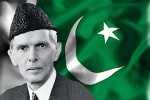
For over 70 years, the vision of the founding father Quaid-i-Azam Muhammad Ali Jinnah has been a matter of intellectual debate, where points and counterpoints are made by writers in order to prove validity of their own personal views and vision of Pakistan. Dialogue, discussion and even debate always helps in at least understanding the positive and negative dimensions of an issue. It is highly unfair and unethical to make a generalisation based on an individual understanding of a single incidence, that too considered out of its context. This onslaught has been going on for a long time specifically with reference to the August 11, 1947, speech of the Quaid as the first President of the Constituent Assembly of Pakistan. This presidential speech is mentioned again and again as perhaps his legal will. No one has the courage to stand up and say that even if a particular interpretation of this speech is allowed, his more than 100 statements contradict this interpretation made by some scholars.
Setting emotions aside’ no one can doubt the honesty, boldness, integrity and clarity of ideas of the Quaid. He was a man of strong principles, integrity and resolution. He never played with words nor with the emotions of people. If we read his post-1940 public policy statements, messages and speeches, he is consistent, coherent and uniform in his views. He never used doublespeak. Let us first understand the context of his address as President of the Constituent Assembly of Pakistan.
The Quaid first touched on three social evils that he called “curses” inherited from the colonial past, namely bribery and corruption, black marketing, and nepotism and jobbery. He declared jihad against all these and stated his zero tolerance towards them.
Then he mentioned the mixed feelings among Hindu and some Muslim segments about the division of India into two sovereign states. Respecting their difference of opinion, he advised them to be realistic and accept the ground reality as a unique event in the modern history of mankind. This is because Pakistan is the only country founded on an ideology of two nations based on their faith and not on ethnicity, color, race or geographic territory like the European nation states.
He referred to another national problem of looking at the Hindu or Sikh minority in the context of the communal riots, brutal murders, rape, hate and violence during partition. He said: “As you know, history shows that in England conditions some time ago were much worse than those prevailing in India today. The Roman Catholics and the Protestants persecuted each other. Even now there are some states in existence where there are discriminations made and bars imposed against a particular class. The people of England in the course of time had to face the realities of the situation and had to discharge the responsibilities and burdens placed upon them by the government of their country and they went through that fire step by step. Today you might say with justice that Roman Catholics and Protestants do not exist; what exists now is that every man is a citizen, an equal citizen, of Great Britain and they are all members of the nation.”
In the same context the Quaid said:
“Now I think we should keep that in front of us as our ideal, and you will find that in course of time Hindus would cease to be Hindus and Muslims would cease to be Muslims, not in the religious sense, because that is the personal faith of each individual, but in the political sense as citizens of the state.”
The context of this statement makes it very clear that he is not talking about relation between “religion” and state which has been haunting the minds of most of the so-called liberal intellectuals globally. The context is Hindu-Muslim riots and violent clashes during partition. He is saying once Pakistan is created, this bitter past need to be buried and like England there shall be no more hate and clash between Hindus and Muslims. They will be just citizens. Why he talks about religious freedom of going to temples and mosques again has to be understood in its proper context. Even before independence that much religious freedom was enjoyed by all religious communities in India. Then why does he mention it?
Dr Javed Iqbal, a known jurist, intellectual and former chief justice and for sure not a ‘fundamentalist’, puts this matter in its proper perspective: “Islamic theology recognises Continue reading “Can We Let Jinnah Speak for Himself?”