The Rise of Revivalists

It was a sunny day on 12th February 1949 when the leader of Muslim Brotherhood, Hasan al Banna was invited for a meeting with an Egyptian government minister in Cairo. At the venue, the minister never appeared and hence the brotherhood’s leader had to leave. While he was on the street to get a taxi, he was shot by unknown person.

The Brotherhood’s leader death was widely assumed as an officially planned assassination. Hasan al Banna funeral was publicly banned by the then Egyptian government and only his father, brothers and some family female members were allowed to carry out his final ceremony.

Hasan al banna was a highly charismatic person and a sharp-minded school teacher who laid the foundation of Muslim Brotherhood in Egypt in 1928. This was the first mass based Islamic party, which overtly worked politically and within country’s legal framework. Brotherhood challenged the ascendancy of secular and western ideology in Egypt and in the whole of Middle East countries. Hasan al banna strongly felt that in the unislamic ideology lays the root of the decay of Islamic societies in the modern world, and advocated a return to Islam as a solution to the ills that had befallen Muslim societies. The message of Brotherhood had spread swiftly not only across the adjacent Arab countries but reached countries far away like Indonesia, Malaysia, Iran and Pakistan.

Hasan al Banna’s achievement was creating a flexible and dynamic structure aiming to transform his vision into reality. He founded numerous schools, factories and mosques in less than 10 years. He was able to provide over a half million committed workers and twice as many supporters to the Brotherhood. The work of Brotherhood started to transcend the national borders. It was the time when Hasan was invited by the British ambassador for tea, complimented for his good character and admired for his work for the poor. He was told that it is in the Brotherhood’s interest to get assistance from British. Hasan politely listened to ambassador and told him that all of his money belongs to Egyptians and the time for British was soon coming to an end. This caused the starting of the conflict between him, British and the then Egyptian monarchy.

No one could have imagined the future of the then Egypt’s most influential and largest revivalist party after his founder, Hasan al banna was mercilessly murdered followed by a massive crack down on his party. Scores of his party members were arrested and subjected to worst physical torture inside the military jails. The party’s assets were confiscated. The situation not only lasted for months and years but for decades and any association with Brotherhood was consider as a serious and unforgivable crime.

The dawn of June 24th,2012 comes along with the election commission’s announcement that Muslim Brotherhood’s candidate, Mohammad Morsi, had won the country’s first contested presidential election, making him the first ever islamist president in the arab world. It took eight decades to Hasan al banna’s dream to come true. Morsi addressed to the tens of thousands at Tahrir square,


“I’m your president, but not without you. I’m your president, but I’m not the best of you…I fear Allah (swt) and no body else.. I will be always one of you. I have been given the authority over you, but I am not the best of you. If I do well, help me; and if I do wrong, set me right. Obey me so long as I obey Allah (swt)and His Messenger (s.a.w), but if I disobey Allah (swt) or His Messenger (s.a.w), you owe me no obedience.”

Despite the time taking and tough period, The Egyptian socio political Muslim Brotherhood has shown its commitment to its cause and vision, given many decades before by Hasan al banna. It would be interesting to see how their counter parts in other countries especially in Pakistan would be performing in the Elections to come. Jamaate Islami claims not only to have close ideological ties with Brotherhood, but due to the amazing similarity in organizational structure and working strategy, is considered to be the Muslim Brotherhood of Pakistan.

The political battle between Islamists and regimes all around the world is not over, it has not only begun but in fact has gained momentum. The brotherhood and such revivalists are emerging as significant forces in the politics of several Arab and non-Arab countries, either directly or through the movements they inspired.

They are appealing most to the masses and cultural conservatives who want their government and society to reflect and defend certain basic Islamic values and principles, and who favor a pragmatic and incremental approach to achieve these goals. The legacy of Hasan al-Banna is thus still presents, and will continue to shape the destiny of societies in the new millennium.
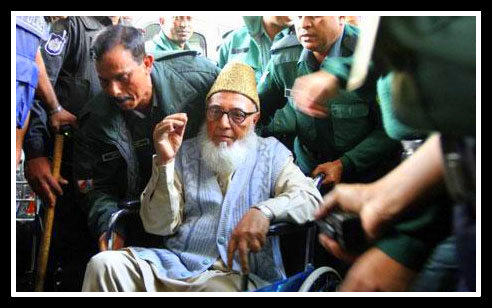
Man of integrity

In 1305, a Scottish knight, a main leader of Scotts was captured by the English Army and later on brought before the then English ruler, King Edward I. The charges against the knight were of most serious level and treason was among one of those. The knight was ordered to be executed through severe physical torture and was hence hanged, drawn and finally quartered. The slain knight was known as William Wallace, who became Sir William Wallace, an Icon of bravery and freedom, not only for the Scotts, but for the fighters and lovers of freedom around the world as well. The reason for the extreme sentiments of hatred of English army and its King for him were his mutinous activities against them. The Scottish nation was truly inspired by the ideological patriotism of Wallace. The practical devotion, struggle and ultimate sacrifice for an Independent Scotland earned him unmatched and unprecedented place in the heart of every Scottish citizen.

The act of loving the land and struggle for independence of one’s own nation is termed patriotism and should be duly acknowledged and admired by the people but this at the very same time can be taken into account as treason against any other nation. The Tiger of Mysore, Tipu Sultan was with his soldiers against those of the British army at battle field of Seringapatam in 1799, passionate for saving his land and nation from the invaders. Again, the patriotism of the Tipu was a symbol of immense bravery and freedom for his nation, but for the opponent army, of course he was a very deadly opponent and enemy who had bravely resisted the then occupant British army. Tipu even allied with the French army against the British expansionist attacks and plans. Tipu died with highest grace defending the fort of Seringapatam.

Sibghatullah Shah Rashidi, Pir Pagaro the sixth, was a sufi spiritual leader of Hurs in Sindh. In 1922, the Pir Pagaro noticed the insulting attitude and inhumane behavior of the British officials against his people and this forced him to prepare for the faceoff with the occupant Britishers and the time came when he was no more a silent sufi. He valorously decided to rise himself and agitate against the injustice by every possible mean. Rashidi gave his people the slogan of “homeland or death”. He in return bagged the unmatched love and respect of his people. He was arrested in 1941 and sent to Seaoni jail in India from where he was finally brought back to Hyderabad jail in 1943. On the charges of Rebellion, Pir Pagaro Rashidi was hanged by the British rulers. The whereabouts of his Grave is a mystery to date. His admirers gave him the title of ‘Soriah Badshah’ (The victorious King). The History witnessed the ambivalent phenomena once again as the Patriotism of an individual became the source of inspiration for defiant and rebellious acts against another nation.

89 year old Professor Ghulam Azam born 1922 is a prominent and retired religious political leader of Bangladesh. The professor’s association with religion compelled him to join the Tablighi Jamaat during 1951 – 1954. However, after being convinced that Islam is not only about spirituality but the sociopolitical aspect is also an integral part, he became part of the Jamaat e Islami. He actively participated in the democratic movement against the dictator, General Ayub Khan. Being a devoted Pakistani, He opposed the separation of East Pakistan, even though he himself was a native Bengali. This was the time when he had to face the real critical situation. He remained steadfast by his ideology and adopted the rather unpopular stance and told his people that mere liberation from Pakistan would not be beneficial and worthy as secret Indian plots were being observed in the liberation movement.

East Pakistan was ultimately converted into Bangladesh and Professor Azam  faced the consequences in the form of arrest and torture, as politics of vengeance was on its peak. His basic right of citizenship was officially denied and he was left with no option other than to live in the Exile. He did not lose hope. Professor fought his legal case before the Supreme Court and was able to get his citizenship restored. In January 2012, the 89 year old Professor Azam was once again arrested, this time for charges of treason. The prosecution is still under process. Professor Azam is undergoing a unique experience of defending his patriotism for his pre-1971 country, the united Pakistan, a patriotism that is in fact a rebellion against his very same land, post 1971 country, Bangladesh.

No matter what the Bangladesh judiciary concludes regarding the fate of Professor Ghulam Azam, there is one thing that is certain. He has displayed his commitment to his ideology and patriotism for united Pakistan. He has nothing to complain regarding his past and is still following his inner self. This speaks for his character. He has encouraged his followers to obey the country’s law. Without undermining the efforts of any of the freedom hero, if one compares the difficulties and hardships faced by William Wallace, Tipu Sultan, the ‘Suriah Badshah’ and Professor Azam, it is evident that the earlier three Heroes enjoyed the support of their respective countrymen during their struggle, the Professor on the other hand was lonesome and against his people during the war that challenged his patriotism. The Professor is still going through much tougher and dire situation to prove his loyalty and attachment for his land. His unchanged spirit in the prison cell is an adequate proof that the man of integrity cannot be conquered. Anyone who feels the deep pain of separation of East Pakistan cannot live without paying homage to Prof.Ghulam Azam.

“ Mitte ki muhabbat may hum ashufta saroon nay..wo qarz utaray hain jo wajib bhi nahin thay”